

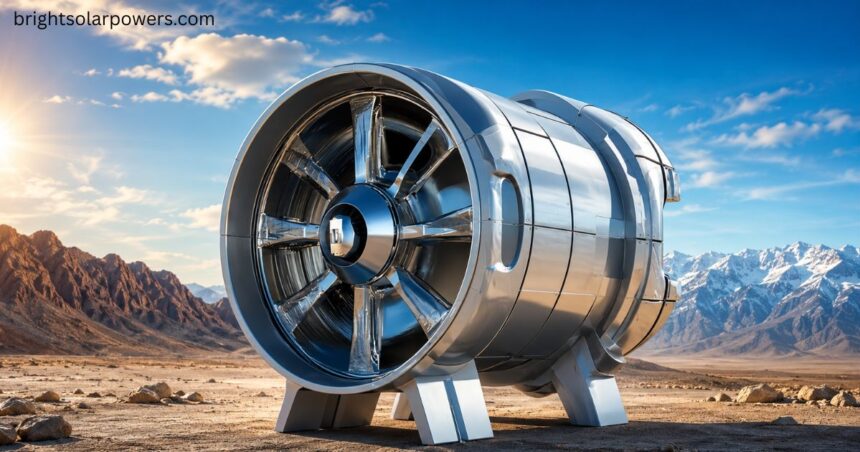
I still remember the first time I stood next to a working parabolic trough collector field and felt the heat rising off the receiver tube before anyone told me the temperature.
That single moment taught me more about solar energy system design than any brochure ever did. A parabolic trough collector bends sunlight using curved mirrors shaped like a parabola, and it pushes that light onto a focal line running the length of a metal pipe.
Inside that pipe, a heat transfer fluid, often oil or molten salt, absorbs the heat and carries it away to do real work.
Engineers in California built the SEGS facility, rated near 354 MW, and teams in Arizona built Solana at 280 MW, while Spain built Andasol-1, and each plant proved that this mature CSP technology could scale up safely.
These systems run on Concentrating Solar Power, and the curved mirror shape gives a concentration ratio near 70-80 suns, which pushes fluid temperatures up to 300-550°C.
That heat becomes steam, and the steam spins turbines connected to generators, so the plant reaches thermal efficiency between 50-80% while storing spare heat for 6-16 hours using molten salt tanks.
This gives the plant dispatchable power, meaning operators can call on electricity even after the sun sets, and that single feature makes concentrated solar energy valuable for industrial process heat and grid stability alike.
Because the linear receiver tube stays heated, and because water gets pumped through connected loops, the whole design keeps delivering energy for industrial uses that need continuous high heat, whether that means running a factory boiler or supporting research training at a university lab.
I have watched these fields sit quietly under a flat sky and still produce a steady flow of thermal energy storage, proving that a mirror does not need moving parts inside to be reliable; it only needs a good working principle and a solid frame.
Builders rate a well-made unit at over 20 years of service life, and with proven reliability behind them, these collectors keep earning trust as a serious solar thermal technology among engineers who study advantages, disadvantages, components, and applications side by side before choosing between this system and ordinary solar panel systems.
Solar Trough Collectors
A field engineer once told me that the real secret behind a trough collector’s efficiency is patience, not just clever glass, and after years of reading spec sheets I finally understood what she meant.
The technology type relies on curved mirrors and receiver tubes working together to reach an operating temperature near 300-550°C, and that heat supports industrial heat demand as well as power generation for the wider grid.
Because the collector reaches high thermal energy and a solar-to-heat conversion rate between 50-80%, it earns a place among serious industrial process heat solutions, and its storage capability of 6-16 hours lets it keep sending electricity long after sunset.
These units also feed district heating networks, support utility-scale electricity projects, and remain the top pick for locations with high DNI, since strong direct normal irradiance improves cost-effective operation and stronger economic viability.
A collector built with simple mechanical components and a modular design works well for laboratory training, industrial heating, and full solar power plants, and its proven technology background gives it a 20+ year lifespan when teams follow proper maintenance routines.
Components of a Parabolic Trough Collector
I like to describe a trough collector as a small team of five specialists, because each part depends on the others to do its job properly.
The parabolic mirror assembly uses curved reflective surfaces coated with silver coatings, sometimes an aluminum coating, spread across glass substrates, and this parabolic mirror technology reaches close to 94% reflectivity while resisting dust, moisture, and shifting temperature fluctuations.
The receiver tube system, sometimes called the receiver tube absorber, uses evacuated glass-enclosed tubes built in a double-walled style with a vacuum between the layers, and this stops convection and conduction from wasting heat, so the tube can enhance efficiency and hold onto roughly 95% sunlight absorption while losing only 5% heat loss as thermal radiation through its selective coatings.
A tracking system, also called a sun-tracking mechanism, follows the sun’s path with high accuracy, and the support structure framework, made from strong steel parts, survives wind speeds near 200 km/h while keeping the optical element aligned for optimal focus and optimal solar concentration.
The heat transfer fluid circuit relies on pumps, piping, and expansion systems to move high-temperature fluids safely, carrying warmth from the focal line toward a heat exchanger or storage system, and this whole chain of core components, protected by protective coatings and tempered glass, plus a glass envelope around each tube, keeps the useful heat flowing under changing environmental conditions.
Some builders swap glass mirrors for polished aluminum to chase maximum reflectivity, and every design still includes control and instrumentation for performance evaluation, tracking flow rate, temperature monitoring, and efficiency parameters across every solid materials frame, every parabola-shaped mirror, and every drop of synthetic oils or molten salts flowing through the solar trough collector.
How Does a Parabolic Trough Collector Work?
Watching a tracker swing slowly from east to west taught me that this technology behaves less like a machine and more like a sunflower with steel bones.
The parabolic mirrors stay aligned mirrors through a single-axis solar tracking mechanism, sometimes guided by a mechanical slewing drive or an electronic tracker running a mathematical algorithm, and this tracker orientation, set north to south, follows the sun from east to west to keep the mirror orientation locked onto peak solar concentration.
Direct sunlight, measured as DNI or Direct Normal Irradiance, reflects off the curved mirrors and lands along the focal line, concentrating incoming solar rays and parallel sunlight rays into a narrow line that reaches high temperatures near 550°C at the center of the receiver tube.
Inside that tube, the heat transfer fluid absorbs the concentrated sunlight and concentrated heat, and pumps push the now hot fluid through the collector field toward a heat exchanger systems, where heat transfer turns water into high-pressure steam through steam generation, and this steam drives turbines connected to electrical generators for full electricity production and power production.
Any leftover warmth goes into molten salt systems for thermal energy storage, giving the plant electricity generation long after dark, while the selective surface on each tube limits radiative losses and keeps the working principle of solar concentration efficient across the whole linear receiver tube.
I find it remarkable that a system built on such a simple focus point can turn solar radiation into steady heat energy, absorbed energy, and reliable energy utilization, using nothing more than operating temperatures, a smart solar tracking system, and a properly pumped loop of fluid moving in a controlled circle.
Common Types of Heat Transfer Fluids Used in Solar
Choosing the right fluid for a trough field always felt like picking the right engine oil for a car, since the wrong choice quietly shortens the life of the whole system.
Engineers pick from three main types, plus one newer option, based on temperature range, whether the plant needs a molten salt tanks setup, and how much system performance complexity the crew can manage day to day.
Synthetic thermal oils, also called synthetic oils, run safely up to 420°C, sometimes described closer to 400°C, and they offer strong thermal stability along with dependable freeze protection even during low temperatures.
Molten salt mixtures, or simply molten salts, unlock higher temperatures and give direct thermal storage integration, storing extra heat storage capacity for later use, while pressurized water/steam, called water or steam.
For small-scale or experimental systems, keeps things simple through direct steam generation and simplified heat exchange requirements, though it stays limited to moderate temperatures.
Advanced nanofluids, an emerging and still experimental fluids category, use nanoparticles to boost thermal conductivity and conductivity, aiming for enhanced thermal conductivity properties that could push next-gen systems further, and every one of these heat transfer fluids carries its own balance of safety, cost, and temperature control worth studying through ongoing research.
Parabolic Trough Collector vs. Solar PV Panels/Systems
People often ask me whether a trough field beats rooftop panels, and my honest answer always depends on the job the system needs to do.
A trough collector follows a thermal-to-electrical path, using conversion method steps that turn curved mirrors into high-temperature heat before reaching electricity, while ordinary solar panels and solar PV panels follow a direct solar-to-electrical route through the photovoltaic effect, converting sunlight into energy without the middle steam stage.
On storage integration, a trough field leans on molten salt thermal storage for 6-16 hours, sometimes written as 6-16 hrs., while solar panels rely on a battery, often lithium batteries or lithium-ion storage, in a battery storage bank for off-grid setups, and stay free of storage needs entirely when running on-grid.
Trough fields need ground-mounted space, roughly 3-5 acres/MW, which limits their fit for rooftop or housing societies, while flexible solar PV panels work well on rooftop, commercial rooftop solar PV, or open ground alike.
They keep producing on cloudy days thanks to bifacial solar panels, unlike a trough system’s poor diffuse light performance and diffuse sunlight performance, which both depend on strong Direct Normal Irradiance.
Regions like Rajasthan, Gujarat, and Ladakh show strong India suitability for utility-scale dispatchable power and industrial applications, and industrial heat work, since their HTF systems handle high-temp heat output well, while distributed residential and commercial buyers usually pick solar PV panels because of lower maintenance, easier cleaning, and simpler storage method choices overall.
Why Are Parabolic Trough Collectors Unsuitable for Homes?
A homeowner once asked me to install a trough collector on her roof, and I had to explain, kindly, why that idea would never work.
The size requirements alone rule out most houses, since a single Solar Collector Module, an SCM, measures about 6 m × 2.5 m, and a full Solar Collector Assembly, an SCA, can stretch past 200 meters, far beyond any normal rooftop scale, needing unobstructed access, clear solar access, and serious structural support just to hold the frame steady against wind.
Technical complexity adds another barrier, since the tracking systems, the moving parts, and the high-temperature HTF circuits all need specialist operation, along with steam-cycle integration and regular check-ups from trained experts, which sits well beyond most homeowner capabilities.
Then come the economic considerations: high investment costs, heavy Capex, and balance-of-plant costs push this technology.
Toward MW-plus scale projects only, since poor cost-effectiveness shows up fast at small scales, meaning residential rooftop installation rarely makes sense for home budgets, residential solar installation, or small commercial buyers. For anyone still curious about solar for homes or housing societies.
I usually point them toward standard rooftop solar PV through a company like Solar Square, where a free solar consultation, a quick pin code lookup, and a look at the average electricity bill can settle the matter faster than any trough collector ever could.
Since maintenance complexity and high technical complexity make trough systems the wrong fit for commercial setups at small size.
Advantages of Parabolic Trough Collectors
Every time I visit a working trough plant during peak summer heat, I get reminded why utilities still trust this thermal storage technology after decades.
These systems reach high-temperature performance near 550°C, strong enough to produce electricity or run heavy factory machines, and their thermal storage integration with molten salt storage grants nonstop energy use across 6 to 16 hours, giving grid operators true dispatchable power generation during peak evening hours.
Their proven reliability, backed by simple mechanical design and roughly 20 years of service, keeps them running through cloudy stretches by drawing on stored heat, and this special storage habit means the plant can collect heat all day and still keep running at night without a pause.
Because of strong economic competitiveness in high DNI regions with steady thermal demands, trough fields stay cost-effective for industrial clients chasing continuous energy supply, and their long operational life, paired with zero operational carbon.
Emissions and fully recyclable construction materials, gives them real environmental benefits on top of being genuinely efficient, reliable, and scalable for both industrial processes and educational purposes.
Disadvantages of Parabolic Trough Collectors
No technology stays perfect, and I always tell clients the honest downsides before signing any contract for a trough field. This system carries a strict direct sunlight requirement, performing poorly under diffused or scattered light conditions.
It struggles further during frequent cloud cover or high atmospheric moisture content, since it depends entirely on direct beam solar radiation and needs high Direct Normal Irradiance to hit full output.
The complex tracking systems, built from single-axis solar trackers and dual-axis solar trackers, bring higher maintenance requirements than stationary solar technologies, and tracking system failures demand redundant components plus preventive maintenance programs just to avoid losing optimal performance.
Add in dust and soiling sensitivity, which forces frequent cleaning in arid environments, along with requires large open areas, near 3-5 acres per MW, that make it unsuitable for rooftops, plus significant upfront costs compared to flat-plate systems.
High capital investment, the geographic constraints, and the general complexity of the design and control explain why this costly to set up system, needing a large lot of space, only makes sense at serious scale, tied to the right position of the sun.
Applications
I have toured plants that quietly serve very different industries, and that variety always surprises visitors who assume this technology only makes electricity.
Beyond utility-scale power generation, rated between 50-500 MW with a solid grid connection, these fields deliver industrial process heat for manufacturing facilities that need steam, heating, and high-temperature processes, and they power district heating networks through community-scale hot water and space heating systems, s parabolic trough collector sometimes called space-heating networks.
In warmer regions, the same thermal output, sitting near 300-550°C, drives solar cooling through absorption chiller systems and solar cooling applications for sunny climates, supports solar desalination and thermal desalination to turn seawater into freshwater across coastal arid regions, and even helps enhanced oil recovery through steam injection for heavy oil extraction, a method already running at GlassPoint Mirah in Oman.
This versatile technology also reaches food processing, chemical manufacturing, textile production, textiles, and dairy work, plus pharmaceutical facilities, since it replaces older fossil fuel systems with consistent high-temperature heat, and it supports hybrid solar-fossil setups through ISCC plants pairing natural gas with trough steam to lift overall efficiency toward 60.9%.
while smaller installations serve research and education, engineering training, and experimental research across university-run solar thermal labs, proving how far these end-use sectors and economies of scale can stretch beyond simple utility-scale electricity generation.
Conclusion
After years of studying this field, I keep coming back to one plain truth: a trough collector earns its place by solving problems that ordinary panels cannot touch on their own.
This well-tested solar thermal technology brings distinct benefits to high-temperature applications, especially industrial processes and any renewable energy project chasing dispatchable power, and its thermal storage systems let the whole setup generate power 24 hours a day, helping solve the problem of intermittency caused by nighttime hours and cloudy weather.
As materials science and manufacturing processes keep improving, this cornerstone of solar thermal technology should only get better, and its s parabolic trough collector teady efficient conversion of raw sunlight into usable heat for diverse applications.
Gives both academic and industrial setups real learning opportunities and lasting sustainable energy solutions as renewable technology continues to evolve into the future with fresh advancements on the horizon.
and curved as a parabola in the others, following the plane of symmetry design and using CNC precision for every focus point. A single 61.87 sq. ft. section, when repeated into eight sections, parabolic trough collector builds a 495 sq. ft. array, run by a mechanical slewing drive and an electronic tracker working a mathematical algorithm oriented north to south, tracking the sun across.
FAQS about Parabolic Trough Collector
What is the working principle of parabolic dish collector?
A parabolic dish collector uses a curved, parabolic-shaped reflector to focus direct solar radiation onto a single focal point, where a receiver captures the heat
What is the principle of CSP?
CSP (Concentrated Solar Power) uses mirrors or reflective surfaces to focus sunlight into intense heat energy, which heats a fluid to create steam. That steam spins a turbine connected to a generator, and thermal storage lets the plant keep producing renewable energy even after the sun sets.
What is the difference between parabolic trough collector and parabolic dish collector?
A parabolic trough collector is line-focused, tracking the sun on one axis and heating a receiver tube along its length, while a parabolic dish collector is bowl-shaped and tracks two axes to focus sunlight on a single focal point.
What are the two types of solar collectors?
Solar collectors split into non-concentrating collectors, like simple flat-plate collectors, and concentrating collectors, which use mirrors or lenses to focus sunlight.