
I have watched a lot of solar panel cleaning manufacturer’s instructions get ignored, and it never ends well. Before you touch anything, check the panel manufacturer’s instructions about shutting down the system, because working on a live system on the roof is risky.
Rainwater helps a little, but it also causes dirt buildup on the underside of the glass, so it is not enough on its own.
Some homeowners now trust automatic robots and semi-automatic robots for the job. In Italy, Washpanels builds portable robots for carports, greenhouses, and shed roofs, along with fixed roof robots for dusty environments that need constant attention.
In the Middle East, Ecoppia uses solar-powered robots, which are really autonomous robots, to clean PV modules at night using soft microfibers and a stream of air rather than water, since high-pressure washing can scratch the glass; the same unit even cleans its onboard solar panel and recharges battery power between shifts.
Researchers are not stopping there. Teams at Heriot-Watt University in Scotland, working alongside a NASA-funded project in the United States, found a way to vibrate solar panels and shake off dust using a small DC motor, also called a direct current motor, that creates vertical vibration strong enough to loosen grime.
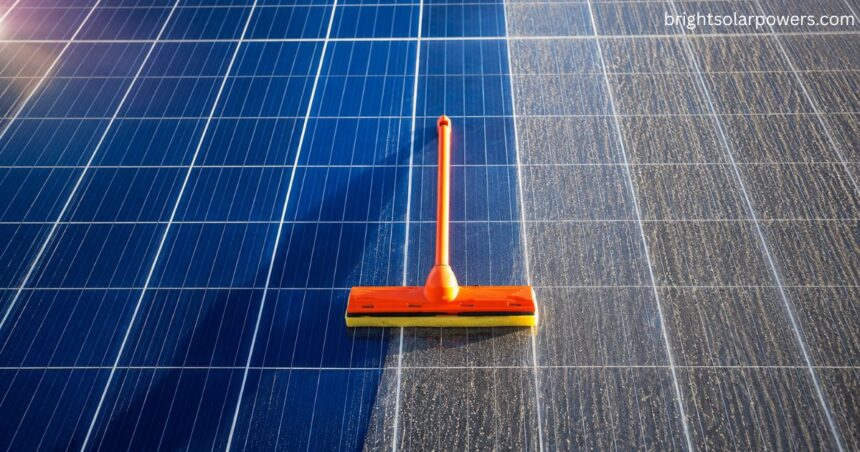
Still, manual cleaning remains the most common choice for most households. Homeowners reach for special brushes that rotate while brushing, or a simple cleaning tool borrowed from the world of car windshields.
Once you finish spraying water, a squeegee process clears the surface fast, and attaching a proper nozzle to your garden hose makes the whole task smoother.
For thicker grime, a squeegee extension reaches further, and a full solar vacuum cleaner kit, with Longarm being a popular name, saves your back.
Whatever you do, keep metal objects, abrasives, and detergents away from the glass, because scratches create shadows that quietly affect efficiency. Solar panel cleaning is honestly the most common maintenance task for residential photovoltaic energy systems, especially homes in dry areas or windy areas.
Solar Panel Cleaning
When dust, debris, and animal droppings pile up, blocked sunlight cuts into output, so regular washing protects maximum output efficiency for your whole solar power system.
If the panels sit high on a roof, hiring a professional is often smarter and safer than climbing up yourself.
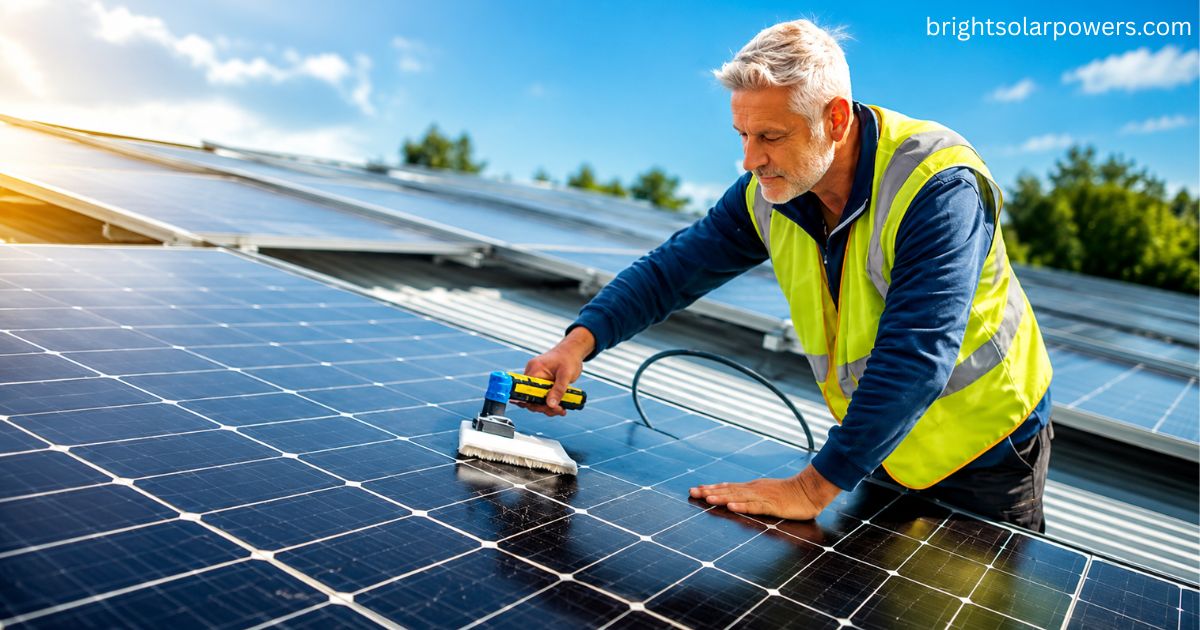
For arrays you can actually reach, a soft non-abrasive brush with soapy water does the job much like washing a car or an RV, without scratching surface glass, and plenty of solar panel cleaning brushes exist just for this kind of system maintenance.
Sometimes you can simply wash off with water through a hose pipe, letting a jet of water handle a quick and easy process from the ground. Other times you need a deeper clean to shift stubborn dirt, which calls for proper non-abrasive cleaning equipment such as a soft long-handled brush, some biodegradable soap, and a solar panel wiper made from soft material.
Always confirm you have safe access first. I always tell people to pick cool weather for this chore, because water can evaporate quickly off hot solar panels and leave streaks and residue behind.
Read your instruction manual before switching anything off, and check for damaged cabling, which can create a genuine electric shock hazard.
Skip working at heights whenever you can. Simply remove dirt, bird droppings, rinse with cool water, then remove large trails of water with your wiper. Compared with waterless vibration methods or specialized coating solutions, this hands-on approach is innovative in its own low-tech way, still efficient, and far less expensive than it sounds, even though bigger commercial jobs can be inefficient without help.
For small residential installations, this works fine, but commercial scale arrays need more planning to stay within reach, done safely and effectively, cutting both personal risk and financial risk.
A Comparison Of Various Solar Panel Cleaning Technologies
This section originally pointed to an image or table comparing cleaning technologies, and no written words appeared underneath it to extract or rework here.
Efficiency Degradation Due To Dust/dirt On Solar Panels
Here is something that surprised me the first time I read it: studies show that ordinary contaminants like dust, dirt, and pollen barely touch your output. On average, you lose less than 0.05% of efficiency to this kind of light grime.
Cleaning your panels in the middle of summer might save homeowners around $20 a year, which sounds nice until you realize that under normal circumstances, you could easily pay more to clean panels than you ever regain solar efficiency.
Additional Things To Keep In Mind
A few small details change everything about how dirty your panels get. Ask yourself how flat panels sit, because anything between zero to five degrees invites more surface soiling over time than a steeper tilt would.
Think about the wind too, since living downwind from an airport, a highway, or farmland usually means high levels of dust drifting onto your roof.
Heavy dust buildup becomes worse with sparse rainfall, and industrial smog or wildfire smoke pollution can leave a hazy film across the glass.
Tall trees nearby drop fallen leaves and attract bird droppings, while a bad pollen season leaves a sticky residue that stops rain washing away dirt the way it normally would. A humid climate that grows moss around your home is its own warning sign, since it is a rain issue you cannot ignore.
What Is The Effect Of Location On Solar Panel Cleaning?
Location shapes almost everything about your cleaning schedule, and once or twice a year is a fair baseline for most homes. A contaminated area near highly polluted areas, such as factories, highways, or airports, builds up atmospheric dirt and oil deposits faster than a quiet suburb ever would.
Woodlands bring their own trouble, since trees and their leaves block the absorption of sunlight, while birds leave droppings whose acids can damage surfaces and reduce efficiency over time.
Out in the desert, dry and dusty climates across the Middle East and the southwestern United States pile sand onto panels, blocking light and even scratching surface glass, while places like California and Australia deal with wildfire ash falling in thick clumps
. The angle of roof installation changes the frequency of cleaning too, because angled panels benefit from runoff rainwater far more than flat panels, where pooling water leaves stubborn residue behind.
Naturally, large commercial solar systems need attention more often than residential systems, simply because fouled panels at that scale interfere with power generation more noticeably, which is exactly why robotic solutions suit commercial systems so well.
Monitoring and routine inspections for solar power systems
I always recommend keeping an eye on your numbers. Monitoring your system output is the easiest way to protect energy bill savings and steady solar electricity production, whether you check it on a daily routine or a weekly routine basis.
If your panels stop working as expected and you notice a significant drop in production efficiency, treat it as a potential issue worth investigating right away. Go further by inspecting equipment regularly, since this habit helps you catch and fix minor issues long before they turn into costly repairs.
That means checking solar panels, inverters, mounting materials, and other components for wear, cracks, or corrosion. For your own personal safety, book a professional solar inspection every five to ten years.
Other common solar maintenance repairs
Beyond the occasional cleaning, solar systems really do need only minimal upkeep to keep their operational efficiency intact. A sudden solar panel output drop usually points to inverter failure; with microinverters, one failing unit will not drag down the rest, but a string inverter setup can temporarily shut down the whole array.
Pest problems are surprisingly common too, since exposed wiring invites animal kingdom visitors, from birds nesting underneath to squirrels and other rodents that chew wires until systems go offline.
Panel damage can also follow major weather events, including hailstorms, storms, extreme winds, hurricanes, and other natural disasters.
Warranty coverage and solar maintenance costs
Never overlook your paperwork. Warranties protect your solar investment, but only if you stick to the manufacturer’s maintenance guidelines and avoid unauthorized modifications.
Total costs tied to solar maintenance requests vary a lot, yet they are usually worth paying to protect ongoing system performance and solar panel cleaning maximum savings, so compare solar installers carefully on their warranty coverage inclusions and potential maintenance costs before making any long-term financial decision.
Most solar energy equipment warranties, including those on microinverters, run for 25-year performance warranties, while string inverter warranties and central inverter warranties usually last 10 to 15 years, and any part failure outside that window means costly part replacements out of pocket.
A typical solar battery warranty covers 10 to 12 years, though some energy storage options stretch to 15-year performance warranties.
Your workmanship warranty, sometimes called a labor warranty, along with your wiring warranties, protects the electrical components too, so schedule a professional inspection for wiring and electrical inspections near the end of that five to ten years window.
If you are not fully confident cleaning the array yourself, especially when panels too high sit out of reach, it makes sense to pay a professional instead. Costs vary with the size of system, accessibility, and the level of cleaning required, and professional solar panel cleaning typically lands somewhere between £20 and £200
Solar panel maintenance checklist
With proper maintenance, panels genuinely work effectively for many years, and a simple checklist keeps you on track. Every 12 to 18 months, clean solar panels so they stay free of dust and dirt and keep performing efficiently.
Every three to five years, schedule a full professional service to check for small cracks or inverter issues, and review your warranty policy with your installer, since some require a full service within a specific period to keep the coverage warranty valid.
Do solar panels need cleaning?
Yes, and I say this from experience: you should clean solar panels roughly every 12 to 18 months to keep performing well and working efficiently, since dust and dirt quietly reduce sunlight reaching the cells.
How often really depends on location. Homes that get lots of rain need less attention, while a drier location with heavier dust and pollen needs cleaning more frequently.
On a roof, rain and the natural angle do a decent job alone, but ground panels usually need you to clean more regularly. If you live near trees, keep branches trimmed so leaves covering panels never become a habit, and watch for nearby birds leaving droppings too.
Your solar panel installer can always advise and recommend the right maintenance schedule for your specific home.
How often should solar panels be cleaned?
Frequency really comes down to your environment and the type of installation you have, but once or twice a year works as a sensible starting point. A dusty area or a heavily polluted area may need cleaning more frequently than that. Uncleaned panels still generate power, but dust and soiling, much like a dirty car windshield, will quietly cause lower production output over time.
Does rain clean solar panels?
Rain can wash away dust and loose dirt, but it is solar panel cleaning honestly not effective method for a thorough cleaning on its own. Relying solely on rain will not guarantee optimal production, though it can extend interval period between proper washes.
That is why regular cleaning, whether DIY or through professional services, keeps output at maximum efficiency.
Can severe weather and hail damage solar panels?
Hailstorms, high winds, heavy snowfall, and extreme temperatures can all cause real physical damage, including micro-cracks in the solar cells or loosened mounting materials.
Most systems are built to withstand elements, so severe damage stays rare, but it is still smart to inspect system condition for signs of damage or decreased performance right after any severe weather event.
Can I use washing up liquid?
I would avoid washing up liquid on your panels. It tends to leave a film that lets dust build up faster, and the harsh chemicals in some bottles can affect coatings on the glass. Stick with biodegradable soap and a soft sponge, or a hosepipe with a gentle spray, which is plenty to get rid of dust and dirt.
Can I stand on solar panels when cleaning them?
No, you really shouldn’t stand on panels. They are simply not designed to support weight like that, and they can crack or break under pressure. Many panels also have slippery coatings, which is dangerous whenever you are working at a height.
Can I use a power washer?
No, you should avoid high-pressure power washer use on your array. It can interfere with seals, damage wiring, and lead to water damage underneath the glass. A soft spray from a garden hosepipe will clean effectively without any of that risk.
How can I clean solar panels from the ground?
Grab a hosepipe with a jet that can actually reach the panels, and add a long-handled brush if you need a thorough clean. Stand on solar panel cleaning even ground and stay careful with surrounding objects nearby. If you are struggling or straining to reach every corner, it is fine to ask a professional instead.
FAQS About Solar Panel Cleaning
How often should I use a solar panel cleaning machine?
Ideally once every 1-2 months, depending on your location and weather.Dusty or coastal areas may need more frequent cleaning cycles.
Are cleaning products safe for solar panels?
Yes, most are eco-friendly and non-abrasive by design.They clean tough stains without harming the panel’s surface.
What makes a good cleaning mop?
A soft bristle head paired with an extendable pole works best.This combo ensures thorough cleaning without scratching the surface.
What’s included in a typical kit?
Most kits include a mop, cleaning solution, squeegee, and brush.Some also add a water purification system for spotless results.