

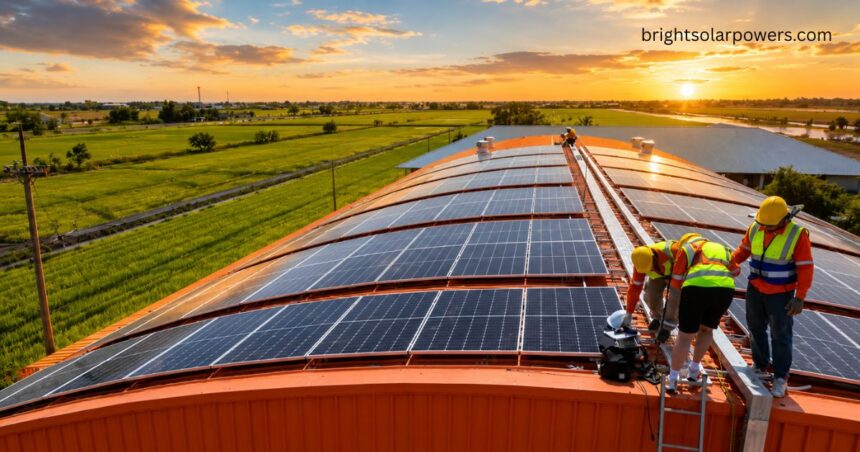
I still remember helping a neighbor figure out her solar installation on rooftop budget back in 2021, when financial constraints made the whole idea feel out of reach for many families.
By 2026, solar pricing in India has become predictable enough to plan like any other home upgrade, and the basic setup cost per kW now sits in a clear, understandable range.
Once you grasp the per kW cost, your rooftop stops looking like one giant expense and starts looking like a simple building block system.
A 1 kW system works as the smallest complete setup you can invest in, and a small setup may only need 1–2 blocks of capacity. A typical home usually settles around 3 kW, while a typical household with bigger usage often goes for 5 blocks or more.
Comparing quotes across installers, most quotes for solar panel installation on rooftop fall between ₹55,000 and ₹85,000 per kW, which is roughly today’s 1 kilowatt solar panel price.
A per-kW number is never just about solar panels. It also covers the inverter that turns sunlight into usable electricity, the structure that holds everything steady, and the protection systems that keep it all safe.
Even a respected manufacturer like Vikram Solar, ranked among the top 10 solar panel manufacturers and priced near ₹28–₹33 per watt, only accounts for one slice of the full cost, alongside labour, cabling, transport, and the expertise needed for installing solar panels on roof.
Solar Installation
Here’s something installers rarely explain upfront: your lowest per kW number actually improves as your system size grows. A 1 kW system may sit near ₹80K/kW, while a 5 kW system often drops closer to ₹60K/kW, simply because fixed costs like labour and transport spread across more capacity.
That’s exactly why bigger home rooftops tend to turn out more profitable for generating power than smaller ones.
Government support matters just as much, since the Indian government currently offers up to a ₹78,000 subsidy, best used around 3 kW. To meet subsidy eligibility, homeowners typically choose DCR solar panels, which satisfy the Domestic Content Requirement and count as compliant modules.
Thanks to these subsidies, a 3 kW system priced near ₹2.1 lakh on paper can land closer to ₹1.3 lakh once the subsidy factor kicks in.
So what does this solar energy actually give you day to day? A 1 kW system produces roughly 4–5 units per day, comfortably covering daily loads for solar power for your house, and scaling up buys you real breathing room on your monthly bill.
Whether it’s solar power for commercial use, a home rooftop, or even a future pv solar power plant, every kW typically pays itself back within 3–5 years and keeps producing savings for 20–25 years after that.
One thing I’ve learned from my own recent years watching this space: never chase a cheaper system purely for a lowest per kW number. Compromised installation quality, shorter warranties, and lower efficiency panels cost far more over two decades than any small saving today.
Thanks to policy-level initiatives and falling solar panels for home costs, more households are finding genuine value in treating their system as stacking units and if you’re comparing this against older reading, our earlier piece on 15 Solar Tech Gadgets is still worth a look before you decide to switch to Solar.
Installation Timeline
People often ask me how long a solar power installation process actually takes, and the truth is the actual installation on your roof is the fastest part. Most residential solar installation project work, from first Inquiry to full power, takes around 75-90 days overall, driven partly by the climate issue and rising energy bills pushing more homes toward solar.
The full Installation Timeline Breakdown usually runs from Day 1-3 through Week 4-6, with a Total time landing between 45-60 Days, from Start to Savings, for most home projects.
It begins with contractor selection, where you spend a few days working to evaluate companies and move through Quote Finalization while examining proposals from each installer.
Next comes the Site Survey, where a solar installer pays a technical visit to your job site to check structural nature and geotechnical nature concerns on the roof. This early stage, roughly Week 1 and about 3 Days long, sets up everything that follows.
Once the signing of the contract happens, your builder and installer begin the Application for Feasibility with your local DISCOM, which typically takes 7-10 Days. Around the same time, they apply for utility connections, local permissions, and various utility incentives and incentives offered under state schemes.
Week 2 is largely about Material Procurement and Logistics, since permits, checks, and other regulatory steps and obstacles can slow things down if paperwork lags.
By Week 3, the real Civil Installation and physical work begins, including installation of a solar power system and mounting solar panels, typically taking 3-5 Days to 5-7 Days depending on complexity.
This is the stage most people picture as “installation,” even though it’s really just a day or two of hands-on work packed inside few months of planning, and examinations at various points confirm quality along the way. You may also want to explore a Solar System on EMI before reaching this stage.
After civil work wraps up, formal inspections begin, covering inspections of local area and utilities, plus a proper Inspection to confirm code compliance.
Net Metering and installation of a utility meter follow, before the true Commissioning and finally the activation of the system.
Once clearance arrives, you can apply for tax rebates, closing out the solar power installation journey and the labor behind it.
How many solar panels are needed to run a house?
So many readers ask me, “How Many Solar Panels Do You Need for my house?” and the honest answer starts with your monthly energy use, not a guess. Pull your electric invoices from the last 12 months, note the total number of units used each month, and divide by twelve for your average. Call your energy company or a trusted rooftop solar supplier if you’d rather have an expert study your home’s energy demands directly.
A typical Indian family uses roughly 90 units, or kWh, of energy every month enough for light bulbs, a television, ceiling fans, a refrigerator, and a few small kitchen appliances. Naturally, your size of home, number of family members, and range of equipment push that number above or below the nation’s average.
Since residential power usage rises during the evenings, when families gather for dining and switch on conditioning devices, your panels matter most right when sunshine starts fading.
Location changes things too homes in the western part of India catch more peak hours than those in the northeast, though that never stops a home in the eastern United States from going solar; it just needs more panels for the same output.
Back in 2014, research already pointed to how solar energy could quietly rise across homes nationwide, cutting power cost one rooftop at a time. Whether it’s peak summer or a cold winter season, cleansolar energy keeps working, and you’ll keep spotting more photovoltaic solar panels, or simply solar panels, on your neighbors’ roofs and the local producer’s van doing rounds each year.
Do solar panels provide electricity during a blackout?
A lot of people assume their solar panels keep running no matter what, but most solar-paneled houses actually depend on a grid connection to supply power whenever the panels aren’t producing, especially after dark.
If your model includes batteries, your bulbs stay lit through an outage, though only a small share of solar homes are set up that way.
Most solar photovoltaic systems shut off automatically during a power cut, and your inverter handles this on its own to avoid islanding, a genuine risk to utility personnel working on what they assume are dead cables.
Conclusion
Plenty of customers now invest in solar electricity for real long-term energy savings, and once you see the numbers, it’s genuinely hard to look back. Teams like Waaree Experts and other local solar professionals use internet tools to help you weigh every solar option available nearby.
If you’re still unsure, reach out to a local solar contractor near you and let real expertise on solar guide your next step.
The Pre-Installation Phase: Site Survey and Design
Every serious solar installation process in India starts long before a single panel touches the roof, with a qualified engineer visiting your premises carrying nothing more than a measuring tape and a compass.
This is the Solar Site Survey stage, and it forms the true engineering foundation of the whole project. The engineer checks Structural Integrity first, asking whether your roof can bear the load of panels and the mounting structure, recommending lightweight structures or reinforced structures for older buildings.
Next comes Shadow Analysis, studying nearby trees, water tanks, and taller buildings that might cast long shadows across the array during peak sunlight hours between 9 AM and 4 PM. Orientation and Tilt matter just as much, since panels in India work best south-facing for full sunlight absorption, with an ideal tilt angle somewhere between 10° and 25° depending on your latitude.
All this data feeds into Custom System Design, where designers use software to build a 3D layout that leaves room for maintenance walking paths.
If you’ve got a flat roof and still want usable space underneath, an elevated structure works well you can read more in our guide to best structures for solar panels.
Good design isn’t only about generation numbers on paper; it’s about making the whole setup practical for years of daily use. Get this early groundwork right, and everything that follows becomes far easier to manage.
Phase 2: Documentation and Approvals
Across India, most solar installation process paperwork now runs through national portals and state portals, which cuts down real delays if your documents are ready in advance.
Under Documents Required for Solar Installation, you’ll need Identity Proof like an Aadhaar Card, Voter ID, or PAN Card, plus Address Proof through your Latest Electricity Bill, and in some states, Property Proof via a Property Tax Receipt or Sale Deed.
Don’t forget Site Photos of your rooftop and Bank Details with a Cancelled Cheque for subsidy credit, since this Document Category speeds up subsidy processing noticeably.
Your installer then files for Feasibility Approval with your local DISCOM, whether that’s PVVNL, BSES Rajdhani, or another grid operator, to confirm the local grid transformer can handle your system’s extra power.
Alongside this, they submit Net Metering Applications for Net Metering, letting you bank excess units back to the grid and see it reflected on your bill.
Treat every bit of this paperwork as seriously as the physical net meter installation itself, and real savings will follow once approvals clear.
Phase 3: The Physical Installation Day
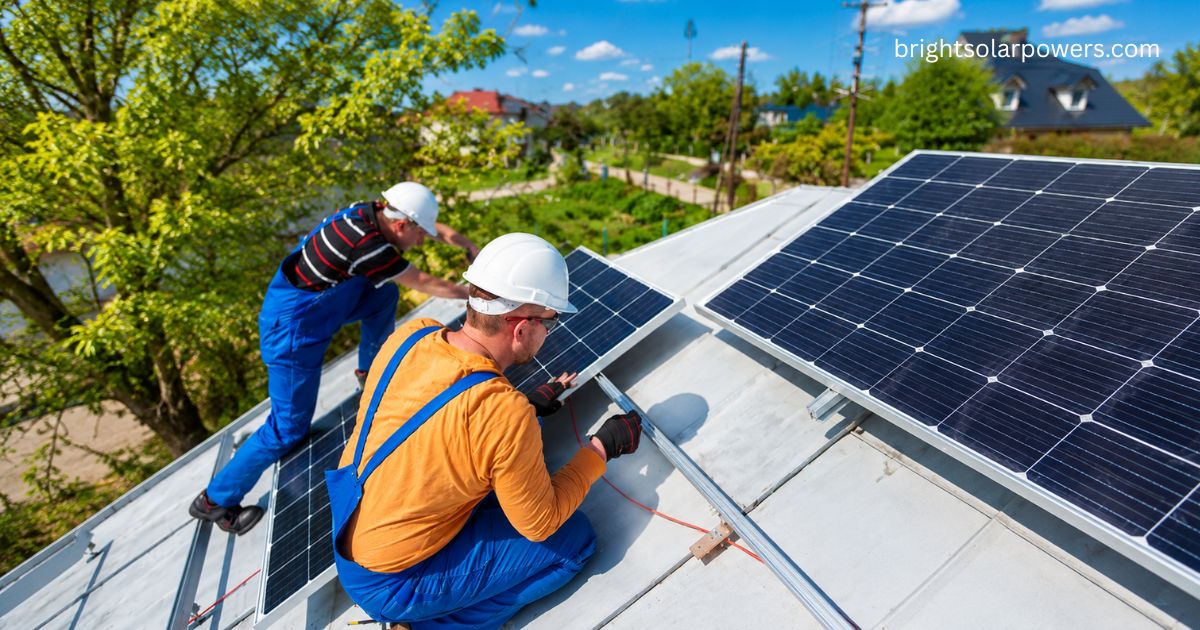
Once approvals land and material arrives, the real solar panel installation steps begin, and teams like Bridgeway Power treat this stage as a genuine precision job, not a rushed weekend task. Depending on structure complexity and system size, the whole process usually takes 3 to 5 days start to finish.
It opens with Structure Mounting, since the mounting structure acts as the skeleton of your entire system, built strong enough to survive wind speeds up to 150 km/ph.
At this stage, installers lean on Hot Dip Galvanized steel, often shortened to HDG steel, or Aluminium, to prevent rusting over time on the roof. Anchor Fastening locks the legs of the structure firmly in place, while Civil Work adds Concrete pedestals, sometimes called padi, around each leg so nothing shifts even in a storm.
Then comes Module Mounting, where panels get lifted and bolted with real care, because even one small crack, or micro-crack, from rough handling can quietly shorten a panel’s lifespan and dent overall efficiency.
Electrical Wiring and Inverter Setup follow, starting with DC Cabling, where panel strings connect to the DC Distribution Box, also known as the DCDB. Inverter Installation places the inverter in a shaded area that’s still a well-ventilated area, since it converts raw DC power into usable AC power for your home.
From there, AC Cabling runs from the inverter to the AC Distribution Box, or ACDB, before finally reaching your home’s main electrical panel.
Last but never least comes Earthing and Lightning Protection, since dedicated earthing pits protect both your expensive equipment and Solar Installation
everyone inside the home from stray current heading toward the ground.
A Lightning Arrester, or LA, sits at the highest point of the structure, ready to redirect any lightning strikes safely away from your solar panels. This full sequence explains why choosing an experienced team matters so much for long-term safety and performance.
Phase 4: Testing, Commissioning, and Net Metering
No responsible rooftop solar installation process ends with just flipping a switch; there’s always a careful testing phase first. During Internal Testing, the team checks voltage and current across each string, watching for earthing leaks or loose connections anywhere in the installation.
Only once everything passes does the solar installation process move toward final approval.
Next comes DISCOM Inspection, where a Junior Engineer, or JE, from your local DISCOM visits the site in India to confirm everything follows Ministry of New & Renewable Energy rules, often shortened to MNRE guidelines.
They’ll also verify your panels and inverters appear on the Approved List of Models and Manufacturers, known as ALMM, since these components and their ratings matter for safety and long-term reliability.
The last step is Net Meter Replacement, swapping your old unidirectional meter for a Bi-directional Meter, sometimes just called the Net Meter.
This device keeps clean meter records of two things: units pulled from the grid, and units you export back, giving you true Net consumption on every bill. Once that’s set, your system is fully live and ready to start saving you money.
A 5kW Installation in Dwarka, Delhi
Let me share a real-world case study from 2025 that still sticks with me: Mr. Sharma in Dwarka, Delhi, had a monthly bill of ₹8,500 before going solar.
His Design included an elevated structure with 10ft clearance, purely so he could keep enjoying his evening tea on the roof, and his Process began with the Solar Calculator on the company website to estimate real savings.
He chose financing through an SBI Solar Loan, and the Execution phase, the actual installation, wrapped up in just 4 days, with the net meter installed by BSES by the 5th week.
The Results speak for themselves: his bill dropped from ₹8,500 to around ₹1,200, counting only fixed charges and taxes.
On top of that, he now earns a Delhi GBI, or Generation Based Incentive, worth ₹3 per unit, adding roughly ₹1,800 in extra monthly earnings every month. This is exactly the kind of 5kW system story that shows solar isn’t theory it’s real money back in your pocket.
Maintenance: Keeping the Power Flowing
The rooftop solar installation process doesn’t really end once the sun starts powering your home good maintenance is what keeps that promised 25 years of life intact. In India, dust is genuinely the biggest enemy, since dirty panels can lose up to 25% of their efficiency if left unchecked.
Periodic cleaning, along with an annual check-up of every electrical connections point, keeps your whole system running smoothly for years.
If you’d rather leave it to the experts, providers offer Solar AMC Plans built specifically for clients who want zero hassle. For DIY Solar Installation enthusiasts, though, our own guide on solar panel cleaning tips walks you through cleaning solar panels safely at home.
FAQS about Solar Installation
What is the process of solar installation?
It starts with a site survey and system design, followed by mounting solar panels, installing the inverter, and wiring everything safely. Finally, the system is tested and connected to the grid (via net metering) to start generating power.
Can 1.5 Ton AC Run on 5kW Solar?
Yes, a 5kW solar system comfortably powers a 1.5-ton AC along with a few basic appliances during daylight hours. For nighttime use, you’ll need a properly sized battery backup.
What is the cost of installing a solar system?
The cost depends on system size, panel quality, inverter type, and whether you add battery storage. Prices vary by region, so a local quotation gives the most accurate figure.
What is the 20% rule for solar?
This rule suggests sizing your solar system 20% above your average energy consumption to cover losses and panel degradation. It’s basically a safety margin for reliable, long-term performance.