

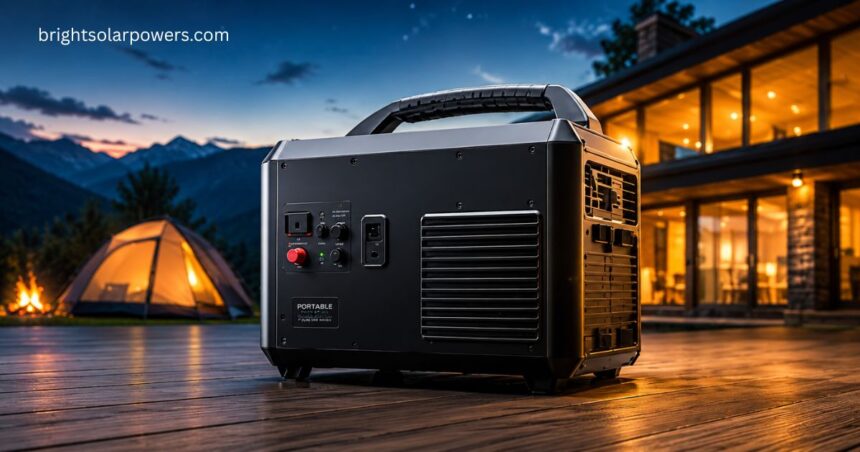
A solar generator is a portable power system that turns sunlight into usable power for your home or your next trip. Unlike a fuel-based generator, it never burns anything, so it stays eco-friendly from the day you plug it in.
I have tested a few units myself, and the biggest surprise was always how quiet they run next to old petrol machines.
Inside every unit sits a compact electronic box built around three main components: a charge controller, a battery pack, and an inverter. The solar panel charge controller manages the energy flow coming in from external solar panels, so the battery never takes in more than it can safely hold.
Most brands now use lithium-ion or lithium iron phosphate cells inside the internal battery pack, since these lithium batteries last longer than older types.
The sun supplies free raw energy, and the system turns that into a usable energy source for daily life. Solar panels capture DC battery power, and the inverter changes it into proper AC electricity for your AC devices at home.
Compared with gas generators, the upfront investment cost feels higher at first, but the running cost stays low, which makes these models more economical, cuts down on fuel replacement, avoids greenhouse gases and carbon emissions, and still gives you the same silent operation buyers expect from good batteries.
How Does a solar generator Work?
The process starts the moment light hits the panel. PV solar cells are made from silicon, a semiconductor material that reacts the second photons from sunlight strike its surface.
This reaction knocks electrons loose, and they move through a closed circuit to create direct current, also known as DC power.
That raw DC electricity does not arrive as a steady stream, since panel output rises and falls with the weather. A solar charge controller, often an MPPT solar charge controller, matches the incoming voltage with the battery voltage so nothing gets damaged.
This part stops overcharging, keeps optimal voltage and current levels in check, and sends only regulated voltage toward the in-built battery pack.
Once the battery pack takes in this stored DC power, it holds that energy inside its storage unit for whenever you need it.
Many brands still rely on lithium-ion batteries, a technology that became common in solar setups around 2016, though some cheaper systems use lead acid batteries because they stay affordable at first.
Over the long term, the pricier lithium option usually wins on durability, and the charge controller manages both charging and discharging based on the type of battery fitted inside.
The final job belongs to the inverter, which balances the power dynamic between stored power and daily use. It takes the low DC current from the battery and turns it into alternating current, or AC, so your household appliances run without trouble.
DC items skip this electricity conversion step, but everything else, from lights and fans to refrigerators and laptops, needs that converted AC power and works like any other appliances in the house.
In short, solar energy moves through the solar panels into the battery, gets stored in the built-in battery, and comes out ready to power your home appliances and other electrical devices.
These three components work together as one fully functioning system, turning sunlight into something your whole house can use.
Gas Generator vs Solar Generator
Anyone who has run both machines side by side knows the difference fast. Gas generators and fuel generators burn petrol, diesel, or gas, and they stay noisy and contaminating the whole time they run.
Solar generators stay noise-free, portable, and eco-friendly, since they only need the sun to work.
On paper, solar looks costlier at first glance, and the upfront investment does sit higher than a fuel unit’s power source.
But the full cost picture changes once you count fuel cost, operating cost, and maintenance cost together, since a fuel machine needs regular oil changes, a fresh fuel filter, and new spark plugs to keep running.
A solar unit skips all of that, which is exactly why people call it more cost-effective and why the long-term savings add up so fast.
Solar renewable energy costs nothing once the panels are installed, since sunlight stays completely free.
This keeps the noise level near silent, protects the environment from carbon emissions, and gives owners real long-term savings compared to buying fuel again and again. I have watched neighbours switch after just one bad fuel shortage and never look back.
Battery backup is where solar really pulls ahead, since a good LiFePO4 battery or set of lithium batteries keeps power ready even after the sun goes down.
Availability stays strong through the night and on cloudy days too, as long as the batteries charged earlier in the day.
Appliance compatibility stays wide as well, with AC output covering most devices and some models even offering DC ports for extra flexibility.
Each option suits a different job. Fuel units work well for short-term power backup, construction sites, and remote field use, while solar units shine for off-grid cabins, RVs, homes, emergency backup, and outdoor trips.
Emergency situations like floods, blackouts, hurricanes, and earthquakes often cut off the fuel source completely, which leaves solar as the only working option, thanks to innovative technologies that pair lithium-ion and lead acid batteries into one green energy backup source.
Lifespan settles the argument for most buyers. A fuel machine runs 5-10 years, while a solar unit’s battery lasts 10-15 years and its panels can keep working for 25+ years without much trouble.
Once you factor in every one of these points, it becomes clear why so many households now choose solar over relying on fuel and worrying about whether they can even rely on fuel during the next outage.
How Much Does a Solar Generator in India Cost in 2025?
Buyers in India in 2025 can expect prices anywhere from Rs. 10,000 on the low end to over Rs. 52 lakh for the biggest home systems. The cost shifts a lot depending on brand, battery capacity, and inverter size, along with the charge controller type fitted inside.
Solar panel specifications, import duties, and dealer margins all push the final number up or down as well.
Real prices also move with market demand, location, and government policy changes, so what one buyer pays this month may look different next month.
This guide leans on general market research rather than fixed pricing, and it reflects standard installation requirements across the country.
SolarSquare does not manufacture, sell, or install solar generators, and this piece does not endorse any single brand.
Top 4 Solar Generators in India in 2025
A handful of brands now dominate the Indian market for solar power generators, and four names come up again and again: Jackery Explorer, BLUETTI, EcoFlow, and Goal Zero.
Each brand sells units with a slightly different mix of top features, and the cost range across them varies quite a bit.
Jackery Explorer 3000 Pro stands out for fast charging, reaching full power in just 3-4 hours, and it still performs in cold weather as low as -20°C / -4°F. It ships with a 3 years warranty plus an option for extended warranty of 2 years, priced around Rs. 6,51,000.
The BLUETTI AC-180 answers back with a 5 Years warranty, a long battery capacity of 1,152 watt hour, and fast charging from 0 to 80% in just 45 minutes, thanks to its lithium iron phosphate battery built for 10+ years of service, all around Rs. 90,000.
EcoFlow Delta 3 Plus pushes charging even further, going 0 to 100% in only 56 minutes, with 1,024 watt hour of storage strong enough to run home appliances like refrigerators, TVs, computers, and hairdryers. It also suits outdoor use and works well for RVs, priced near Rs. 1,21,000.
Benefits of a Solar Electric Generator
Living near a road with heavy traffic taught me how much noise pollution a fuel unit adds to a neighbourhood, and switching to solar removed that problem overnight.
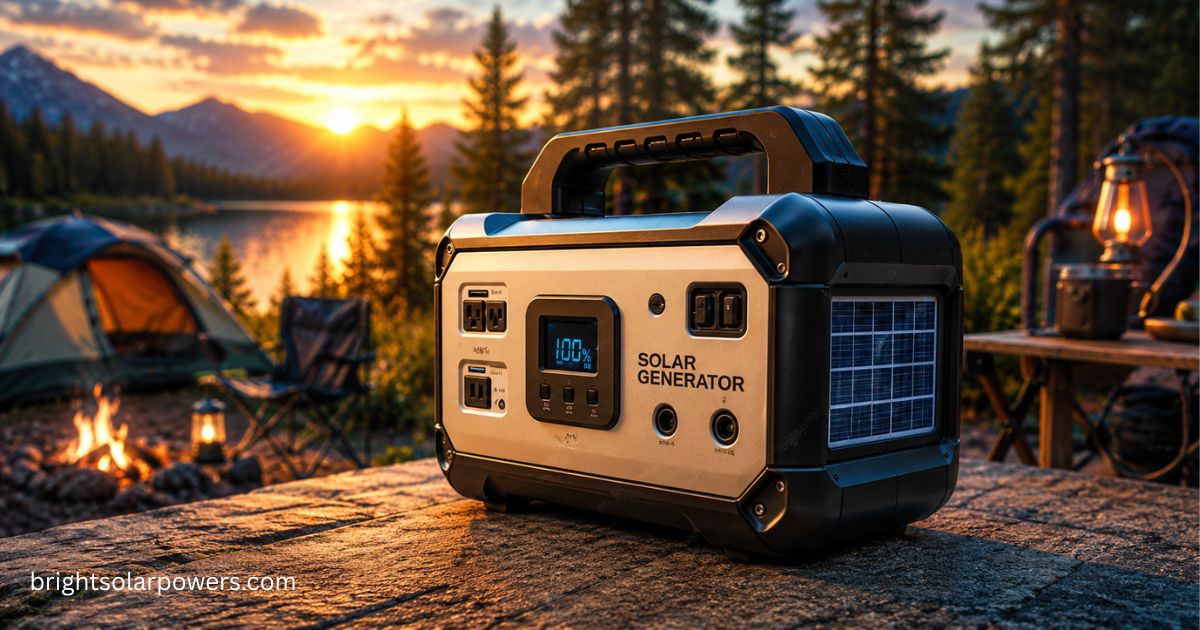
A solar unit stays eco-friendly, keeps operation cost at close to nil, and needs only minimal maintenance to keep running. Its compact, portable build also means you can carry it along on trips, whether that means hiking, camping, or spending a weekend in the mountains.
Silent operation is one benefit that surprises first-time buyers the most, since gas generators rattle and hum while solar units stay quiet, avoiding carbon emissions entirely.
Running on power that stays infinite and non-polluting, a solar unit skips oil and a fuel tank altogether, and its zero operation cost comes purely from sunlight.
It also stays safe for indoor use, since it never releases carbon monoxide or fumes, which is one more reason solar generators keep winning over cautious buyers.
What Are the Disadvantages of a Solar Generator?
No system is perfect, and solar has its own weak spots worth knowing before you buy. The higher upfront cost compared to gas generators remains its biggest limitation, even though it turns cost-effective once you look past the first year of operating cost.
Minimal maintenance helps close that gap over time, but the initial price tag still puts some buyers off.
Weather dependence is the second issue, since solar panels need sunlight to work well, and their performance drops on weather dependent days with heavy cloud cover. This can also slow how fast you can install and start using the system in the first place.
A slower response to sudden needs rounds off the list too, since a battery low or empty unit cannot recharge instantly the way refueling a gas generator with fresh fuel can.
When Should You Invest in a Solar Power Generator?
Timing matters more than most buyers realise. Anyone living in a busy city with a reliable grid rarely needs to spend lakhs of rupees on a full solar setup for the home, since that spending stays largely unnecessary when on-grid rooftop solar through housing societies already covers daily energy needs for most homes.
The picture flips completely for people in remote off-grid locations, where a cabin, workspace, or remote area sits too far from the power grid, or where connecting one up would prove far too expensive.
Anyone who loves to camp or hike in the mountains also benefits from cheaper models that run LED lights, portable fridges, drones, and laptops, along with other gear, in remote locations where grid access simply does not exist.
Rural areas that deal with frequent power cuts round off the list of ideal buyers, since a solar unit works as a steady backup solution during blackouts and periods of grid instability.
It keeps essentials like lights, fans, routers, phones, and medical devices running the entire time, freeing a household from fuel dependency for good.
Top 5 Whole House Solar Generators
Testing whole-home units feels different from testing small portable ones, since the stakes rise the moment your fridge or medical equipment depends on the output.
At number five sits the EcoFlow Delta Pro 3, built around a 4,996Wh LiFePO4 battery and a 4,000W AC output that suits both home backup and mobile power setups.
Its IP65 rated shell, rolling wheels, and telescopic handle make it easy to move, and its dual 400W solar panels allow fast charging even on cloudy days, thanks to smart MPPT algorithms.
It also connects to a smart home panel and supports split-phase 240V for heavy loads like dryers or well pumps, with built-in temperature control that protects the unit under high load use, though it stays expensive and heavy overall.
Number four, the Jackery Home Power 3000, carries a 3,072Wh battery rated for 4,000 cycles, meaning it can last a decade or longer with regular use. Its 3,600W continuous output runs refrigerators.
Sump pumps, microwaves, and power tools together, helped by a very low self-discharge rate from Jackery’s zero drain technology.
Along with flexible AC charging, solar charging, car charging, and hybrid AC+DC modes; it does lack built-in wheels, though, and trails behind rivals on ecosystem expansion and 240V support.
Number three, the Bluetti Apex 300, brings a 2,764Wh battery rated past 6,000 cycles, good for 15+ years of heavy use, alongside a 3,840W output with true split-phase 120V/240V support for kitchen appliances, water heaters, compressors, and well pumps.
Its dual MPPT solar charging allows up to 2,000W solar input, and its UPS function gives near instant switching during outages, which matters for home office equipment and medical devices.
Its modular system even expands up to 58 cubic feet, turning a house into a full off-grid energy powerhouse with real industrial-grade reliability and strong capacity potential.
Number two, the original EcoFlow Delta Pro, holds a 3,600Wh battery with a sine-wave output strong enough for most household essentials, backed by wide charging flexibility through AC charging, EV charging, generator input, and solar input.
Owners can add expansion batteries to reach over 25kWh, manage multiple circuits through the smart panel, and rely on its 400W foldable solar panel, which stays waterproof and works even in partial shade, making it a strong pick for homeowners and RV users who want a premium level power solution.
Even though rivals now beat it on cycle life and scalability while it still leads on user interface, mobile app stability, and ecosystem integration, aside from its higher price and weight.
Number one, the Growatt Helios 3600, tops the list with a 3,686Wh battery, a 3,600W pure sine-wave output, and a 4,500W+ mode for heavy appliances that smaller units simply cannot run.
Its ultra-fast charging pulls up to 3,600W from a 240V outlet and 200W solar input, reaching a full charge in as little as 1.5 hours, and the system stays expandable up to 36kWh.
Built-in wheels, cold temperature charging support, a fast UPS switchover, and the Growatt app for monitoring round out the package, and even with a few minor bugs in the app, its hardware performance stays unmatched in its price category, making it the clear winner as a complete whole home solar generator package.
FAQS About Solar Generator
Can a solar generator run a house?
Yes, but only if it has enough capacity and battery power to match your home’s needs. Smaller units can run a few appliances, while a whole-home system is needed for full house backup
How long will a 3000 watt solar generator run?
Runtime depends on your battery size (watt-hours) versus your power draw. A 3000Wh battery running a 1000W device lasts about 3 hours, but lighter loads can last much longer.
Can 3kW solar run AC?
Yes, a 3kW solar system can usually run a small window or mini-split AC unit. Just make sure the surge wattage doesn’t exceed your system’s output capacity.
Is a solar generator AC or DC?
It stores DC power from the solar panels and battery, but uses a built-in inverter to convert it to AC. This makes it usable for everyday household appliances.