

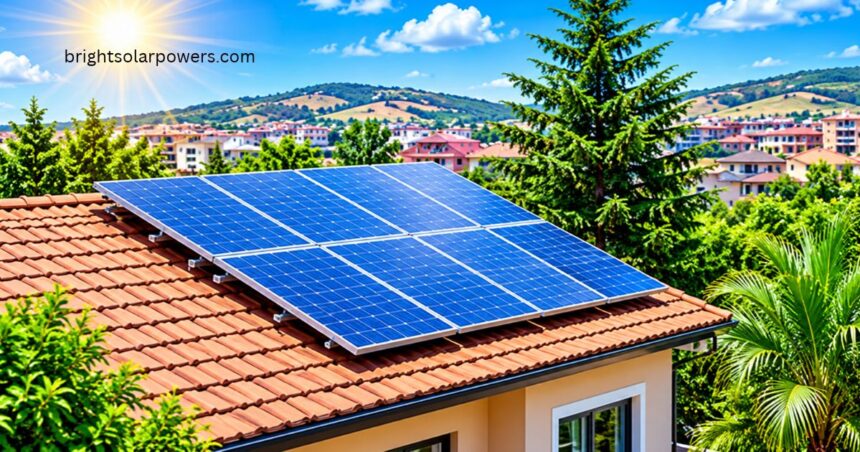
Affordable rooftop solar gives Honolulu families a real shot at low-cost clean energy and relief from the nation’s highest electricity prices.
This guide breaks down costs, permits, utility rules and incentives in plain words. My goal is simple: help you read any offer with checkable numbers and fewer surprises.
Affordable Rooftop Solar
What counts as an affordable system?
A system counts as affordable when its payback period stays short and its annual savings beat what you pay each month. Honolulu makes that math easy because Hawaii carries the highest household energy costs in the country. Even a modest system can erase a big slice of your electricity bills.
Start with twelve months of utility bills from Hawaiian Electric, then check how much of that use solar panels would cover.
A residential solar affordable rooftop solar offer that skips this step tells you very little. I always tell friends that energy affordability begins with their own numbers, not a salesperson’s slide.
How high are power prices in Hawaii?
Hawaii households paid about 48 cents for each unit of power in July 2026, while the national average sat near 18.3 cents. Federal data backs those figures. That gap pushes energy costs here far above the mainland.
Hawaiian Electric reports solar on about 27 percent of residential accounts and roughly half of Oahu’s single-family homes. That level of solar penetration shows neighbors already trust rooftop solar systems. Heavy solar adoption also drives the solar contagion effect, because neighbor visibility nudges other owners to follow.
How much does a Honolulu system cost?
What do installers charge?
ConsumerAffairs estimated a typical 8-kilowatt Hawaii system at about $26,161 before incentives in 2025. That price works out to a cost per watt near $3.27.
Your own system costs will move with your roof, your electrical panel and your installer.
Ask for install prices split into equipment, labor, permits and utility fees. The Lawrence Berkeley National Laboratory publishes the Tracking the Sun report, which studied 3.7 million distributed photovoltaic systems through 2023.
Its pricing trends show the median install price falling 10 to 20 cents per watt yearly, even in inflation-adjusted prices, so use that market data as a benchmark against local soft costs.
What should a good quote show?
A good quote lists the system’s size, panel brand, inverter type, warranty and the full price in plain numbers.
Collect at least three solar quotes so you can spot outliers. Use a simple price comparison by dividing each total by its watts.
Beware of rock-bottom offers, because very thin installer margins can mean thin service.
Transparent pricing from licensed solar installers should show permit fees, the site survey and every inspection. My rule of thumb: if a company dodges those lines, I move on.
Which incentives and savings still apply?
Which incentives still help?
Hawaii still offers a state income tax credit worth 35 percent of system cost, capped at $5,000 for a single-family PV system.
Some sellers still quote the old investment tax credit, so ask them to list all financial incentives in writing.
Many shoppers hunt for rebates, but Hawaii’s biggest rewards come as tax credits and battery bill credits. Hawaii lawmakers also adjusted the state credit starting in 2027, so check the current terms.
Is rooftop solar worth the cost?
Often yes, because high power rates keep your solar savings large compared with the net price after incentives. Run that math over ten and affordable rooftop solar twenty-five years. Remember that export rates can change, so build a cautious case.
You can pay cash, take solar loans, or sign solar leases, and each path changes your upfront expense and solar ownership rights.
Watch for loan financing fees that installers fold into the price, and note that a high cost of capital shrinks your consumer savings.
Policy advocate Nick Josefowitz hopes solar gets so cheap that clean energy ownership needs no complex solar financing.
How do permits and utilities affect price?
How does permitting work in Honolulu?
Honolulu requires building permits for every solar installation, and your contractor files them through the city’s online system.
City planners told state lawmakers in 2024 that this system offers the same instant functionality as SolarAPP+. That speed matters because local permitting often decides how fast your project moves.
During plan review, officials compare your drawings with the National Electrical Code and local building codes. A digital permitting process saves weeks only when your paperwork arrives complete. Missing documents trigger bureaucratic delays.
Why does paperwork raise solar prices?
Red tape raises prices because every delay adds labor, repeat visits and lost customers. Solar advocates call the extra paperwork a paperwork tax.
David Roberts of Volts says rooftop solar costs about three times as much in the US as in Australia, mostly for that reason.
Nick Josefowitz of Permit Power says the US affordable rooftop solar has roughly 20,000 local offices, each an authority having jurisdiction, or AHJ, and nobody knows the exact count.
Andrew Birch says Australia rooftop solar runs about a dollar a watt, and he argues the market needs no subsidies when rules stay open. Some offices still demand notarized documents, and uneven electrical code readings add cost.
How do delays hurt homeowners?
Long waits push shoppers to cancel, and each lost sale raises a company’s customer acquisition cost. Birch says about 10 to 15 percent of buyers cancel after 30 days, and that cancellation rate doubles at 60 days. Speed saves everyone money.
Faster approvals also shrink customer acquisition effort, because shoppers decide quickly on a cheaper mass-market product. Birch notes that systems costing $7,000 to $12,000 sell like quick credit card purchases. Systems near $30,000 need long education and slow closings.
What does Hawaiian Electric require?
Hawaiian Electric handles interconnection for new systems through its Smart DER programs. Customers pick an export track that pays bill credits for affordable rooftop solar excess power or a non-export track that keeps on-site power at home, much like a zero-export design. Every participant needs an advanced meter.
Your installer files the interconnection agreement and the utility approval request through Hawaiian Electric’s online tool.
Hawaii closed traditional net metering to new customers in 2015, so new quotes should model electricity export at current program rates. Ask for a written timeline for the grid connection step.
Why do utilities limit exports?
Utilities limit exports when grid congestion threatens a local circuit. Midday sun can overload a neighborhood distribution grid when many homes push power at once. Curtailment then trims output to keep service safe.
California handles this with limited generation profiles, and experts also point to flexible interconnection and connect and manage rules as smarter fixes.
A smart inverter follows those instructions affordable rooftop solar automatically, while a microinverter converts power right at each panel. Both include anti-islanding protection, which shuts the system off during an outage.
What equipment should I choose?
Do I need a battery?
A battery is optional, but energy storage keeps your lights on during outages and earns extra credits in Hawaii. Hawaiian Electric’s BYOD affordable rooftop solar Plus program, which opened on May 15, 2025, pays a cash incentive and bill credits for solar plus storage homes.
A home solar and batteries package costs more, so request a battery attached quote and a panels-only quote side by side.
Berkeley Lab found that 12 percent of residential systems in its 2023 sample paired battery storage with panels.
Most of those homes chose one unit holding 10 or 13.5 kilowatt-hours, which lasts about two to 2.7 hours. Ask your installer for the real storage duration and the backup power you will actually get.
How big should my system be?
The median residential system size reached 7.4 kilowatts nationwide in 2023, up from an average of 2.4 in 2000. Your electric affordable rooftop solar use should set your own system size, not a sales script. More generating capacity costs more, but it also covers more of your bill.
Better module efficiency explains much of that growth, because each panel makes more power from the same roof space.
Residential photovoltaic systems usually cover 20 to 40 percent of the roof, according to the report’s PV roof coverage data.
The stable roof coverage ratio since 2010 shows that higher solar efficiency lets owners produce more power without larger footprints.
Which buildings and roofs work best?
Berkeley Lab found that 94 percent of 2023 residential systems sat on detached single-family homes. Taller multi-story homes often host larger arrays, so measure your roof before you pick a design. Salt air makes equipment quality important.
Licensed roofing contractors can check roof age before solar roofing work begins. Businesses use the same logic for commercial solar, where non-residential systems have a median size of 26 kW. Fix an aging roof first, because removing panels later costs money.
Can tenants and condo owners go solar?
What are the plug-in options?
Renters often cannot install roof systems, so plug-in solar and balcony solar give them a smaller option.
These portable solar units connect to a standard household outlet, and tenants can take them along when they move. Apartment dwellers in Honolulu should confirm building and utility rules before buying.
About one-third of US households rent, and landlords and homeowners associations can slow things down. Many European countries affordable rooftop solar give tenants solar access rights that block unfair refusals. In Hawaii, get written HOA approval before you spend a dollar.
What do other places allow?
At least 1 million homes already run Germany balcony solar setups, according to WRI. Buyers pick up off-the-shelf kits at big retailers for about $590 and use them right away.
These solar kits usually cap output near 800 watts, yet they still run a large refrigerator.
That success proves plug-and-play solar can scale when rules stay simple. Utah passed Utah House Bill 340 in March 2025, which created affordable rooftop solar a regulatory category with size limits of 1,200 watts.
Other states are weighing enabling legislation, and Hawaii households should watch state legislation before they buy any device.
Why does fairness matter for solar?
Rooftop systems have mostly served higher-income homeowners with credit and capital. Wider equitable access and better energy access let more families cut bills. That goal sits at the heart of energy equity.
Low-income households need smaller affordable rooftop solar upfront costs, and income-qualified programs can deliver extra help.
Cities can run outreach campaigns and demonstration events. Gear tested to safety standards by Underwriters Laboratories gets appliance-level safety treatment under electrical safety codes.
What can lawmakers change?
How can permits get faster?
Automated permitting can approve code-compliant homes the same day, and instant permitting already works where cities adopted it.
California requires every city to automate, while Texas and Florida allow third-party permitting by licensed engineers. Hawaii lawmakers have debated similar rules.
Standardization makes that speed affordable rooftop solar possible, since standardized permitting lets installers skip the pre-install site visit.
Permitting software gives small offices the tools, and state minimum standards make adoption automatic instead of voluntary.
Streamlined registration and permitting reform remove regulatory barriers, and state governors can champion both.
How should utilities change?
Josefowitz says some New Jersey homeowners faced nearly $20,000 in grid upgrades, while data centers often get faster treatment.
A public utility commission can order clearer timelines, and updated utility regulations can protect families. Fair rules would give homes the same speed.
Birch wants an open energy market where homes sell grid services and ancillary services. A virtual power plant, or VPP, lets thousands of batteries earn those payments together. That extra income improves the economics without a government handout.
How do clear rules help everyone?
Clear rules lift grid utilization, which Josefowitz says could climb from about 50 percent toward 70 percent. They also let distributed energy compete fairly.
Birch calls his proposed rulebook the Electric Protocol, and it gives every technology access to grid pricing and time-of-day pricing.
Lower utility interconnection costs and less regulatory uncertainty help installers plan ahead.
Municipal utilities, rural electric affordable rooftop solar co-ops and publicly owned utilities often follow state oversight, so reforms can reach them too. Island grids need that planning.
Do imports change the price?
Tariffs add cost, but they matter less than paperwork. Josefowitz says panel prices now run $50 or less per panel, and permit paperwork costs far more than the panels do. Birch agrees that local labor and sales hold most of the value.
The push for domestic manufacturing and a stable supply chain still matters for jobs and security. The Department of Energy and affordable rooftop solar other federal guidelines can help standardize products across states.
Birch cites the International Energy Agency’s view that solar is the lowest-cost energy available, which supports a cost-effective energy plan at home.
How does solar help the environment?
What does it do for the environment?
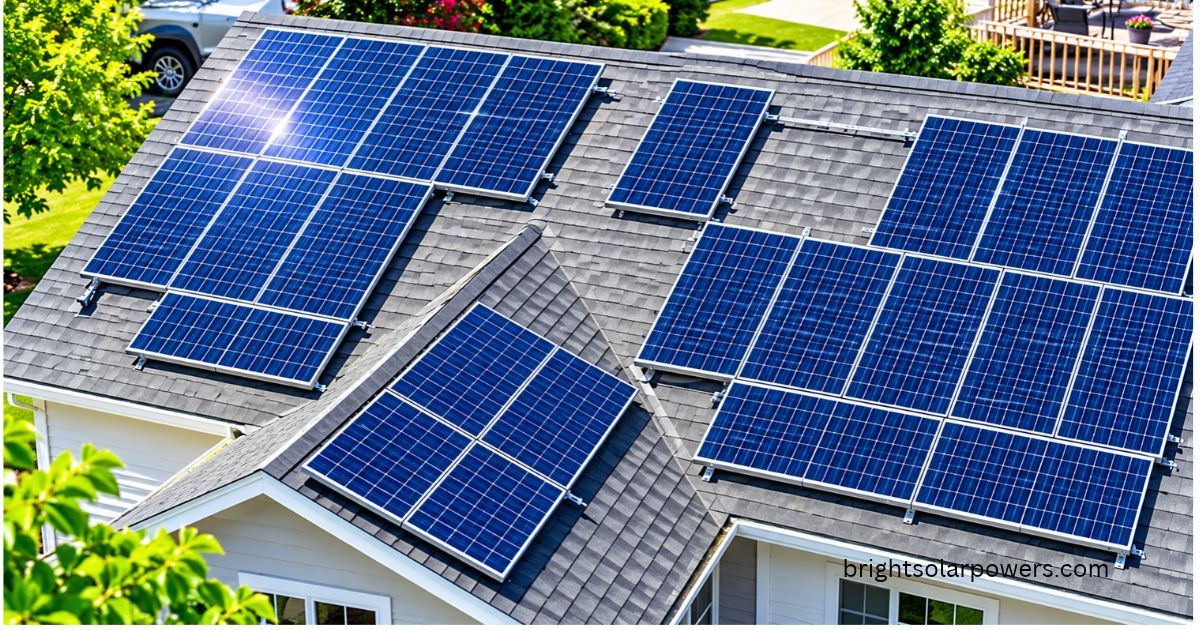
Rooftop solar cuts your carbon footprint because sunshine replaces some of Hawaii’s imported oil power. It also reduces other environmental impacts of burning fuel. Pair it with energy efficiency upgrades like LED lighting for bigger savings.
A home array also supports clean energy and renewable energy growth across the islands. Sustainable roofing materials can help roofs affordable rooftop solar last longer under panels. Add EV charging at home and your solar output can displace gasoline too.
How does it support the wider energy picture?
Hawaii imports fuel and cannot borrow power from the mainland, so each home adds to energy security. Plug-in gear, big roofs and community solar all drive the energy transition.
WRI estimates small devices could offset thousands of megawatts of electricity demand across U.S. energy supply.
Hawaii’s renewable energy goals push utilities toward a fully renewable grid, and the wider clean energy transition needs affordable rooftop solar homeowners to join in. National climate action also depends on practical steps like these. Start with one honest quote.
FAQS About affordable rooftop solar
Can I still claim a federal credit in Hawaii?
No, the 30 percent homeowner credit from Washington ended for systems placed in service after December 31, 2025. Hawaii’s own credit still pays 35 percent of cost, up to $5,000. Confirm current rules with a tax advisor.
Does Hawaii still offer net energy metering?
Traditional net energy metering closed to new Hawaii applicants in 2015. New customers use the Smart DER tariff, which began on April 1, 2024. It offers export and non-export choices.
Can I add a battery after installing panels?
Yes, Hawaiian Electric’s BYOD Plus program accepts customers who add a qualifying battery to an existing system. It pays a one-time cash incentive plus ongoing bill credits. The older Battery Bonus program closed to new participants on July 1, 2024.