

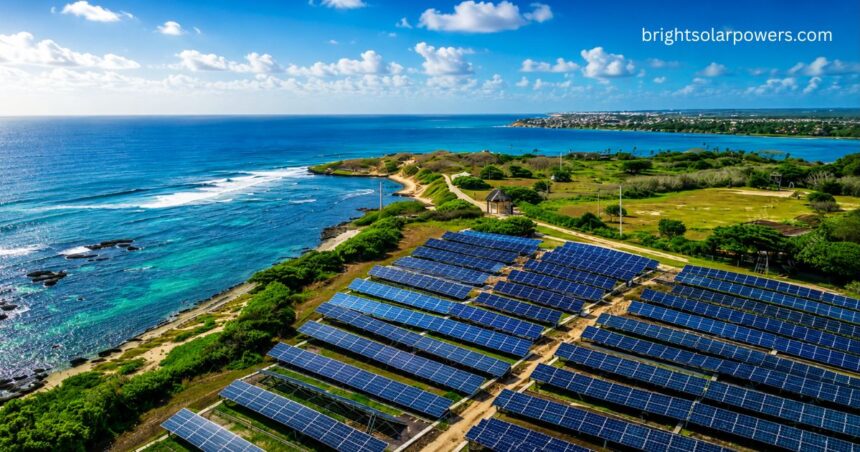
I still remember the first time I read about the Khavda solar park and thought it sounded too big to be real. Spread across 726 square kilometers in Gujarat, this hybrid marvel sits in the salt desert of the Rann of Kutch, where the sun beats down with relentless desert heat almost every day of the year.
Announced in 2021, the project has grown into the world’s largest renewable energy colossus and one of the most ambitious solar energy builds anywhere on the planet, and by 2029 it plans to stretch across roughly 280 square miles near the Pakistan border.
What makes this site stand out is simply its scale, since the finished park will be five times size of Paris and hold a generating capacity strong enough to power a small country like Austria.
India’s economy is racing ahead faster than China’s right now, and solar power has become the backbone of that breakneck rush toward industrialization.
Installed solar capacity has grown by 40 percent a year and crossed 150 gigawatts in March, with targets aiming to double that figure again by 2030.
Khavda Solar Park
Cheap solar has turned into one of the biggest stories in global energy, and Kingsmill Bond, an energy strategist and director at the U.K.-based think tank Ember, believes India is skipping the fossil-fuel detour that the West and China once had to take.
“China built on coal, India is building on sun,” he often says, adding that other emerging economies could soon follow.
With 60 million panels expected on site, the Khavda solar park will combine solar and wind to become the most powerful supplier of clean power from the sun anywhere in the world.
Picture a horizon where solar panels stretch further than the eye can see, replacing what a nuclear power station or an old coal power station used to provide.
Once fully switched on, the site is expected to electrify around 18 million homes, cementing India’s place as the world’s most populous nation to attempt a genuine renewable energy transition at this scale.
Analysts studying the region agree that 30 gigawatts of sustainable energy from one location marks a turning point, and standing anywhere near that stretch of sky and sand, it’s hard not to feel like you’re watching history get built in real time.
Location & Site Details
Nestled in Gujarat, a state already known for its wind farms, the Khavda project sits on 726 km² of vast empty land that most people would never choose to build on.
The nearest town is 70 km away, and the site sits barely 1 kilometer from the border with Pakistan, making it as much a geopolitical flex as an energy project.
In 2023, eyebrows went up when long-standing military protocols banning construction within 6 miles of the border were quietly set aside just before Adani secured the land, and a construction ban that once blocked this exact stretch simply disappeared.
Anyone who has visited a desert in peak summer knows what temperatures here really mean, since the mercury regularly hits 50°C, or 122°F, turning the ground into an open oven.
Dust storms roll through without warning, coating every surface in fine grit, while water scarcity is so severe that a single bucket can feel worth more than gold.
Despite the toughest spots imaginable, relentless sunshine and steady winds make this patch of salt flat oddly perfect for solar and wind power.
Capacity & Scale
By April, the site had already installed 9.4 gigawatts of capacity, making it the clear jewel in the Adani crown among India’s renewables. This hybrid titan khavda solar park combines 26 gigawatts solar with 4 gigawatts wind turbines, since sunlight fades at night but wind rarely stops.
Together, both sources are meant to deliver a steady stream of power around the clock rather than the usual stop-start rhythm of a single renewable source.
Once complete, the entire park is expected to reach a full 30 gigawatts by July 2026, covering close to 10 percent of India’s renewable goals in one single location.
That number alone puts the scale of this project into perspective compared with almost anything else being built globally right now.
Technology & Infrastructure
One detail that genuinely impressed me is how Adani solved the water problem here, since waterless cleaning robots now dry-clean panels every night without touching a drop of freshwater.
These robots brush off dust, sand, and stubborn desert salt that would otherwise cake up under the heat and cut output.
To keep the grid stable after sunset, engineers are assembling khavda solar park a massive battery storage system on site, big enough to discharge over a gigawatt of nighttime power to the grid for three hours every evening.
It’s a simple but clever fix, and it shows how much thought has gone into keeping this place running long after the sun goes down.
Investment & Cost
None of this comes cheap, and the price tag runs to roughly $19.6 billion, or about 1.6 trillion rupees, which sounds enormous until you look at what it’s expected to deliver.
At full output, the park should generate 81 billion kilowatt-hours of electricity annually, enough to supply 18 million Indian homes or power all of Belgium for a year.
For a project this size, that kind of output represents genuinely seismic returns on the original investment.
Environmental Impact
Every big project has a flip side, and here it’s the local wildlife living right next to this development. The Khavda complex sits close to the Rann of Kutch Wildlife Sanctuary in Pakistan, home to threatened species such as striped hyenas, desert lynx, jackals, and desert foxes, plus critically endangered great Indian bustards that call these desert salt flats home.
Migrating waterfowl flying the Central Asian Flyway all the way from Siberia to the Indian Ocean also pass directly overhead each season.
On the positive side, this single park is expected to pull 58 million tons CO2 out of the atmosphere every year, roughly equal to planting a forest size of Mumbai or taking 12 million gas guzzlers off the road.
Jobs & Economic
Growing up hearing stories about rural Gujarat, power was always treated as a power luxury rather than something you could count on, and blackouts regularly cut kids off from homework, farmers off from irrigation, and doctors off from life-saving tools.
That picture is finally starting to change as 18 million homes get connected to this new supply. On the ground, engineers, technicians, and locals maintaining panels and turbines have created 15,200 jobs so far, giving 15,200 workers steady jobs and real futures instead of short-term work.
Beyond the paychecks, this project feeds directly into khavda solar park Gujarat’s economy and India’s wider push toward energy independence, since importing less coal means fewer coal imports and billions saved that would otherwise flow overseas.
It’s the kind of quiet, grid-level change that doesn’t always make headlines but genuinely reshapes daily life for the people living closest to it.
Challenges & Obstacles
Building something this size in the middle of nowhere was never going to be simple, and Khavda proves that every step of the way. Sandstorms regularly bury equipment, punishing heat fries circuits, and with the nearest town sitting 70 km away, even basic logistics turn into a daily grind.
Because the site sits so close to the Pakistan border, border security forces keep constant watch over the desert, adding extra red tape to an already demanding build.
Technically speaking, syncing 26 gigawatts solar with 4 gigawatts wind into one stable grid is a genuine puzzle, since grid stability depends on getting the timing exactly right, and a single misstep could leave the lights dim for thousands of homes.
On top of that, costs ballooning past the original $19.6 billion feels almost inevitable once delays and other desert curveballs get factored into the final bill.
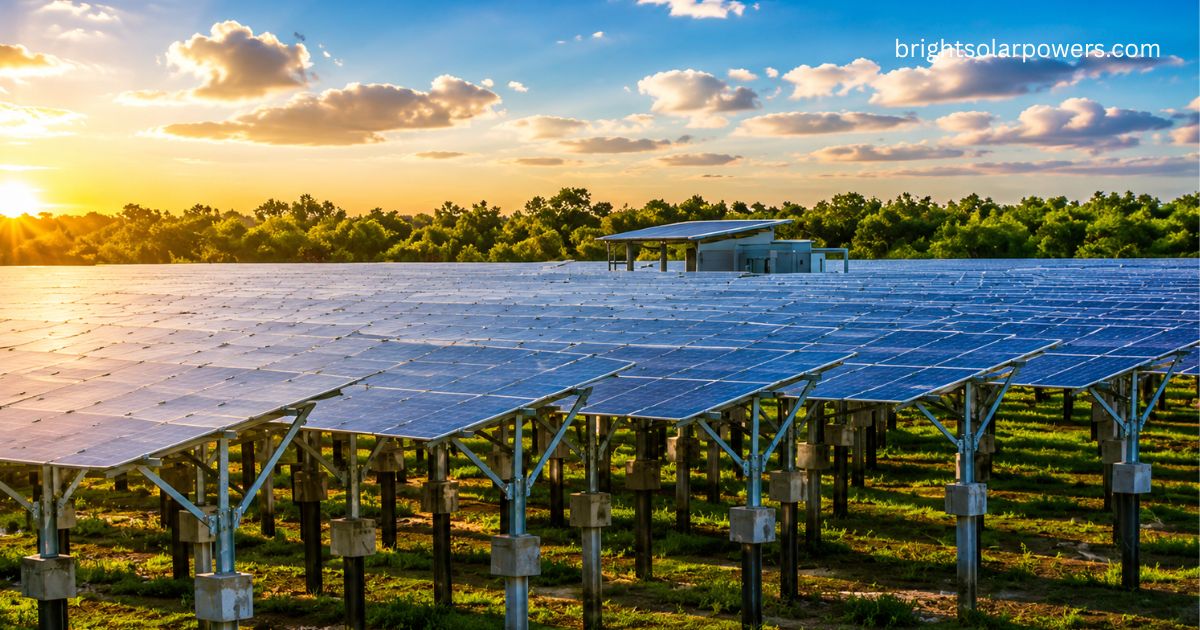
India’s Broader Solar Context
Leading this entire push is Gautam Adani, who started out in 1988 as a small commodity importer before building the Adani Group into the largest private power producer in the country and the world’s second largest solar developer.
Long seen as close to prime minister Modi, Adani has often been accused of benefiting from Modi’s patronage on his way to becoming Asia’s richest person. In 2024, the U.S.
Department of Justice accused Adani executives of paying bribes to Indian government officials in exchange for lucrative supply contracts, and of hiding this from investors, though the case dropped this year after talk of fresh U.S. investment, with officials denying any direct link.
Despite headlines about solar, India still leans hard khavda solar park on coal and other fossil fuels for its baseload power, and coal alone still covers around 70 percent of total power generation nationwide.
That reliance helps make the country the third largest carbon dioxide emitter behind China and the U.S., and fuels some of the worst in the world urban smogs.
Even so, an ambitious coal mining output target has quietly been dropped, coal-fired power stations are being built far less often, and the IEA expects coal’s share of the mix to slide below 50 percent by 2035.
On paper, solar already makes up 28 percent of India’s total installed electricity generating capacity, yet it only delivers about 9.4 percent of actual electricity supply to customers.
The outdated grid simply cannot transmit everything captured across the deserts of western India to the urban heartlands that need it, and last year nearly 40 percent solar power output failed to reach anyone at all.
Charith Konda, an India-based energy researcher at the Institute for Energy Economics and Financial Analysis, points out that transmission projects usually take about five years to finish while solar farms go up in just 18 to 24 months, which explains why the grid keeps falling behind.
To close that gap, the Ministry of New and Renewable Energy has committed roughly $100 billion toward a national grid expansion of 29 percent by 2032.
Much of that money will go into a network of Green Energy Corridors linking major solar hubs directly to industrial centers and population centers across the country. It’s a huge bet, but without it, all this new solar capacity risks sitting unused out in the desert.
Storage is the other half of the puzzle, since renewable energy storage has to cover both nighttime demand and the cloudier monsoon season, according to Debajit Palit of the Chintan Research Foundation in New Delhi.
One fix already underway is pumped storage, where two reservoirs at different heights use surplus grid power to push water uphill and then release it through turbines whenever power is actually needed.
A 1.4-gigawatt project on the Chambal River’s Gandhi Sagar reservoir in Madhya Pradesh is due to start later this year, alongside another 3 gigawatts scheme near Mumbai set for 2030, and the Central Electricity Authority has already identified 120 potential pumped-storage sites capable of holding a combined 180 gigawatts.
Batteries are the second big lever here, and Kostantsa Rangelova, Ember’s global electricity analyst, notes that battery prices have fallen by khavda solar park58 percent since 2023, which is finally making round-the-clock solar electricity realistic.
The Indian government has introduced a new battery storage requirement forcing fresh solar farms to add storage before connecting to the grid.
There’s a catch though, since India still depends heavily on China dependency for silicon materials and imports roughly three-quarters of the lithium-ion batteries and photovoltaic cells it actually uses.
Space is another real constraint in such a densely populated country, where land area is already stretched thin across competing needs.
In a few regions, farmers are being offered agri voltaics, letting them keep growing crops underneath raised panels instead of giving up their fields entirely.
Elsewhere, though, peasant farmers have faced evictions to make way for new solar farms, sparking real protests on the ground.
Optimists still believe India can eventually meet 90 percent electricity demand straight from solar once storage catches up properly.
The steel industry remains the toughest holdout in this whole decarbonization story, since blast furnaces still need coal, and India’s steel manufacturing plans call for double production within a decade.
Elsewhere the picture looks brighter, with 42,000 miles of broad-gauge railway track now almost fully electrified, and electric rickshaws now making up 60 percent of tuk-tuk sales, putting India ahead as a genuine world leader in that one small but telling corner of the transition.
Conclusion
In many ways, Khavda works as a proof of concept for what’s possible when tech and tenacity meet a harsh empty desert instead of avoiding it.
The same formula could just as easily play out in the Sahara, the Australian outback, or Chile’s Atacama, turning any similarly forgotten stretch of land into its own power hub.
Locally it means jobs and growth for the region, while globally it offers a genuine blueprint for a wider green revolution.
Analysts still believe India, as the world’s most populous nation, is close to becoming the first major economy to power its industrialization mainly through solar energy rather than coal.
Whether that prediction holds will depend on how fast the grid and storage catch up, but the direction khavda solar park of travel already feels pretty clear.
FAQS About Khavda Solar Park
What is the capacity of Khavda solar park?
Planned total capacity is 30 GW . As of April 2026, operational capacity stands at 9.4 GW, with full completion expected by 2029.
Which is the 2nd largest solar park in India?
Pavagada Solar Park in Karnataka, with 2,050 MW capacity. It ranks after Bhadla Solar Park (2,245 MW), India’s largest.
Which is the largest solar park in the world?
Talatan Solar Park in Qinghai, China, currently leads with 21 GW installed capacity as of March 2026. Khavda is expected to surpass it once fully built to 30 GW by 2029.
What is the cost of Khavda solar park?
Estimated total investment is around ₹1.5 lakh crore, or roughly $16–19 billion. Figures vary slightly by source and exchange rate timing.
Who is developing Khavda solar park?
Adani Green Energy Limited (AGEL) is the lead developer, along with partners like NTPC and Total Energies. Power Grid Corporation of India manages the transmission infrastructure.