

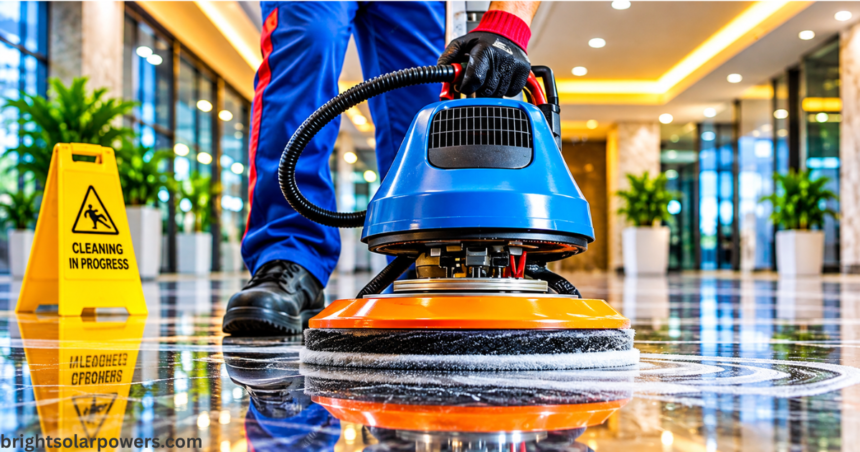
A reader in Nampa who types polishing machine into a search box usually needs a trustworthy provider, not just another catalog. This guide lists the questions worth asking, summarizes what two manufacturers publish on their own sites, and explains where dust collection fits. You can work through the whole checklist in about ten minutes with your own quotes at hand.
What Should You Look for in a Polishing Machine Provider?
Look for a provider that names each polisher type, states its maintenance terms in writing, and explains how it handles returns. Ask who supplies spare parts and wear parts, and how long they stay available. A provider that answers those points directly saves you weeks of back-and-forth.
Write your questions down before you call, because sales conversations tend to drift toward price first. A clear after-sales service policy, honest software updates terms, and a defined spare parts stock matter more than a discount on day one. Compare two or three providers against the same list so the answers line up side by side.
What Is a Polishing Machine and What Does It Do?
A polishing machine removes microscopic material from a workpiece until the surface reaches a target finish. Polishing works alongside grinding and deburring as one link in a surface treatment chain. Each step prepares the part for the next one.
A surface finishing machine may also handle brushing, satin finishing, and emery finishing, depending on the part. A satin-finishing machine gives metal a uniform directional grain, while a circular satin-finishing machine leaves a circular pattern. Precision finishing and complex surface finishing often start after milling has brought the shape close to final.
Which Machine Types Do Providers Offer?
Providers usually group equipment into CNC polishing machine models, CNC grinding machine models, and automatic polishing equipment. A CNC finishing center adds software control to those steps. Smaller shops often prefer a compact CNC finishing center that saves floor space.
An automatic transfer machine moves parts between stations without an operator, and a modular CNC finishing machine lets you add stations later. A robotic finishing cell pairs a robot arm with a loading and unloading system, while a separate deburring machine or brushing machine handles single steps. Ask every provider which polishing accessories fit the model you choose.
Which Machine Components Should You Ask About?
Ask about the tool spindle, the numerical axes, and the grinding wheels, because those parts set what the machine can finish. Recomatic’s site cites an 18,000 rpm spindle speed in its machine descriptions. Compare that figure with the number each provider quotes you.
Axis count changes what a machine can reach: simultaneous 5-axis machining covers angled faces, while 4-axis kinematics suits simpler shapes. Servo-controlled axes hold their positions steadily, and a part-flipping module with a recentering module lets the machine finish both sides of a part. Machine covers, bellows, overpressure protection, and full mechanical protection keep debris away from the mechanics, and a quality drawer with carrier boxes handles checks and transport.
Which Brands Should You Know, and Where Do They Come From?
Groupe Recomatic is a Swiss group with its service site in Courtedoux, and MTI Corporation supplies laboratory equipment. Neither company operates out of Nampa, so you will contact them remotely. Each brand offers the services listed on its own website.
Recomatic’s brand names include RECO, BULA, SWIS, and COSMAP, and its models include RECO-CT501, RECO-MS320, RECO-BU200-UR, and BULA POLIGO B2. The group describes its equipment as Swiss-made, and its site also names FANUC and Universal Robots. Read each model page yourself before you request a quote.
What Services Does Recomatic List on Its Website?
Recomatic’s after-sales service page lists annual preventive maintenance, machine overhaul, software updates, and a permanent stock of spare and wear components. It also commits to a 10-year minimum service on new machines. You send requests through its service portal.
For several CNC models, preventive maintenance includes a ballbar diagnostic with Renishaw equipment, followed by axis optimization and spindle optimization using FANUC Servo-Guide. Before an overhaul, a technician diagnosis sets the scope, and the work happens through on-site servicing at your workshop or through return to factory for overhaul at Courtedoux. The page mentions machines with over 50 years of service, which shows how far refurbishing decades-old machines can go.
Does Recomatic Offer Anything Beyond Repairs?
Recomatic’s homepage mentions used machines in stock, and its navigation shows pages for application support and grinding wheel supply. The group also lists custom automation solutions. We confirmed only the titles of those pages, so read them directly.
Used stock counts as sales, not repair, so treat it separately from the maintenance terms above. A used machines listing deserves the same questions as a new quote: age, overhaul history, and available support. Ask whether application support covers your parts before you commit.
What Does MTI Corporation Publish About Service?
MTI’s Service page describes a product return policy: you can exchange or return defective products within 30 calendar days of the invoice date. You need a return merchandise authorization (RMA) number, which stays valid for 15 days. The pages we reviewed mention no repair, maintenance, or calibration.
Returns ship prepaid with the original invoice and packaging, MTI may charge a 25% restocking fee, and shipping costs stay non-refundable. The policy excludes opened consumables and orders that require a down payment. MTI’s navigation also lists a technical knowledge center, so open it for further guidance.
What Equipment Does MTI Corporation Sell?
MTI’s site lists R&D laboratory equipment for materials work, including metallographic lab equipment, vacuum pumps, and recirculating chillers. A mounting press, blade saw, and wire saw support sample mounting and cutting. Pressing dies and wafer holders support pressing and substrate handling.
Its cleaning range includes an ultrasonic cleaner, a plasma cleaner, and a UV-ozone cleaner for cleaning samples. Containment products include gloveboxes, dry rooms, fume hoods, and storage chambers, backed by atmosphere control, a gas purification system, moisture-free storage, and high vacuum. Testing tools range from microscopes and balances to thin film measurement, XRD, TGA, a tensile tester, a battery analyzer, and a battery safety tester.
Which Industries Rely on Polishing Machines?
Watchmaking, luxury and jewelry, medical, aerospace, and other advanced industries use this equipment, according to Recomatic’s site. MTI instead serves materials science research, battery research, and metallographic laboratory work. Match the provider’s focus to your own sector.
Research uses range from thermoelectric materials research and wire arc additive manufacturing to graphene and 2D materials and thin films. Substrate work covers crystal substrates, ceramic and glass substrates, and metallic substrates. Each of these fields sets different demands on flatness and cleanliness.
Which Materials Can These Machines Finish?
Providers list hard materials, complex surfaces, metal foils, wafers, and single crystals among typical workpieces. Ceramics, rare earth and magnetic materials, and sputtering targets also appear. Ask each provider to confirm your exact material in writing.
Material hardness changes the choice of wheel, speed, and cycle time. Send a sample drawing or a test piece so the provider can judge fit before quoting, and note the finish you need. A provider that asks about your material first usually understands the work.
Which Performance Qualities Matter Most?
Precision, repeatability, and surface quality decide whether a machine suits your parts. Providers describe high-performance equipment often, so ask for tolerances and roughness values instead. Numbers you can check beat adjectives every time.
A user-friendly interface and intuitive control software shorten operator training, and modularity with ease of integration lets you grow the line later. A compact footprint saves floor space, rigidity limits vibration, and a short series changeover time helps small batches. Eco-responsible design and automation integration also appear on provider sites, so ask what each phrase covers.
Where Do Dust Collectors Fit in a Polishing Shop?
Dust collectors capture the airborne particles that finishing steps create, and they protect both operators and the machine. Neither Recomatic nor MTI lists dust extraction on the pages we reviewed, so you need to source one separately. Treat it as its own purchase with its own quote.
Ask an installer for airflow ratings in cubic feet per minute, filter specifications, and cleaning intervals. Check with your insurer and local fire authority about combustible dust rules for your material. Collect those answers before you finalize the machine layout.
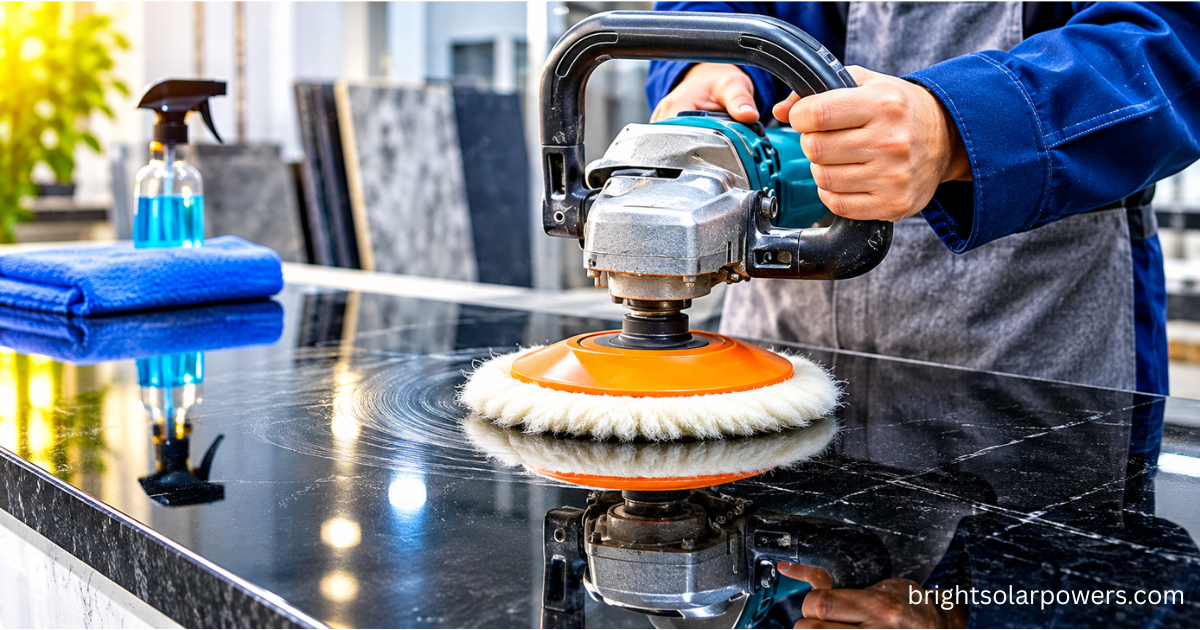
How Do You Compare Providers in Nampa?
Compare providers on one checklist: machine types, maintenance terms, parts availability, return policy, and dust collection support. Score each answer yes, no, or unclear. Any unclear answer deserves a written follow-up.
Ask for service terms by email so you have a record, and ask whether the provider sends technicians to Idaho or expects you to ship the machine. Request the return policy and any restocking fee before you place an order. Keep the replies in one folder and compare them side by side.
What Documents Should You Request Before You Buy a Polishing Machine?
Request an itemized quote, the written service terms, a spare parts list, and the return policy before you pay anything. Those four documents show what the provider actually promises. Anything missing from the set tells you where to ask more questions.
Add a sample finish report if you have one, and ask the provider to run or review a test piece in your material. Keep every document in one dated folder, so a later disagreement has a paper trail. A provider that hesitates to put terms in writing has already answered your question about reliability.
Why Use This Website to Find a Provider?
This website puts the checklist, brand notes, and confirmed service facts in one place, so you skip a dozen separate searches. It separates what each brand states on its own site from what you still need to ask. It also keeps Nampa and dust collection in view.
Each brand entry points you to the brand’s own website for current details, because terms and models change. We do not claim services that a brand has not confirmed, and we label anything unconfirmed as unconfirmed. That keeps your shortlist honest and your questions specific.
FAQS About Polishing Machines
How Much Does a Polishing Machine Cost?
Prices vary widely by machine type, axis count, and automation level, and the pages we reviewed state no prices. Request written quotes from at least two providers. Ask each one to itemize accessories, installation, training, and service so the totals compare fairly.
Is a Used Machine Worth It?
A used machine can make sense when the seller documents its overhaul history and names who supports it afterward.
Recomatic mentions used stock on its homepage, but you should confirm condition, age, and parts availability first. Compare the total cost against a new quote before you decide.
How Often Should You Schedule Maintenance?
Recomatic recommends annual maintenance, and the pack differs by machine. Ask your provider for a written schedule that matches your daily usage, because heavy use may justify earlier checks. Keep the service records, since they help future technicians trace past problems.
Do These Brands Sell Dust Collectors?
No. The pages we reviewed list no dust collectors for either brand, and Recomatic’s site holds no dust extraction content. Source dust extraction from a separate supplier, and ask that supplier to size the system for your material and machine layout.
Who Can Service a Machine Near Nampa?
Neither brand operates out of Nampa, so ask each one whether it offers on-site visits in Idaho or requires you to ship the machine. Recomatic describes both options for overhauls, but confirm travel terms before you buy. Get every answer in writing.