

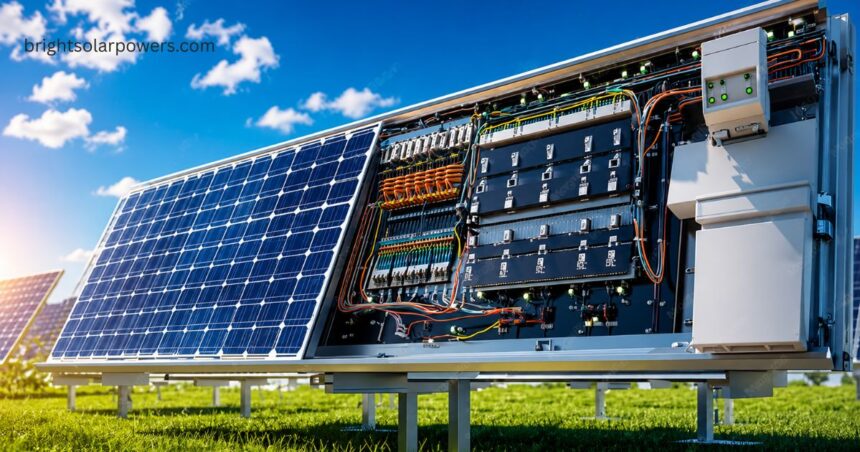
A solar charge controller works like a smart voltage regulator that sits between your solar panels and your battery, making sure power coming from solar panels never overwhelms the system.
Good controllers act as a current regulator and charge regulator together, meaning they regulate current and safely charges your bank while it maintains batteries at a high state of charge without pushing them into overcharging.
Most 12 volt panels actually push out 16 to 20 volts, and the controller’s job is regulation down to a safer 14 to 14.5 volts once the battery gets fully charged.
This protects electrical loads like lights, fans, and telecom equipment, along with sensitive process control equipment that can’t handle spikes in voltage and current.
I’ve run hybrid off-grid systems with inverters, surveillance cameras, and other accessories, and a solid Morningstar product has never let me down when it comes to reading voltage input correctly and protecting every connected electronic device.
The whole point is to keep batteries healthy and extend battery life for years instead of months, and any system that monitors its own output constantly will always outlast one that doesn’t.
Types of Solar Charge Controllers
There are really three types of solar charge controllers on the market, and understanding them saved me a lot of money over the years.
The oldest design uses shunt relay types and shunt transistors to manage control voltage, and while these dinosaurs still show up in some old systems, most people now avoid these cheap controllers because they simply can’t compete with newer tech.
A traditional charge controller built on basic PWM pulse width modulated switching still has few components, which some folks like for its simplicity, but it never squeezes out the 10-30% more power that better options deliver.
PWM controller designs come in 3-stage PWM, 4-stage, and 5-stage versions, and each one adjusts how it charges an electric cell bank as the solar panel exhibit changing output through the day.
Brands like Blue Sky, Xantrex, and Steca built a name as an industry standard through unwavering quality and reliability, while smaller discounters and mass marketers tend to push whatever gives the biggest margin instead of the best working voltage matching.
A small 4.5 amp Sunguard unit suits a shed with 200 watts of panels, while bigger cabins need something rated 60 to 80 amp or higher.
The real sparkling star of the charge controller world is MPPT, short for maximum power point tracking, and once I switched my own solar electric systems over to it, I saw efficiencies climb into the 94% to 98% range almost overnight.
Morningstar, Midnite Solar, and Outback Power all make excellent MPPT programmable controllers, with the Outback Power FlexMax and Midnite Classic standing out for larger systems that need serious amperage, handling anywhere from 40 to 80 amp units up to a full 80 amps depending on the model.
One safety feature worth mentioning covers solar panel shorts, since a well-built controller cuts power the instant it senses one, and a dedicated Morningstar MPPT unit handles this kind of fault detection better than most budget alternatives I’ve tested.
These charge controls come in every shape you can imagine, and the phrase shapes sizes features price ranges really does apply here, since you can wire two or more units wired in parallel to cover a 4 to 60 amp range without spending considerable money on one giant box.
Look for a model with a computer interface or computer interfaces built in, because monitoring and control through an app beats squinting at a tiny indicator every morning.
Most good units include an LED or a full series of LEDs, plus digital meters showing panels and battery voltage and voltage and current at a glance, and don’t fall for advertising hype claiming a controller can equalize batteries.
Without the proper LOAD terminals and safety checks that real MPPT units and 3 stage PWM types always include as standard, rated around 60 amps on hardware you can trust, along with small LED lamps for quick night-time reads.
What Does a Solar Charge Controller Do?
At its core, a charge controller exists to prevent battery damage in any of the off-grid systems I’ve built over the years. It works around the clock to maintain batteries at their highest state of charge while it helps avoid gassing, which in turn helps prolong battery life far beyond what you’d get without one.
By delivering proper current and voltage matched to each battery’s rated capacity, it keeps electrical loads running smoothly and stops a raw PV array from sending too much power downstream, because unchecked power like that can destroy batteries and even destroy loads in a single afternoon.
How Does a Solar Charge Controller Work?
Take a look at Figure 1, which shows exactly how pulse width modulation and PWM work alongside maximum power point tracking to move power through the system.
MPPT technology and standard methods both regulate current and deliver voltage correctly, taking raw energy from PV arrays and sending it safely to electrical loads so the unit can charge batteries all through daytime hours.
As evening approaches and there’s no sunshine left, the controller switches modes automatically to protect the battery bank using built-in electronic protections.
These protections stop nighttime reverse current, guard against short circuiting, and shut things down if high voltage or high temperatures show up unexpectedly.
They also catch battery reverse polarity mistakes, trigger a low voltage disconnect when needed, and flash LED warning lights so you can spot installation errors and faults before they cause real damage.
Look at any proper solar charge controller schematic and you’ll see how a DC load connects differently than the setup shown in Figure 2 for an AC load, which is exactly why every off-grid diagram matters.
Following the correct connect and disconnect order protects your whole system, so always wire battery to controller first, then PV array to controller, and only after that connect the electrical load to controller.
I always install proper disconnect switches for safety, and every installation should include a clear breakdown of how solar modules turn sunlight into usable DC electrical power.
From there, the charge controller regulates amperage so excess power never floods the battery system, keeping tabs on the state of charge through the negative battery terminal and a common negative ground.
Both PWM controllers and MPPT controllers must follow NEC code for proper grounding, which usually means connecting to an equipment ground terminal lug on the controller enclosure itself.
From there, an inverter turns stored DC power into usable AC power for things like a TV, and a good controller handles the high energy surge that comes with startup as long as your rated capacity and batteries meet surge requirement for the appliance in question.
Buy the World’s Leading Solar Charge Controllers
When it comes to Morningstar charge controllers, I trust them for even the most challenging solar application out there, because mission-critical users working in hazardous locations need gear that simply won’t fail.
Industries like the oil and gas industry, telecommunications, mining, security, and transportation all rely on.
Morningstar electronics to keep critical systems running, and that reputation was built on real-world results, including the world’s largest off-grid solar residential project in Peru, which powers over 200,000 homes.
If you need one for your own setup, reach out to your nearest distributor or a local representative who can match the right unit to your needs.
Features of a Solar Charge Controller
A well-designed unit protects battery cells rated at 12V from overcharging while it quietly reduces system maintenance for the whole household.
Better models also deliver increases battery lifetime performance through smart auto charge indication, giving you high reliability whether you own a small 10amp to 40amp setup or something bigger.
On top of that, they adjust charging current on the fly and keep watch with monitors reverse current flow so nothing ever drains backward overnight.
The Function of the Solar Charge Controller
The unit controls device voltage at every stage, and once the battery voltage ascends past a certain level, it simply opens circuit and halts charging until things settle back down.
Inside, a mechanical relay does the physical work to open or shut circuit connections, protecting electric storage devices like standard 12V batteries from getting pushed too far.
Since solar panels convey more voltage than batteries actually need, the controller trims that charge voltage down to its best level, cutting the time to fully charge and helping solar systems work optimally overall.
Running higher voltage in wires also means power dissipation reduced across the whole circuit, which saves energy that would otherwise turn into wasted heat.
Good reverse power flow control stops no power from solar panels situations at night from turning into a drain, using a clean open circuit state for separating solar panels from battery and halting reverse current flow completely.
Applications
Charge controllers show up everywhere solar power gets used, from generating electricity from sunlight through photovoltaic panels on rooftops to pollution free street corners running on low maintenance street lights.
Inside every one of these setups, photovoltaic cells turn sunlight into DC electric charge, and the controller makes sure the system can store DC in batteries safely for later use in home systems.
Whether you’re wiring a single PV module for basic household applications or building a full hybrid solar system that draws from multiple energy sources, having reliable control means you get a full-time backup supply no matter the weather.
Example of a Solar Charge Controller
Picture a simple circuit where a solar panel charges battery cells using a pair of operational amplifiers to constantly monitor panel voltage and adjust load current as conditions change.
A full set of LEDs gives you a quick visual read, and a MOSFET acting as a power semiconductor switch stands ready to cut off load the moment things reach a low condition or an overloading condition.
When that happens, a bypassed transistor redirects extra current into a dummy load instead of the battery, which helps protect battery from overcharging while the main circuit still charges the battery normally.
You’ll see a clear indication when fully charged and the setup constantly monitors battery voltage, so it cuts off supply through a dedicated load switch whenever it needs to remove load connection during an overload condition.
Looking at the block diagram, everything starts with a collection of solar cells that converts solar energy into electrical energy using layers of Ohmic material joined by careful interconnections and external terminals.
Inside each cell, electrons move through n-type material, pass an electrode, travel along a wire connected to battery, and cross into p-type material where electrons combine with holes to complete the loop, all wired in series connection across four process steps.
The controller watches constantly for overload, under charge, and low battery conditions, using a switch built around over voltage indication and detection, overcharge detection, and overcharge indication, along with low battery indication and detection managed by a small diode and a MOSFET switch.
When trouble shows up, supply cut off kicks in to stop power supply to load immediately, and honestly, once you understand this design.
You start appreciating why people call solar the solar energy cleanest renewable energy source around, whether it’s producing electricity, providing light, heating water, or serving domestic commercial industrial applications of every kind.
Do I Always Need a Charge Controller?
Not always but usually, especially once you get past tiny trickle charge panels in the 1 to 5-watt panels range, since the old rule of solar charge controller 2 watts per 50 battery amp-hours only works for very small maintenance jobs.
I once ran a flooded golf car battery rated at 210 amp-hours wired as a series pair for 12 volts, and even a tiny 4.2 watts panel needed no regulation at all, since 5-watt panels and smaller usually count as small maintenance trickle chargers.
That said, AGM deep cycle batteries like a Concorde Sun Xtender are pickier, so even a small 2-watt panel on one of those deserves a real controller instead of skipping it.
Why Are 12 Volt Panels Actually 17 Volts?
Here’s something that confused me for years: those extra volts on a nameplate are panels put out only when cool under perfect conditions, meaning full sun, not real life.
That extra voltage rarely shows up once the sun low in sky, heavy haze, or cloud cover rolls in, and it definitely doesn’t show up on hot afternoons with high temperatures either.
A fully charged 12-volt battery actually sits around 12.7 volts at rest, climbing to 13.6 to 14.4 volts under charge, so manufacturers rate panels for worst-case conditions instead of typical days.
Take a panel rated 100 watts at room temperature; on a hot roof, that same panel might behave more like an 83 watt panel once it hits 110 degrees. This is exactly solar charge controller why MPPT charge controllers matter so much, since a good charge controller regulates 16 to 20 volts coming in and turns it into a steady 10.5 to 14.6 volts output based on real state of charge readings.
Every type of battery needs a different controller mode, and temperature compensation makes sure the numbers stay accurate no matter the season.
Using High Voltage (Grid Tie) Panels With Batteries
These days, plenty of PV panels rated over 140 watts hit the market as grid tie panels, and they are simply not standard 12-volt panels you can hook straight to old gear.
Most put out 21 to 60 volts, which is far beyond what standard charge controllers or even standard 24-volt panels were built to handle, so matching the right hardware really matters here.
What Happens When You Use a Standard Controller?
Hook a high voltage panel to the wrong gear and here’s what happens: most standard controllers, even some MPPT types, simply cannot handle solar charge controller high voltage panels past their maximum input voltage, and you’ll lose power 20 to 60% right off the bat.
Say a panel rated for 175 watt panel output pushes 23 volts and 7.6 amps; once charge controls feed current into a battery fully charged and sitting at 13.6 to 14.4 volts, the controller keeps the panel voltage at 12 volts and the panel amps limited to whatever the battery can accept.
Basic Ohms Law explains the math here, since watts volts amps all relate directly, meaning you might only get 90 watts into battery instead of the full amount the panel could deliver.
Switch to a real MPPT controller instead, and you’ll get full power from high voltage grid tie panels without losing a watt along the way.
Some units handle up to 150 volts DC, and industrial versions climb as high as 600 VDC, which lets you series two or more panels together and reduce wire loss using smaller wire runs.
Take that same 175-watt panel putting out 46 volts and 7.6 amps; a good MPPT unit converts it down to 12 volts while pushing roughly 29 amps into the bank, and that’s the real difference proper matching makes.
What Is Equalization?
Equalization is simply a way to equalize cells across your battery bank so every cell reaches an equal charge together.
The process runs a deliberate period of overcharge, usually pushed up into the 15 to 15.5 volt range, specifically to fix cells lower than others and bring the whole bank back to full capacity.
This only applies to flooded batteries, since the extra voltage causes a bit of stirring liquid action through rising gas bubbles, something sealed batteries can’t tolerate.
I’ve seen this matter most on an RV or boat that’s been parked for months without any normal movement to shake things up, or on setups using small panels feeding oversized battery systems.
What Is PWM?
Pulse Width Modulation works a lot like float charging, but instead of one steady output, it sends a series of short charging pulses through a rapid on-off switch action.
The controller reads the state of battery and adjusts both pulse speed and pulse width on the fly, so a fully charged battery sitting at no load might only get a quick tick every few seconds through a short pulse.
A discharged battery, on the other hand, gets long pulses that feel almost continuous, running close to a full on mode since the controller checks state of charge between pulses constantly.
One downside worth knowing: PWM switching can cause interference in radios and TVs, since those sharp pulses sometimes create noise problems on nearby electronics, something I noticed the first time I ran a ham radio near my system.
What Is a Load, or “Low Voltage Disconnect” Output?
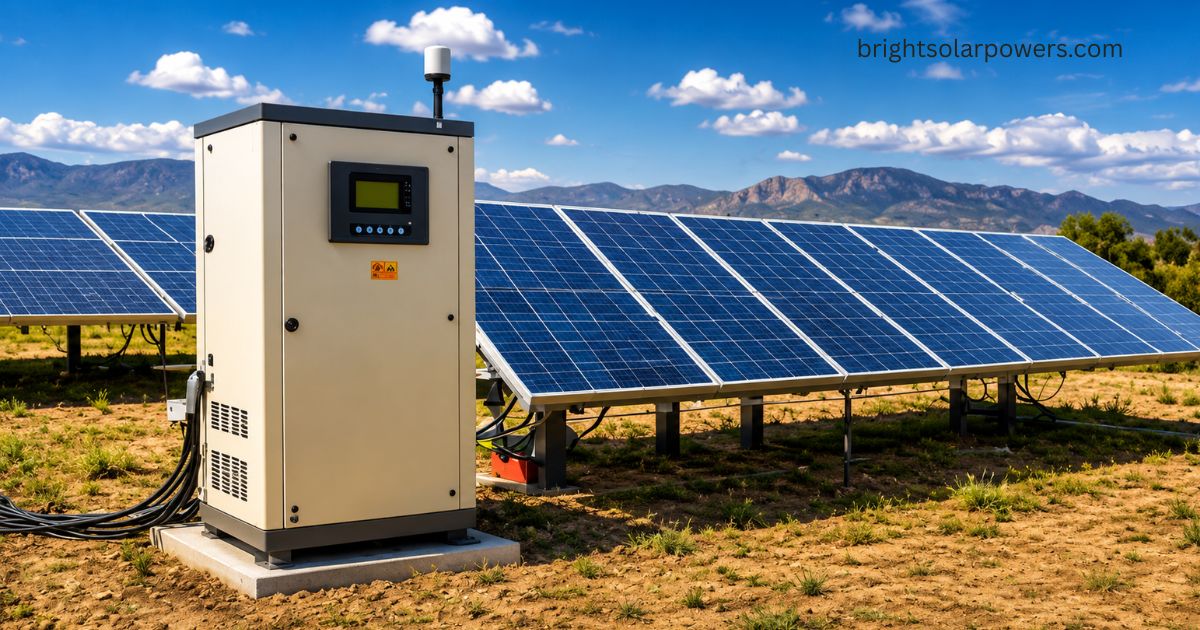
A LOAD terminal on your controller mostly exists to power smaller loads like small appliances and lights, using an LVD output that acts as a low voltage disconnect whenever the bank gets too low.
This feature will turn off connected load automatically to keep battery from running down past a safe point, but it’s really meant for non-critical loads only.
Units like the Schneider Electric C12 or a dedicated lighting controller work great here, especially if you want something to turn lights on at dark automatically, and a Morningstar SLC lighting controller handles that job nicely.
One warning I always pass along: do not use LOAD output for inverters, because high surge currents at startup can easily blow the controller before the LVD function even has a chance to react.
Most units rate this output somewhere between 6 to 60 amps, which might handle the smallest inverter but nothing bigger, and even a Morningstar SS series controller relies on a separate heavy duty relay for real load control or gen start duties.
This setup shows up constantly in RV and remote systems, especially for camera monitor cell phone sites running at some unattended site far from the grid.
What Are the “Sense” Terminals on My Controller?
The sense terminals on your controller carry only low current, often less than 1/10th of a milliamp, just enough to measure real battery voltage at the source.
This tiny signal lets the controller know about any voltage drop along the way and raise controller output to compensate, which matters a lot on a long wire run between the controller and battery.
Since these small wires carry no current worth mentioning, I usually run #20 to #16 AWG for the job, though #16 AWG preferred stands up better because it’s not easily cut or squished during installation.
Just remember that SENSE terminals are separate from your main charging wires, and they need to land right at the battery end for accurate solar charge controller readings, not partway down the run.
What Is a “Battery System Monitor”?
Don’t confuse battery system monitors with your charge controller itself, since something like the Bogart Engineering TriMetric 2025A falls into the category of not controllers at all.
Instead, these units simply monitor battery system health and track overall battery condition, showing exactly how much power you’re using and generating at any moment.
They calculate total amp-hours moving into and out of batteries and display real battery state of charge, which makes them incredibly useful for medium to large systems and tracking charging sources from multiple inputs at once.
For a tiny cabin setup, one of these might feel like overkill for small systems, more of a fun toy than a necessity, but I still recommend checking out a TriMetric PentaMetric model if you want a proper computer interface for your data.
You can find full details on our charge controller page solar charge controller in the web store, alongside a full lineup of battery monitors meters and shunts listed on our Meters and Monitors page.
FAQS About Solar Charge Controller
Do I really need a charge controller for a small 12V panel?
Yes, even a single small panel can overcharge a battery without one. It’s cheap insurance for an expensive battery.
Is MPPT really better than PWM?
Yes, MPPT can boost charging efficiency by 20–30%, especially in cold or cloudy conditions. It’s worth it for most serious setups.
What’s the most important thing to check in the manual first?
Always confirm the correct battery type setting before powering on. Wrong settings are the #1 cause of early battery failure.
Is it worth paying more for a premium controller?
Yes, if you have a larger system better efficiency and protection pay for themselves over time. For small setups, a budget option works fine.