

Every day, millions of passengers stand at a solar bus stop staring at a timetable stuck to a glass wall, sitting on a hard bench under a canopy, hoping the rain stays light, and honestly, that experience has not changed much in decades.
But right now, across the world, modern bus stops are breaking that old mold, turning transfer points from dull storage containers into genuinely inspiring public spaces that serve the community in ways nobody expected.
The shift toward sustainable mobility and public transport is pushing cities to rethink what a bus stop can be, and the answer is far more exciting than a glass wall and a bench.
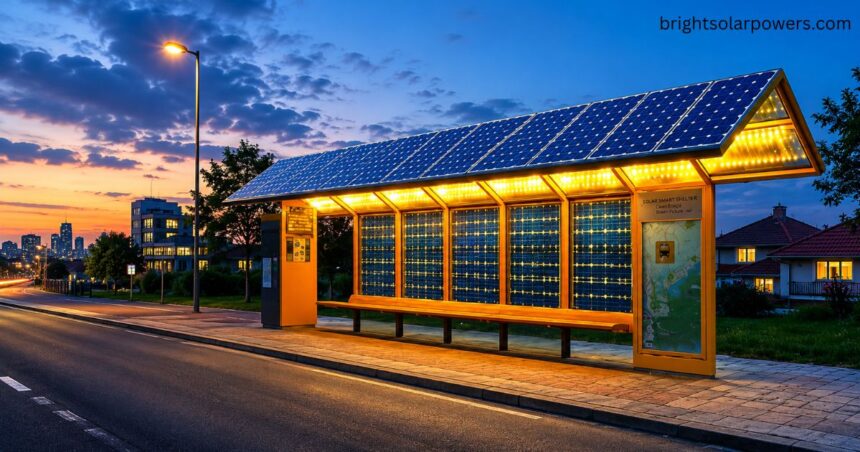
What makes this transformation truly powerful is that solar panels are now sitting on bus stop roofs across the world, pulling energy from the sun to power bus stop lighting, timetables, phone charging facilities, and even public Wi-Fi, all without touching the utility grid.
There are roughly 300 million bus stops around the world, and if every single one of them carried solar panels, the volume of environmentally friendly energy they could generate would be staggering, and that number alone should make every city planner sit up and pay attention.
Even a single solar-powered bus shelter installed in a remote location with no access to the utility grid can completely change the travel experience for the community it serves, bringing illumination, safety, and connectivity to places that never had them before.
The truth is, public transit does not stop when the sun goes down, and bus stop lighting should not either, yet thousands of bus shelters across cities sit poorly lit after dark, quietly compromising public safety every single night.
Municipalities have long struggled with the cost of extending the electrical grid to individual bus stops, dealing with trenching, road closures, permits, and endless utility bills that often make grid-powered lighting more expensive than the shelter itself.
Solar lighting systems that mount directly onto existing bus shelters solve all of this at once, delivering reliable illumination with zero utility connections, no construction disruption, and no ongoing electricity costs, making them one of the smartest upgrades any city can make to its infrastructure right now.
solar bus stop
Walking past a green bus stop for the first time genuinely stops you in your tracks. The sight of vertical gardens climbing the walls, small trees providing shade for waiting passengers, and a vegetated roof buzzing with urban insects feels almost surreal in the middle of a busy city.
These green details do far more than just look beautiful. Plants and trees around bus stops actively absorb carbon dioxide and push out oxygen, making a real contribution to air quality and air purification in dense urban landscapes.
The vegetated roof also absorbs rainwater, reduces heat, and slowly transforms into a living urban meadow that provides food and shelter for urban insects that cities desperately need for biodiversity.
Green bus stops are no longer a rare experiment; they are now a feature of hundreds of European cities, not just major metropolises, and examples like the green-roofed bee stop in Leicester, UK, and the green stop in Siemiatycze, Poland, show just how beautifully these spaces can blend rooftop greenery with practical public spaces.
The canopy over a green bus stop does double duty; it shields passengers from rain while supporting the eco-friendly plant life growing above, creating a space that feels genuinely connected to nature rather than bolted onto concrete.
Carbon absorption, sustainable design, and real biodiversity benefits make the green stop one of the most quietly powerful ideas in modern public transport infrastructure, and cities that have embraced it are already seeing the difference in both air quality and community pride.
Energy-Generating Solar Bus Stop
The moment a solar panel goes onto a bus stop roof, that structure stops being a passive piece of street furniture and starts becoming a small but mighty energy-generating station for the entire community around it.
Solar panels installed on a bus shelter roof can power bus stop lighting, run timetable information boards, and keep mobile phone chargers active all day and into the night, all through clean energy pulled directly from the sun, with zero dependence on the utility grid.
Energy recovery systems that capture kinetic energy from a tram braking cycle and convert it into electricity can also be added alongside solar panels, creating a genuinely multi-source off-grid energy solution that keeps the stop running through all conditions.
What sets the best solar-powered bus shelter setups apart from basic installations is the intelligence built into the system, starting with the MPPT controller, which acts as the smart brain of the entire setup, actively optimizing energy collection and capturing up to 30% more power than older PWM controllers can manage.
Even on cloudy days, an MPPT controller keeps pulling charge into the system, ensuring faster recovery and truly long-lasting illumination that does not fade out after a few dark hours.
The split-type design of modern solar panels allows the panel to mount cleanly onto the bus shelter roof without complex wiring, delivering a fast, practical off-grid energy solution that any municipality can deploy on existing bus shelters without major construction work.
Lighting quality matters just as much as energy source, and the best solar bus shelter lighting uses a milky-white PMMA lens to diffuse LED light into a soft, even glow that feels welcoming rather than harsh, eliminating the kind of glare that distracts drivers or makes passengers squint uncomfortably while waiting.
The SL62 CorroLine solar bus stop is one strong example of what a high-performance, split-type solar tubular lighting system looks like in practice, delivering a 20W output with an efficacy of up to 180 lm/W, a PMMA lamp body with over 85% light transmittance, and 316 stainless steel end caps that provide serious corrosion resistance in harsh outdoor environments.
A 5m DC cable allows flexible installation across different bus shelter configurations, while intelligent lighting control keeps performance stable and long-lasting, with the system capable of running for up to two consecutive nights on stored renewable energy alone, making it a genuinely reliable solution even in locations where cloudy days are the norm rather than the exception.
Convenience and Comfort of the Modern Solar Bus Stop
Passenger comfort at a solar bus stop shapes how people feel about public transport as a whole. A miserable wait in the cold or heat is often enough to send someone back to their car permanently, and cities that understand this are investing in ergonomic benches and chairs that make waiting feel far less like a punishment.
Municipalities in cold climates are now fitting bus stops with heaters and heated seats that keep passengers genuinely warm while they wait, while stops in hot weather cities focus on ventilation and cooling systems that bring the temperature down to something bearable.
Some cities go even further. An innovative bus stop in Singapore famously replaced the standard bench with a swing, which immediately made waiting feel playful rather than tedious and attracted attention from city planners worldwide.
Air purifiers installed at bus stops in cities like London and Hong Kong actively filter the surrounding air, protecting the health of public transport users who might otherwise be breathing in traffic fumes while they wait.
The Station-of-Being project in the Swedish city of Umea, located just below the Arctic Circle, pushed the idea of passenger comfort to a completely new level creating an interactive Arctic bus stop with comfortable seating built into a canopy that shields against wind and rain, a fully heated interior for cold climates, and a layout designed around socialising, with dedicated rest, seating, and meeting areas spread across the stop.
A fountain and a cycle zone encourage active travel right at the stop, and interactive touch screens give passengers instant access to timetables and local tourist attractions, turning what used to be dead waiting time into something genuinely useful and pleasant.
How Solar Bus Stops Make Life Easy on The Road?
Solar bus stops change the daily travel experience in ways that most commuters do not fully appreciate until they use one, starting with public Wi-Fi that stays on because it runs on solar-powered energy rather than the utility grid, meaning the service stays consistent and passengers can actually enjoy browsing, messaging, or working while they wait.
At night, the solar system uses energy stored from the daytime to keep LED lights burning bright at the bus stop, ensuring the stop stays well lit and safe even in remote locations that have no access to the electricity grid, a feature that makes an enormous difference to passengers traveling after dark in areas where poorly lit stops have long been a public safety concern.
Cell phones are part of everyone’s daily life now, and solar bus shelters give passengers the ability to charge mobile phones and electronic gadgets through a clean power source right there at the stop, removing the anxiety of arriving somewhere with a dead battery.
Smart sensors powered by solar panels on top of the bus stop can monitor traffic flow and measure pollution levels in the air, feeding real-time data back to city managers and giving passengers and commuters a clearer picture of what they are waiting in.
HD displays running on solar energy show live travel updates, bus schedules, and route information in a way that is far cheaper and more sustainable than pulling power from the utility grid to run screens, and the transport authority can also use those same solar-powered screens at smart bus stops to show ads and generate revenue that helps fund further upgrades.
In India, where a huge number of people avoid the bus due to a lack of schedule clarity, solar bus stops with live display boards filled with schedules and travel information can directly increase ridership, reduce pollution from private vehicles, and even improve public safety through solar-powered security cameras that keep passengers feeling safer at every stop.
Educational Stops
A bus stop that teaches you something while you wait is not a fantasy. Modern bus stops in cities like London and Copenhagen already function as genuine educational spaces, with information panels covering local history, culture, and attractions that give passengers something meaningful to engage with instead of just staring at the road.
Modern technology has made it possible to go even further, offering passengers multimedia access to tourist audio guides, sustainable transport facts, and route discovery tools right from the bus stop, turning a two-minute wait into a micro-learning experience that actually builds connection between people and their city.
Multimedia stops in Krakow went live on World Book Day, introducing travellers to writers associated with Krakow through interactive panels that sparked genuine curiosity and showed what a bus stop with an educational role can do for cultural features in an urban landscape.
In Curitiba, Brazil, the city built its entire public transport system reputation around glass tube bus stops that do something remarkable: they protect passengers from the elements, allow people to board and alight quickly without crowding, and some of them even house Tuboteca, small interchangeable libraries built right into the structure so that waiting time becomes reading time.
These glass tubes are celebrated worldwide not just for their architecture but for the way they make public transport feel dignified, intelligent, and worth using a lesson that cities everywhere could learn from.
The sustainable bus stops of Curitiba prove that an educational role and outstanding architecture are not luxuries reserved for wealthy cities; they are design choices that any city committed to great public transport can make.
The Bus Stop as a Work of Art
The best bus stops in the world do not just serve passengers; they stop people in their tracks, pull out cameras, and become destinations in their own right, which is exactly what happens when cities treat the bus stop as a genuine opportunity for art and culture. Murals, sculptures, and art installations transform an ordinary stop into an attractive space that earns its place on the city map, and architects have long recognized that the humble bus stop offers a rare chance to put extraordinary design right in the middle of everyday life.
In Melbourne, Australia, Annie Davidson’s Transporting Arts project turned bus stops into vivid galleries, while stops in Rotterdam, designed by studio Maxwan, and in Aachen, Germany, designed by Peter Eisenman, became celebrated works of urban architecture that people travel specifically to see.
Futuristic glass and steel structures, nature-inspired pavilions, and artistic installations with unusual shapes all attract the attention of passers-by and add real character to their surroundings, proving that a bus stop can carry genuine aesthetic ambition without sacrificing function.
The small Austrian town of Krumbach made this idea its entire identity through the Bus: Stop initiative, inviting leading architects to design original bus stops and tram stops that would blend into the surrounding landscape and become attractions in their own right, and the results delivered both outstanding aesthetics and full functionality while drawing locals and tourists from around the world.
The Bus: Stop project turned Krumbach into an internationally recognized name in architecture and innovative design, proving that a unique place on the city map can start with something as simple as rethinking what a bus stop should look like.
The Smart Stop
A truly smart bus stop does far more than display a timetable; it uses modern technology to make every moment of the wait more efficient and more convenient for passengers, starting with touch screens and interactive information panels that put real-time bus arrival times, routes, and connection information directly in front of the people who need it.
Intelligent monitoring systems built into smart bus stops handle everything from cashless payments via proximity card readers to chargers for mobile devices, reducing the friction that has historically pushed people away from public transport and toward private cars.
Cities like Seoul, Singapore, and Paris already operate transfer points where passengers can hail taxis, access car sharing, arrange bike hire, and check maps all from a single interactive touchscreen at the stop, turning the wait into a seamlessly connected part of the wider digital infrastructure of the city.
Advanced data collection systems using smart passenger counters give city managers a continuous feed of information on traffic flows and passenger preferences that was simply impossible to gather before modern technology made it practical.
That data directly improves scheduling and route planning, meaning the smart bus stop is not just serving the people standing in front of it; it is quietly making the entire public transport network smarter and more responsive over time.
The digital age has made it completely reasonable to expect bus stops and tram stops to carry real-time information, live connectivity, and digital infrastructure that matches the technology people carry in their pockets, and cities that invest in smart bus stops are already seeing the payoff in higher ridership and a better passenger experience.
The Intermodal Stop
A bus stop that connects seamlessly to other modes of transport is not a luxury it is the backbone of any serious sustainable mobility strategy, because the real barrier to public transport use is rarely the bus itself but the complexity of getting between different parts of a journey.
Interchanges need infrastructure that makes smooth transfers and comfortable transfers feel effortless, facilities for urban cycling, dedicated car-sharing drop-off points, and proper bicycle parking that give passengers the flexibility to combine transport modes based on what their day actually requires.
Research from 2013 by university researchers confirmed that long waiting times for a bus, trolleybus, or tram ranked among the top reasons people abandoned public transport altogether, which means turning transfer points into genuinely friendly spaces and functional spaces is not optional if cities want to grow ridership.
The intermodal stop works best when it sits at the center of the urban spatial plan rather than being bolted on as an afterthought, because city planning that treats bus stops as people-first spaces naturally produces a better passenger experience, smarter scheduling, and more intuitive route planning across the whole network.
Every interchange should feel like an invitation rather than an obligation, comfortable, convenient, and designed around the real needs of public transport users who are making a conscious choice to leave their cars at home.
When active travel infrastructure like cycle zones and bicycle parking sits right alongside bus and tram connections at a well-designed intermodal stop, the entire city infrastructure benefits, because more people find it genuinely easy to move through the city without a private vehicle.
Why solar bus stop shelter lighting?
Anyone who has ever waited at a poorly lit bus stop after dark knows exactly why solar bus shelter lighting matters. Standing in near darkness while waiting for a bus is uncomfortable at best and a genuine public safety risk at worst, especially for passengers traveling alone at night.
Public transit systems serve people around the clock, which means bus shelters need reliable illumination through every hour of darkness, and the traditional answer of connecting to the electrical grid brings with it a cascade of problems trenching through roads, applying for permits, arranging road closures, and then paying utility bills indefinitely for a single shelter that may sit in a remote area where grid connection costs more than the shelter itself.
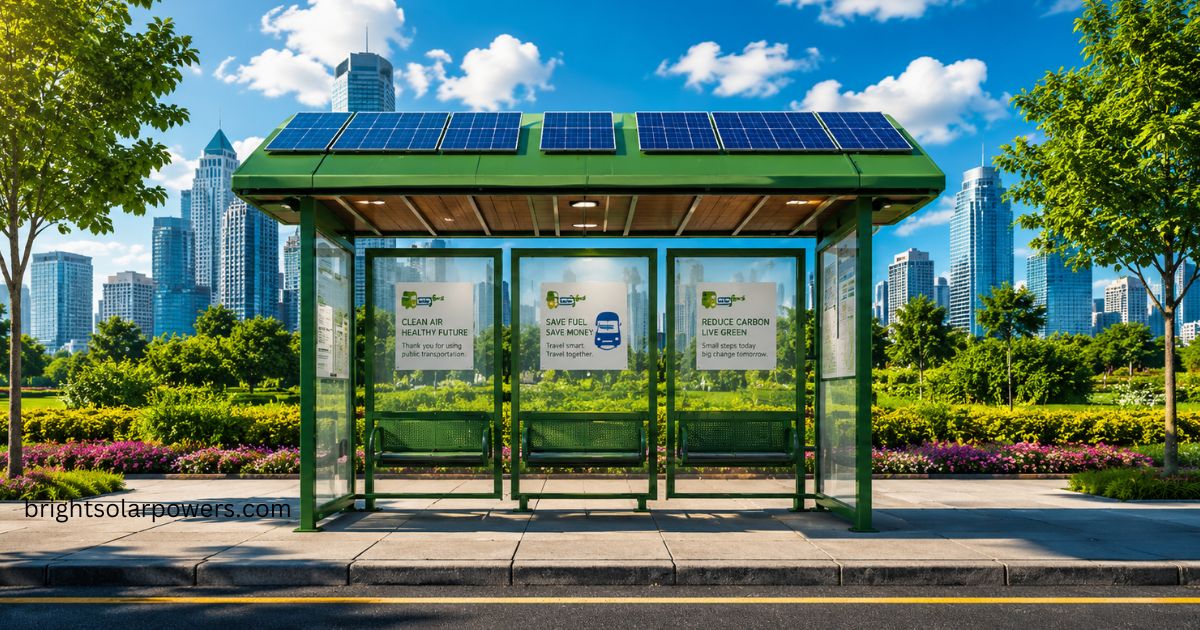
Solar lighting systems cut through all of that by mounting directly onto existing bus shelters, delivering bus stop lighting that needs no utility connections, no ongoing electricity costs, and no construction disruption, just clean, sustainable, renewable energy doing exactly what it should.
The MPPT controller at the heart of a good solar bus shelter lighting system acts as the intelligent lighting control brain of the whole setup, optimizing energy collection and pulling up to 30% more power from available sunlight than older PWM controllers manage which means even a stretch of cloudy days does not leave the stop dark, because the system builds up enough stored charge for faster recovery and long-lasting illumination across multiple nights.
The split-type design of the solar panel allows it to mount cleanly onto the bus shelter roof without complex wiring, making the entire setup fast to deploy and easy to maintain, a genuine off-grid energy solution that any municipality can scale across dozens of stops without the logistical nightmare of grid extension.
With a milky-white PMMA lens diffusing LED light into a soft, even glow that eliminates uncomfortable glare for both passengers and drivers, the SL62 CorroLine Solar Light, a high-performance split-type solar tubular lighting system with 20W output, up to 180 lm/W efficacy, a PMMA lamp body delivering over 85% light transmittance, 316 stainless steel end caps for corrosion resistance, a 5m DC cable for flexible installation, and the ability to run for two consecutive nights on stored renewable energy represents exactly what solar bus shelter lighting should look like when it is done right.
Conclusion
Solar bus stops deliver a genuine win-win situation for passengers and transport authorities alike. They are cost-effective, energy-efficient, clean, and packed with applications that make the entire travel experience better for thousands of commuters every single day.
Solar panels on bus stops do not just cut electricity costs; they generate revenue through solar-powered screens showing ads, improve public safety through powered security cameras, and make bus commutes more attractive to people who currently choose to drive instead.
The urban spatial plan of any serious city should treat bus stops as essential city infrastructure rather than optional upgrades, because comfort, convenience, and reliable illumination at bus stops directly influence whether public transport users keep choosing the bus or quietly give up on it.
The research from 2013 made it clear that long waiting times at transfer points push people away from public transport, but the deeper truth is that uninviting, poorly lit, uncomfortable stops do the same damage even when the wait is short.
Turning solar bus stop into friendly spaces and functional spaces powered by renewable energy, connected to digital infrastructure, designed around real human comfort, is one of the most impactful things a city can do for sustainable mobility and clean energy goals at the same time.
Every solar-powered bus shelter built today is a small but real step toward a city infrastructure that works for public transport users, reduces dependence on fossil fuels, and makes the simple act of waiting for a bus feel like the right choice rather than a sacrifice.
FAQs about Solar Bus Stop
Are solar buses running in India?
Solar buses are expanding across Indian cities like Gujarat and Delhi, cutting carbon emissions and electricity costs. This clean energy shift is making bus commutes greener and more reliable for millions of daily commuters.
Where can I buy a solar bus stop?
Ready-to-install solar bus shelters with solar panels, LED lights, and MPPT controllers are available directly from manufacturers. They deliver a complete off-grid energy solution without any utility connections or construction disruption.
How much does a solar bus stop cost?
Solar bus stop cost varies based on solar panel capacity, LED lighting, smart sensors, and HD displays included. Long-term savings on utility bills and electricity costs make it a highly cost-effective investment for any municipality.
What makes solar bus shelters better than traditional ones?
Solar bus shelters power bus stop lighting, charging stations, and public Wi-Fi entirely through renewable energy from solar panels. This delivers a safer, smarter, and more welcoming experience for every passenger day and night.
Does Erode have solar bus stands?
Erode is actively installing solar-powered bus shelters with LED lights and solar panels for reliable illumination. This improves public safety and travel experience for thousands of commuters using public transport daily.