

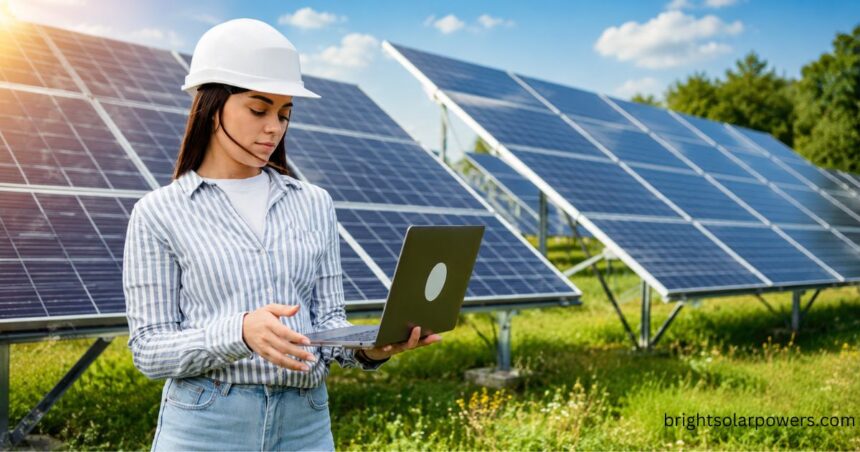
India’s solar plant business stands at a strong moment for this industry, with the Ministry of New and Renewable Energy reporting that solar capacity has already crossed 80 GW on its way toward 500 GW by 2030.
Non-fossil fuel energy now holds the largest share of national energy planning, and solar carries most of that weight. The solar business in India keeps booming as more sectors lean into clean power.
Rising electricity tariffs across homes and industries push more people toward solar as a practical fix rather than a luxury. Government subsidies for rooftop solar, growing corporate demand for green energy, and flexible net metering policies that let users earn from excess power all add fuel to this shift. Banks and NBFCs now offer solar loans with far less friction than before.
Together, these forces build a genuinely stable market for new solar businesses entering the field. Anyone watching the numbers can see why this sector keeps growing every year without slowing down.
The opportunity sits wide open for those ready to step in seriously.
Understanding the solar plant business
Before picking a direction, it helps to map out the common solar business types in India clearly. Solar EPC, short for Engineering, Procurement, and Construction, covers the full job of designing and installing solar systems for residential, commercial, or industrial clients.
A solar panel distribution path, working as an authorized dealer, suits people who prefer selling inverters, panels, or batteries over running full installs. A rooftop solar installer keeps things simple by sticking to home and small commercial installations alone. Solar O&M, meaning operations & maintenance, focuses on cleaning, monitoring, and upkeep work that keeps existing systems running well.
Solar Consultancy instead leans on project feasibility, system design, and handling approvals for clients who need expert guidance.
For anyone just starting out, EPC services or rooftop installations remain the most practical and profitable entry points into the solar industry.
Both paths let a new player learn the ropes of the broader solar power plant business plan without overextending resources early. Choosing one focus first, then expanding later, almost always beats trying to cover everything at once.
Step-by-Step: How to Start a Solar Panel Business in India
Anyone serious about this path should start by gaining practical knowledge of how solar panels generate electricity and how on-grid, off-grid, and hybrid systems differ from one another.
Learning the system components, including inverters, structure, and wiring, builds a foundation that certificates alone cannot match.
Short-term solar courses, online MNRE resources, industry blogs, and case studies all help here, and working alongside an experienced solar company speeds things up further.
A solar plant business should map out target customers such as homes, shops, factories, and schools, along with the city or state of operation.
Residential projects usually bring a lower ticket size with a faster closure, while industrial projects carry higher value but a longer sales cycle. Smart owners start small, build customer trust, then scale with confidence.
Proper legal setup matters just as much as technical skill. Business registration, whether as a proprietorship, LLP, or Pvt Ltd, along with GST registration, a current account, and a trade license, keeps things clean from day one.
EPC firms also benefit from vendor registration with DISCOMs and optional MNRE channel partner registration, and a private limited company structure usually suits anyone chasing government projects or working with corporations.
Understanding government policies prevents the costly mistakes that sink many new entrants. Rooftop solar subsidy rules, net billing rules, the DISCOM approval process, and electrical safety and inspection norms all shift by state rules, so checking the state electricity regulatory commission matters every time.
Skipping this step quietly damages both reputation and brand later on.
Product quality decides long-term success more than almost anything else. Choosing Tier-1 solar panels with solid warranty coverage, reliable inverters such as string inverters or micro-inverters, certified mounting structures, and proper AC cables and DC cables protects every project from future complaints.
A skilled installation team that understands panel mounting techniques, earthing, lightning protection, safe wiring practices, and correct inverter configuration turns good design into a system that actually works.
I always tell new owners to train electricians internally, hire experienced solar technicians, or partner with freelance installers while building toward a full team. Quality installation lowers complaints and raises referrals naturally over time.
The cost side stays manageable too, since an initial investment budget, supplier and installation partners, and a fair pricing and profit margin plan keep early projects from draining resources, especially when operations stay lean and scale grows step by step.
How to Get Solar Customers?
Sales sit at the backbone of any solar panel business, so the right customer acquisition methods matter from day one.
Local digital marketing through Google My Business and local SEO brings in steady local interest, while WhatsApp marketing and referrals build trust through word of mouth. Tie-ups with builders and architects, along with cold visits to factories and commercial buildings, open doors that ads alone cannot reach.
People respond far better to brands that teach rather than push a hard sell. Educational content on social media builds genuine trust before anyone tries to sell anything.
Customers who feel educated convert faster and stay loyal longer.
Pricing and Profit Margins in the Solar Plant Business
Smart pricing always factors in material cost, installation cost, warranty risk, and after-sales service before settling on a final number. Anyone who tries to underprice for a short-term profit usually regrets it once real costs catch up.
Long-term trust with customers pays far better than a quick win ever could. Building fair, transparent pricing from the start protects both reputation and margin. This balance keeps a solar plant business healthy well beyond its first few projects.
Common Mistakes to Avoid
Many new solar entrepreneurs stumble over the same problems again and again. Ignoring state-level regulations, overpromising savings to customers, leaning on low-quality components, offering weak after-sales support, and skipping proper documentation all count among the most common mistakes.
Avoiding these missteps gives a business a real chance to grow and survive in a competitive field.
Future Scope of Solar Business in India
The solar industry shows no sign of slowing down anytime soon. Solar battery storage systems, EV charging paired with solar integration, solar for agriculture through the KUSUM scheme, and corporate ESG-driven installations all sit among the upcoming opportunities worth watching.
Businesses that adapt early to these shifts will likely lead the market for years to come.
Is a solar plant business worth it?
Anyone who genuinely wants to work with clean energy, stays willing to learn, and commits to building trust step by step will find that the solar panel business in India remains absolutely worth pursuing through 2026 and beyond.
This path never works as a get-rich-quick business, but it stands as a stable, meaningful, and future-proof one instead. Patience and honest work carry this business further than shortcuts ever could.
Transforming Potential into Profit
A true turnkey solar solution partner treats every project as more than a sale, guiding the solar journey from first planning and design through to installation, grid connection, and ongoing maintenance.
An expert team focused on high-performance photovoltaic solutions brings strong energy savings to the table while reshaping a company’s entire business energy landscape.
Precision construction and continuous support keep every system running smoothly year after year.
A skilled solar provider delivers cost-effective results paired with flawless operation across the system’s full life. Every solar power plant built this way runs at peak performance for far longer than poorly managed alternatives.
That kind of consistency builds the reputation a business needs to keep growing.
Rooftop Solar Installations
Solarium handles complete end-to-end solutions that cover planning, design, project construction, and connection to the grid in one smooth process. Ongoing maintenance and care of the solar system keep performance steady long after installation day ends.
This kind of full-service approach removes the guesswork that often worries first-time clients.
Ground-Mount Installations
Ground-mount solar gives businesses another strong option when rooftop space falls short. With deep power plant experience, Solarium runs both on-site installations and off-site installations while optimizing land and system size to match real energy needs, especially when shading limits a roof or unused land sits nearby ready for use.
These larger systems usually take more install time than rooftop setups, but they often offset electricity costs by a wider margin.
Increase your electricity savings with battery storage
Battery storage changes how a business handles utility bill demand charges by storing electricity while the sun shines, keeping panels active. Solarium Storage stores that power during off-peak hours, then intelligently discharges and reserves battery reserves the moment demand spikes hit. This kind of integration of solar for business with stored power keeps usage efficient around the clock.
This setup helps maximize savings while keeping efficient energy use front and center every single day. Offset demand spikes through smart storage timing rather than relying on the grid during peak hours. Businesses that adopt this approach typically notice the difference on their very next bill.
How Much Does It Cost to Set Up a Solar Power Plant in India?
Setting up a solar power plant in India usually falls between INR 4.5 and 5 crore for a 1MW system, and this investment depends heavily on size, capacity, technology, and location.
The total cost includes solar panels, inverters, mounting structures, installation, labor cost, battery storage, tracking system, and maintenance cost. Owners can usually expect return on investment within 3 to 4 years, followed by free energy for roughly 20 to 25 years after that, which makes this a genuine long-term investment.
Some businesses work with structured programs, such as a 25-year Power Purchase Agreement under the DREBP scheme through the Government of Gujarat, choosing between 38% equity or 100% equity investment options as part of India’s broader green energy revolution.
The 38% route asks for roughly ₹1.31 Cr alongside a ₹2.14 Cr bank loan per 1 MWp, while the full 100% equity path needs close to ₹3.45 Cr per 1 MWp, including GST, for projects up to 5 MWp.
For smaller setups, a small EPC model keeps things lean. Company registration and legal costs usually run between ₹30,000 and ₹60,000; tools and safety equipment sit between ₹50,000 and ₹1 lakh; marketing and a website cost between ₹30,000 and ₹80,000, and an optional office setup adds another ₹50,000 to ₹1 lakh.
Anyone who manages projects carefully on an order-to-order basis can realistically start with approximate starting costs near ₹2-5 lakhs, which keeps energy costs and overall sustainability goals well within reach from a place like KP Group.
How to Select the Right Substation and Switchyard for Your Solar Plant?
Large-scale projects need more than panels alone, since the substation and switchyard carry equal importance for any large-scale solar plant business.
Figuring out current and future power needs decides the right size, and the range here usually spans from 33 kV up to 400 kV depending on project scale.
Voltage levels matter too, with low voltage between 11 kV and 33 kV suiting smaller plants, mid-sized plants sitting between 66 kV and 132 kV, and high-voltage runs of 220 kV and 400 kV built for big plants connecting straight into the national grid.
On the switchyard side, enough feeders keep power distribution stable while backups protect against unexpected failure. Quality circuit breakers and protection systems matter just as much, since they hold up the safety standards that every serious setup needs.
Meeting local standards of solar plant business, including the Indian IS 3156 code, alongside global standards and international IEC standards, keeps every piece of equipment ready for the future without risking compliance trouble down the road.
FAQs about Solar Plant Business
Is solar plant business profitable?
Yes, a solar plant business is highly profitable due to rising electricity demand and strong government subsidies. Low maintenance cost and long panel lifespan ensure steady long-term returns.
What is the cost of 1 acre solar plant?
Setting up a 1 acre solar plant costs around ₹3 crore to ₹4 crore based on panel type and quality. This generates nearly 800 kW to 1 MW of solar power capacity.
How to start a solar plant business?
Start a solar plant business by securing land, getting government approvals, and choosing trusted solar panel suppliers. A certified installation company ensures smooth grid connectivity and quick setup.
What is the monthly income of solar plant?
A solar plant can earn a monthly income of ₹60,000 to ₹1,00,000 per acre depending on sunlight availability. Net metering further boosts revenue generation from surplus power.
What are 10 disadvantages of solar?
Solar energy involves high initial cost, land requirement, battery storage limits, and panel degradation over time. It also faces low efficiency, recycling issues, grid integration hurdles, and dependence on government incentives.