


I still remember the first time I read about cochin international airport solar power plant , and I could not believe an airport actually became the first airport in the world to run only on sunlight.
The journey started in August 2015, when the Cochin International Airport Limited switched on a small 1 MWp unit near the International terminal building. That single step opened the door for a much bigger solar PV power plant network across the campus.
Under the holding company structure of CIAL, the infrastructure wing known as CIAL Infra took charge of every new design and rollout.
Cochin International Airport Solar Power Plant
Power Solar brought its own engineering skills and designing skills to the table, helping the airport meet strict quality standards on every project.
By November 2013, planners had already begun testing smaller Solar PV system setups, and this early work paved the way for a 2 MWp solar PV plant near the Cargo Terminal.
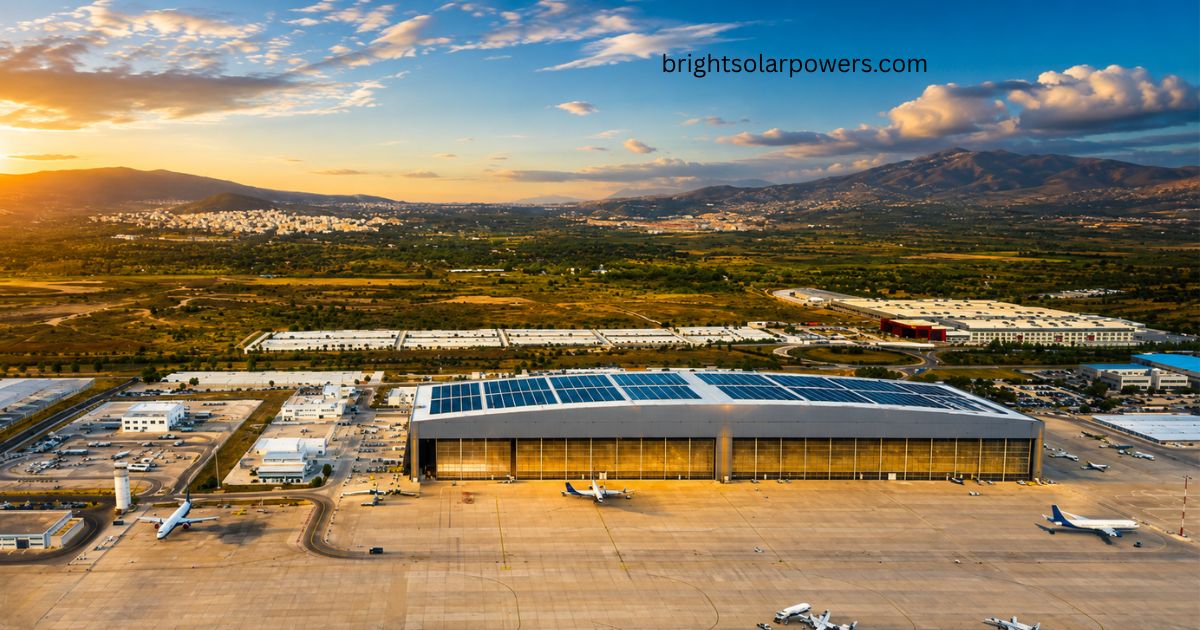
A 3 MWp solar PV plant followed close to the Aircraft Maintenance Hangar, and engineers later added a 2.4 MWp solar PV plant inside the aircraft maintenance hangar premises. Each of these builds used advanced technology suited to the site.
Land near the southern side of the runway posed a challenge because of high water levels, so the team built a 6 MWp canal-top solar PV plant right along the Chengalthodu canal.
Nearby, workers reused backfilled lands to raise a 12 MWp solar plant, and by July 2017 a second 12 MWp solar PV plant joined the grid, powered in part by 8472 solar panels spread across roughly forty five acres.
One feature that always gets attention is the India’s largest solar carport, a striking set of 27 carports built with a modular design.
These carport structures create a grid-connected cochin international airport solar power plant that supplies 2.67 MW solar carport capacity, and the whole covered car park doubles as a 2.7 MWp carport for parked vehicles, spread over 20289.9 square meter.
March brought two more milestones worth noting. In March 2017, and again by March 2018, fresh panels went live near the new International terminal, adding a solar panelled roof above busy public areas.
A rooftop system also went up near the Airport Museum premises, and by May 2016 the rooftop near the Aviation Academy building was generating power for daily use, cutting the airport’s energy consumption and its CO2 emissions by close to 1868 tonnes every year.
Taken together, these builds along the operational boundary wall and across the wider campus form one connected Megawatt scale installation, and today the airport stands fully powered by solar energy, and its own commercial establishments run on clean power drawn straight from the on-site State of Kerala grid connection.
The inauguration of each plant became a cochin international airport solar power plant , proving that patient planning and steady energy consumption management can turn an airport into a genuine green landmark.
Solar power plants outside airport premises
Once the airport campus reached its limit for panels, planners looked beyond the runway. CIAL Infra searched for open ground in Northern Kerala and settled on Payyannur, where fresh business plans turned bare fields into a working power source.
This terrain based installation approach suited the sloped land better than a standard rooftop build.
The Payyannur site spans 35 acres, laid out across the North, South, East, and West edges of the plot to catch sunlight through the whole day.
Engineers finished the 11.6 MWp solar plant and connected it as a captive power plant, which means CIAL itself acts as the main buyer of the electricity rather than selling it through the open market.
The project reached full commissioning on cochin international airport solar power plant 13th November 2021, a date that came only after the team pushed through delays caused by the Covid-19 pandemic.
Because the plant works as an Independent Power Plant (IPP) feeding into the KSEBL grid, India now has one more example of how a parent company can support its main site with clean green energy generated far away from the terminal gates.
The Cochin Project
Ask anyone who has studied airport sustainability, and they will point to the Cochin Project, more formally called the Cochin Airport installation project, as a textbook case.
The airport signed a Power Purchase Agreement (PPA) with the Kerala State Electricity Board, and this PPA lets the site draw energy daily from the array while sending any surplus power straight back to the grid.
A press release covering the power station’s operation cochin international airport solar power plant noted that the site uses over 46,000 panels to produce anywhere between 50,000 kWh and 60,000 kWh on a strong sunny day.
Over its expected life of 25 years, the plant is set to return roughly $9.5 million US dollars in financial benefits, alongside steady energy savings that keep operating costs low.
What strikes me most are the environmental consequences the airport has managed to avoid.
The system offsets carbon equal to planting 3 million trees, or skipping 750 million miles of driving, and it is expected to prevent close to 300,000 tons of CO2 emissions across 8 years and 6 months of payback time alone, long before the full 25 years are even over.
Other Airport Solar Installments
Cochin is not working alone on this path. Several media reports describe how the Airport Authority of India (AAI) wants to push airport solar development across India, with 11 airports already using rooftop or ground panels and a long-term goal of reaching 125 airports nationwide.
The Cochin International solar project remains the model that most other Indian sites study first.
Netaji Subhas Chandra Bose cochin international airport solar power plant , ranked as the fifth busiest airport in the country by passenger traffic, has added its own panels to shrink its electrical demand and trim its carbon footprint.
Planners there rely on open land spaces near the runway, much like the large-scale solar installations seen at other sites across India.
Outside India, the United States has run its own program since 2005 through the Federal Aviation Administration (FAA).
The Voluntary Airport Low Emissions Program (VALE) has funded 69 VALE projects worth about $24.5 million in grants, helping close to 30 airports cut their electricity needs through cleaner power, including one site that added a 15-MW solar farm to meet its own demand.
India’s Solar Goals
India’s solar story goes back further than most people expect. Momentum began building around 2014, and by March 2015 and April 2014 the government had already set bold targets under Prime Minister Narendra Modi, aiming to lift the country toward a 100 GW goal for solar-produced electricity.
The country holds real natural advantages for this shift. Wide stretches of wasteland, covering close to 180,000 square miles out of India’s total 467,000 square kilometers, sit ready for.
Wasteland redevelopment into solar farms, and cochin international airport solar power plant most regions enjoy around 300 clear sunny days each year, giving strong solar power potential for large-scale electricity generation.
By August 2016, the 750-MW solar plant in Rewa district, Madhya Pradesh, had become one of the standout projects in the country, and some coverage even called it close to a world’s largest solar plant achievement at the time.
That single site proved solar could rival coal-produced electricity on cost, pushing the country closer to true grid parity and a lower unit price for every unit sold.
By 2019, solar supplied close to 3.6% of national electricity cochin international airport solar power plant generation, and government officials set a fresh target of 10% electricity from solar within the next decade, growing toward a 4 GW yearly addition and a wider electricity supply base.
This matters even more because India ranks among the countries with the worst air pollution, including several cities in the top ten cities list worldwide.
Set beside China, Germany, Japan, and the United States, India still trails in total solar capacity, though it holds a spot in the top four emerging solar markets by 2022.
Reaching the national electricity demand will likely need close to $100 billion dollars in fresh investment, much of it aimed at helping a growing state-owned utility sector and the wider Indian solar market expand at scale.
Every one of these numbers, from a small 5% rooftop share to the airport installations springing up nationwide, points to the same shift in the country’s economic makeup and environmental makeup.
Solar energy is no cochin international airport solar power plant longer a side project in India; projects like the one at Cochin International Airport show exactly where the whole country is headed.
FAQS About Cochin International Airport Solar Power Plant
Which airport in India is 100% solar-powered?
Cochin International Airport proudly holds this title. Since August 2015, this Cochin International Airport Limited site has run fully on its own solar PV power plant network.
Are there any solar power plants in Kerala?
Yes, Kerala has several. Besides the main airport site, CIAL Infra built an 11.6 MWp solar plant in Payyannur, Northern Kerala.
Which airport in the world is fully solar-powered?
Cochin International Airport is the answer. It became the first airport in the world to be fully powered by solar energy — a truly remarkable feat.
Which airport runs on 100% renewable energy?
It’s Cochin International Airport again. Through its solar PV power plant and India’s largest solar carport, it meets all its energy consumption through solar energy.