

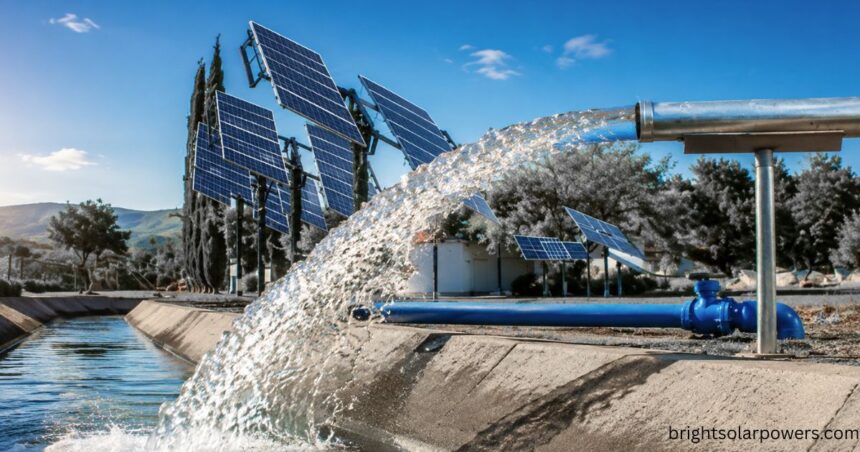
We have worked closely with farmers across Madhya Pradesh, and one thing we hear constantly is how tired they are of paying for diesel pumps and waiting for grid electricity that never shows up on time. That frustration pushed us to explore MP Solar pump deeply, and what we found changed how we see irrigation in this state forever.
MP Solar Pump Complete Guide for Madhya Pradesh Farmers
Oswal Pumps stands as a trusted manufacturer and supplier in Madhya Pradesh, delivering eco-friendly and energy-efficient solutions that genuinely serve residential, commercial, and industrial application needs without burning a hole in your pocket.
Every year, farmers across MP with solar pumps spend between ₹40,000 and ₹120,000 on fuel costs alone just to keep their diesel pumps running through the kharif season, and that number keeps climbing.
We have seen firsthand how agriculture in this region suffers because monsoons are unpredictable and natural irrigation is simply not enough for a perennial supply of water to fields.
Switching to a solar water pump cuts that fuel cost to nearly zero and delivers a payback period of just 2 years for most soybean and cotton growers in the Nimar and Malwa belts.
R-Solar, part of the Farmkart Group and based in Barwani, Madhya Pradesh, has completed over 300 installations of solar installation projects across MP, managing everything from site assessment to MPUVNL subsidy application and full warranty support.
The PM KUSUM Component B program covers 60% of the system cost through central government and state government contributions, bringing a 5 HP system down to roughly ₹1.6 lakh in actual farmer outlay.
Our team handles KUSUM scheme paperwork, system sizing based on MP crops and soil conditions, and full district coverage so farmers never have to chase offices alone.
What is a Solar Water Pump?
A solar water pump, also called a solar pumping system or solar submersible pump, works as a complete water lifting system that runs entirely on electricity produced by a solar panel sitting right on your farm. The moment sunlight hits the panel, the MPPT solar pump controller reads the available power and starts pushing groundwater up through your pipes: no switch, no operator, no waiting.
This makes it far more economical than relying on grid electricity, especially in areas of Madhya Pradesh where power cuts are still a daily problem for farmers.
An MP solar pump uses photovoltaic technology to convert raw solar energy into usable electricity that drives the entire pumping system, replacing the need for diesel-powered engines and unstable, erratic grid supply altogether.
Solar modules mounted at the right angle capture maximum energy and push it directly into the pump motor, whether you are lifting surface water from a shallow source or pulling groundwater from deep underground. Both DC and AC pump varieties exist, and choosing between a submersible and a surface pump depends entirely on your water depth and farm layout.
Farmers across MP use these pumps for irrigation of farming land, horticulture farms, and even for running a fountain, swimming pool pump, water circulation pump, or a simple mono-block home pump for household needs.
The system works silently, requires almost no human attention during the day, and keeps delivering water for 6–8 hours consistently. Once you install one, you quickly realize why grid electricity dependence feels like a problem you never needed in the first place.
Types of Solar Pump
When our team visits farms across Madhya Pradesh, the first question we always ask is about water level depth, because that single measurement decides which solar pump type will actually work for your land.
If the depth of water is beyond 15 meters, a solar submersible pump is the only right answer. This pump sits inside the water and pushes it upward with steady force, and it remains the highest-selling pump across Madhya Pradesh because most districts have water tables sitting very deep.
If your depth stays under 15 meters and you simply need to lift water to ground level, a solar surface pump handles the job cleanly without the need for deep installation.
Both pump categories come in DC technology and AC technology options, and TATA POWER SOLAR offers a strong DC range and AC range across both surface and submersible categories for farmers who want proven brand reliability.
Beyond the basic types, three powerful technologies exist for powering your pump setup: the Solar pump VFD Drive for smooth motor control and the Hybrid Solar PV pump that combines solar power and grid electricity.
Battery backup for round-the-clock operation, and the on-grid solar PV pump with net metering that actually lets you sell surplus energy back to the grid. Choosing the right technology reduces fuel dependency, cuts maintenance costs, and outperforms conventional irrigation systems on every measurable metric.
Our experience shows that farmers who switch from diesel to any of these solar pump types recover their investment faster than they expect, especially in MP, where sun hours are generous, and grid electricity remains unreliable.
The hybrid solar PV pump works particularly well for farmers who irrigate at night or during overcast days and cannot afford any gap in water supply. Understanding your land, your depth, and your daily water requirement before choosing your pump type saves both money and installation headaches down the road.
Parts of the MP Solar Pump System
Every working solar pumping system depends on four core components and parts working together without interruption, and understanding each one helps you maintain the system better over its long life.
The solar PV panel handles all power generation by capturing sunlight and converting it into usable current that flows directly into the pump circuit. The controller manages system control by regulating voltage and current so the motor pump always receives clean, steady power regardless of how bright or cloudy the sky gets.
The motor pump itself performs the actual water lifting, pulling water from underground or surface sources and pushing it through the pipes toward your fields or storage tanks. Each of these parts connects in a specific sequence, and a fault in any single component affects the performance of the entire solar pumping system.
When you buy a complete system, always verify that all four components, the solar PV panel, controller, motor pump, and pipe, come with clear specifications and individual warranties.
Advantages of an MP solar pump
Across developing countries, communities that lack solar-powered water pumps still depend on rain, inaccessible water sources, and toxic fuels like charcoal made from fuelwood, a resource facing serious scarcity because women and children walk longer distances every year just to collect enough wood for household energy.
These impure fuels harm the environment and damage the health of community members who breathe the fumes daily, and with three billion people worldwide still stuck in this cycle, the shift to solar energy for agricultural use is not optional — it is urgent. Installing a solar water pump eliminates fuelwood dependence completely and replaces it with free, clean sunlight that costs nothing to collect.
From a pure farming economics standpoint, a 5 HP diesel pump running 6 hours/day across a 150-day kharif season burns through ₹1.1–1.5 lakh/year in fuel and maintenance costs, money that could fund seeds, fertilizers, or family needs.
Solar-powered water pumps bring that number to near zero because no electricity bill arrives and no fuel delivery is needed, giving farmers long operating life equipment that stays reliable and durable for two times or more the lifespan of diesel alternatives.
With 97,000 pumps already installed across India, Tata Power has demonstrated that water assurance and financial security are not promises; they are proven outcomes.
MP solar pump farmers benefit even more than most because peak sun hours here average 5.5–6.5 hours/day across nearly every district, making local solar pumps among the most productive in India with exceptional energy yield and the fastest payback speed anywhere in the country.
Since 2020, diesel pump operating costs have jumped 40–60%, pushing more farmers toward solar every season as the numbers make an undeniable case.
A system that is easy to operate, easy to maintain, and genuinely eco-friendly while delivering a consistent water supply is not a luxury for MP farmers anymore; it is simply the smartest financial decision available.
PM KUSUM Scheme
The PM-KUSUM scheme, whose full name is Pradhan Mantri Kisan Urja Suraksha evam Utthaan Mahabhiyan, was launched by the Ministry of New and Renewable Energy (MNRE) to put subsidized solar pumps and distributed solar power plants within reach of over 3.5 million farmers across India, making it one of the largest clean energy programs ever attempted for agriculture anywhere in the world.
Tata Power operates as an empanelled agency under this scheme, helping farmers in even the most remote corners of the country meet their irrigation needs while building a steady income through reduced input costs.
The scheme directly targets the replacement of diesel pumps on individual farms with standalone solar pumps funded through the KUSUM Component B structure.
In MP, the subsidy structure works clearly: the Central Government (MoNRE) contributes 30% worth ₹150,000 on a ₹5 lakh system, the MP State Government through MPUVNL (Madhya Pradesh Urja Vikas Nigam Ltd.) adds another 30% worth ₹150,000, and the farmer contribution sits at just 40%, which equals ₹200,000, bringing total 60% subsidy coverage that makes adoption genuinely affordable.
R-Solar works as one of the empanelled vendors registered with MPUVNL, meaning we handle your subsidy application, track your approval status, and manage all communication so you never need to visit offices or follow up separately.
The subsidy process moves faster when farmers prepare their documents early, specifically the land record (Khasra / B1 nakal), Aadhaar card, bank account passbook, and borewell completion certificate, which cover everything the application needs.
Applications
MP solar pumps serve best in remote areas where no electricity connection exists, and running power lines would cost more than the pump itself. This is exactly why thousands of MP villages adopted them before urban areas did. Farms across the state use them for drip irrigation and sprinkler systems that deliver water precisely where crops need it, cutting waste and improving yield at the same time.
Beyond fields, the same pump supplies water reliably to schools, hospitals, homes, institutes, and government establishments that sit far from the main grid.
Industrial applications also rely on solar pump systems for process water, cooling, and site supply in locations where grid infrastructure is absent or expensive to connect.
A single properly sized pump can also run a fountain, serve as a swimming pool pump, drive a water circulation pump loop, or power a mono-block home pump for full household coverage. The versatility of these systems means one investment covers multiple use cases across the same property without needing separate equipment for each purpose.
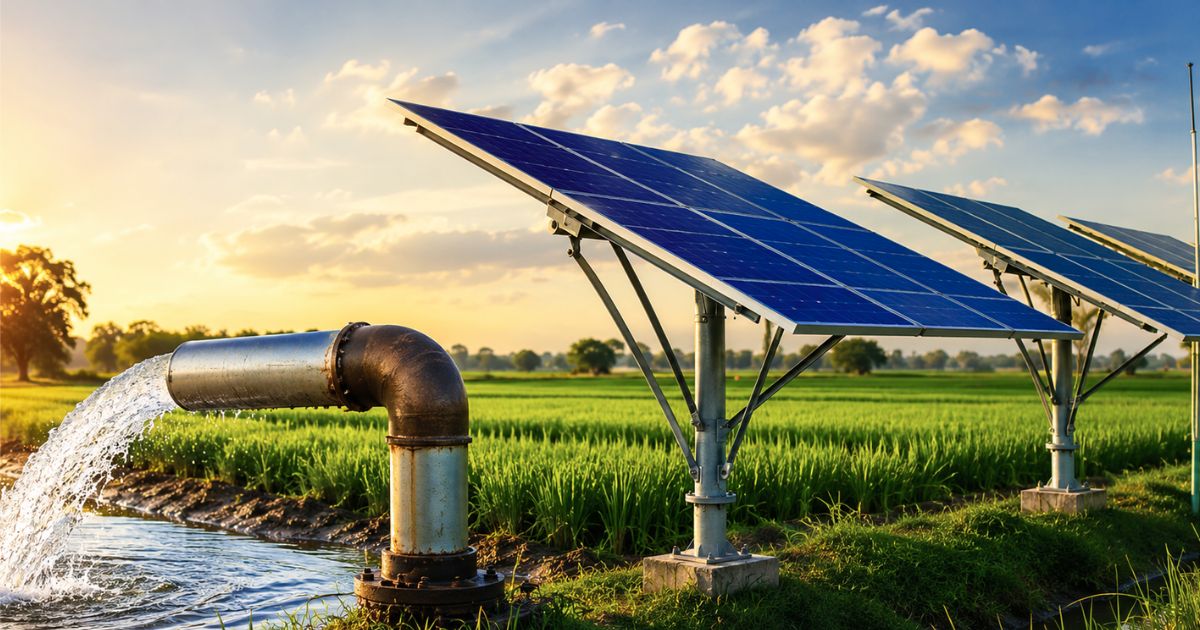
Why MP Farmers Are Switching from Diesel Now
OSWAL introduced the OSSL series Solar Submersible Pumpset as a state-of-the-art product built entirely from stainless steel AISI-304, making it genuinely anti-corrosion with outstanding high wear resistance that keeps running costs low and pumping efficiency high across its full longevity.
The OSSL series operates within safe operating conditions: max liquid temp of 45°C, water pH value between 6.5 and 6.5–8.0, max quantity of sand at 50 gm/m³, and pumped liquid must be clean water free from solids and chemically natural, and deliver continuous output for 6–8 hours of daytime irrigation with an energy-efficient duty range of 1–50 m³/h.
The BEE 5 Star Rated certification confirms that this manufacturer and supplier from Madhya Pradesh builds to the highest efficiency standard, and the lighter weight of stainless steel directly reduces the equipment cost, installation cost, and service time while keeping the system pollution-free and delivering clean energy for years without degrading.
MP’s agricultural geography shapes every system sizing decision. The Nimar belt, covering Barwani, Khargone, and West Nimar, sits above deeper aquifers reaching 200–400 feet in many villages, making submersible pumps the clear choice over surface pumps every time.
Across the Malwa plateau in Indore, Dewas, Ujjain, and Shajapur, shallow water tables exist in many spots, but irrigation intensity for wheat and soybean runs high, demanding careful HP and flow rate matching.
In Bundelkhand districts like Sagar, Damoh, and Tikamgarh, seasonal water scarcity makes storage tank integration a non-negotiable part of any proper system sizing plan, and borewell depth data directly determines whether a 5 HP or 7.5 HP pump fits the job for those crops and soil conditions.
R-Solar covers Barwani and West Nimar with the fastest installation timelines of just 7–15 days, including full MPUVNL subsidy processing, while Khargone in the East Nimar cotton belt gets priority submersible stock of 5 HP and 7.5 HP units ready for high borewell depth sites.
Dhar and Badwani farmers working mixed crops, including a large tribal farming community, receive installations within a 30-day installation window with complete subsidy support, and Alirajpur’s hilly terrain gets handled through non-standard mounting configurations built specifically for sloped land.
Indore and Dewas support both commercial solar and residential solar alongside agricultural installations within a 25–30 day timeline, while Bhopal and Sehore handle 5 HP+ systems on a 30–45 day project window, and 10 HP+ multi-system farms and agri-solar parks across all of Madhya Pradesh fall within R-Solar’s full district coverage through empanelled vendors registered with MPUVNL.
Diesel pump operating costs have climbed 40–60% since 2020 across MP, and farmers running a 5 HP diesel pump for 6 hours/day through a 150-day kharif season now spend ₹1.1–1.5 lakh/year on fuel and maintenance, which solar pumps replace with near-zero ongoing expense.
Speak sun hours averaging 5.5–6.5 hours/day across most districts make local solar pumps among the most productive in India.
Generating strong energy yield and delivering the fastest payback speed of any state in the country for soybean, cotton, Nimar, and Malwa belt farmers. KUSUM empanelled vendor slots and subsidy quotas through MPUVNL fill up every year before April–June kharif season,
MP Solar Pump farmers in Madhya Pradesh who start the process by February–March secure their installation and full solar energy benefit before the growing season begins, waiting costs money that the subsidy could have saved.
FAQs about Mp Solar Pump
Does an MP solar pump work without grid electricity?
Yes, an MP solar pump runs entirely on sunlight through photovoltaic technology, making grid electricity and diesel completely unnecessary for daytime irrigation at near-zero cost.
Is the PM KUSUM subsidy available for all farmers in Madhya Pradesh?
Yes, PM KUSUM Component B covers 60% of the total cost for every Madhya Pradesh farmer, bringing your farmer contribution down to just ₹200,000 for a 5 HP solar pump.
Is a solar submersible pump necessary for deep borewells in MP?
Yes, for borewell depth beyond 15 meters across the Nimar belt where aquifers reach 200–400 feet, a 5 HP or 7.5 HP solar submersible pump is the only right choice.
Does an MP solar pump reduce long-term farming costs?
Yes, an MP solar pump eliminates ₹1.1–1.5 lakh/year in diesel and fuel expenses, replacing them with free sunlight and near-zero maintenance for 20+ years of long operating life.
Is MP a good state for solar pump performance compared to the rest of India?
Yes, Madhya Pradesh averages 5.5–6.5 peak sun hours/day, making MP solar pumps the most productive systems in India with the highest energy yield and fastest payback speed.