
Coatings Plus in Boise lists Nampa among the cities it serves, so readers in Idaho can begin there. Primo Powder Coating in Meridian and Metal Coatings & Mfg. Co. in Minnesota show how other providers describe their work. This guide walks you through what to check before you drop off a part.
I have hauled parts across the Treasure Valley for years, and the shops that answered my questions plainly gave me the best results. Whether you live in Caldwell, Nampa or Meridian, the same checklist applies. Each brand offers the services listed on its own website, so read those pages before you call.
What Is Powder Coating ?
Powder coating is a finishing method in which dry powder bonds to a metal part under heat. The powder coating process moves through part preparation, powder application and oven cure. Each stage changes how long the finish lasts once the part leaves the shop.
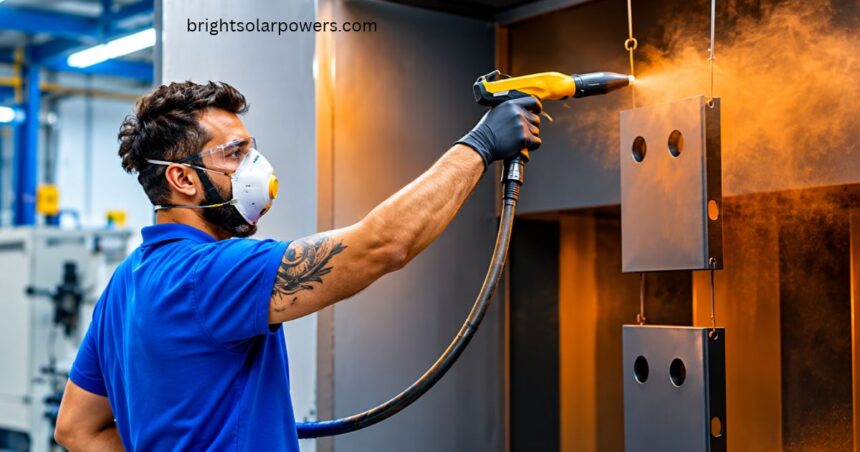
Pre-treatment cleans the metal, and an electrostatic spray gun or corona gun then charges the powder so it clings to the grounded part. This electrostatic application leaves a uniform coating before the oven. The solvent-free powder blends polymer resins, curatives and pigments, leveling agents and flow modifiers.
How Do Coating Thickness And Cure Settings Affect Quality?
Coating thickness (mils) and cure settings decide whether a finish survives daily use. A thin film leaves metal exposed, while a heavy film can sag or crack. Ask each shop which mil range it targets for your part and how it measures that range.
The curing temperature and cure time change with the powder and the weight of the part, so a thick casting needs longer in the oven than thin sheet. Trapped gases cause outgassing, which leaves bubbles or pinholes in the finish. I always ask how a shop handles porous castings, because careful outgassing steps prevent that flaw.
How Should A Good Shop Prepare Your Metal?
A good shop strips, cleans and profiles the metal before any powder touches it. Surface preparation often decides whether a coating peels or holds for years. Look for in-house surface preparation, because one team then controls every step and answers for the result.
Sandblasting and media blasting push abrasive media against the part to leave an adhesion profile that supports mechanical adhesion. Degreasing removes oil, and immersion washing or spray washing rinses the part clean. A media blast room and a spray booth keep that work contained and consistent.
How Do Shops Remove Old Coatings, Rust And Scale?
Shops remove old finishes through chemical stripping, blasting or heat, depending on the metal and the coating. Coating removal matters because new powder bonds poorly over flaking paint or oily residue. Coatings Plus lists coating burn-off on its site, using a batch burn-off oven with an afterburner.
That thermal stripping runs at about 800°F, accepts parts up to 72 by 72 by 144 inches and clears paint, powder coating, grease, oil and varnish. The site excludes halogen-containing materials. Rust removal also targets mill scale, welding scale and other metal oxides that weaken a bond.
Which Metals Can You Powder Coat?
Most conductive metals accept powder coating, because the charged powder needs a path to ground. Common choices include steel, aluminum and stainless steel. Cast iron and galvanized metal also work, though both release gas more easily during the bake, so the shop adjusts its steps.
Metal Coatings & Mfg. Co. states that it coats aluminum, steel and stainless steel. Primo Powder Coating states that it works on ferrous metals and non-ferrous metals. Tell any shop your exact alloy and size before you drop off the order.
What Powder Types Should You Ask About?
Powder type controls how a finish handles sun, chemicals, moisture, impact and everyday wear. Common families include polyester powder, epoxy powder, TGIC and hybrid powders. Each one suits a different setting, so name your part’s environment and daily use when you ask.
Primo Powder Coating lists polyester powder, epoxy powder, TGIC, hybrid powders and super durable powders. Metal Coatings & Mfg. Co. lists epoxy powder, polyester powder and TGIC types, plus nylon coating and high-temp options. Coatings Plus lists thermoplastic coating among its services.
Is High-Temperature Powder Coating Worth It?
A high-temperature powder coating makes sense on parts that run hot, such as exhaust systems, headers and manifolds or turbochargers. It adds thermal protection where standard powders often fail. Skip it for parts that never see serious heat, because the extra cost buys nothing there.
Primo Powder Coating states that it offers high-temp coating through ZyBar and holds ZyCoat certification. Metal Coatings & Mfg. Co. states thermal protection up to 800°F. Ask about oxidation-resistant coatings, a heat dissipation coating and radiant heat reduction if your part sits near other components.
What Colors And Finishes Can You Choose?
You can usually pick a color, a gloss level and a texture for the same part. Custom color matching helps when a new part must blend with existing equipment. Coatings Plus lists it, with a color chart from Cardinal, Sherwin-Williams, Tiger Drylac and Axalta.
Shops keep stock colors on hand and order special-order powders for anything else, and some suppliers advertise 10,000+ color options. A RAL color code describes a shade exactly, and metallic silver is a common request. Finishes range from smooth finish, textured finish, smooth hammered and anti-skid texture to high gloss, semi-gloss, low gloss, matte finish, clear powder coat and decorative finish.
What Benefits Should A Coating Deliver?
A good coating protects metal and keeps its look for years of sun, rain and handling. Look for corrosion resistance, rust protection and a durable finish on every quote. Ask the shop how it backs those claims with testing or warranty terms.
Powder also offers chip resistance, scratch resistance, fade resistance, UV resistance, chemical resistance, moisture resistance and impact resistance. That mix gives you a long-lasting finish with minimal maintenance and extreme weather resistance through Idaho’s hot summers and freezing winters. Low VOC content also makes it an environmentally friendly coating.
Which Parts Can You Bring To A Powder Coater?
Powder coaters handle everything from automotive parts to architectural metal, as long as the part fits the oven. The right shop matches its oven size to your part. Measure your biggest piece before you call, and note its weight and any hollow sections.
Car owners bring car frames, a race car frame, wheels and rims and ATV/UTV parts, while farm and shop owners bring trailers, machinery components and industrial equipment. Homeowners bring metal fencing, a wrought iron fence, gates, handrails, safety railing, residential railing, patio furniture, lawn furniture and bicycle racks. Businesses add HVAC equipment, hooks, racks and fixtures and even sewer cleaning equipment.
What Capacity And Services Should A Provider Have?
Check large-part capacity, fast turnaround times and high-volume production before you commit. Oven and booth size set the limits. Primo Powder Coating lists an 8 by 8 by 16 foot oven, and Metal Coatings & Mfg. Co. coats parts up to 19 by 7.5 by 7.5 feet.
Metal Coatings & Mfg. Co. states that production runs from 1 to 100,000 units, and it adds laser cutting, metal fabrication, tube bending and welding. That start-to-finish finishing suits a custom job shop customer who wants one contact. Its site also lists fencing and rails, assembly, labeling and kitting.
How Do Custom And Industrial Coating Jobs Differ?
Custom powder coating fits one-off projects and small batches, while industrial powder coating fits repeat production runs. Many shops serve residential, commercial and industrial customers under one roof, which simplifies repeat orders. Primo Powder Coating lists both custom and industrial work on its site.
Primo Powder Coating also provides a free estimate, offers media blasting as a stand-alone service and follows a six-step process of chemical stripping, masking, outgassing, coating, media blasting and baking. Good masking uses high-temp masking tape and silicone plugs to protect threads and bores. I always ask who handles masking, because a rushed job leaves bare spots or clogged holes.
Why Does Location Matter When You Choose A Shop Near Nampa?
Location matters because you haul the part yourself or pay someone to move it, and distance adds time and risk. A shop close to Nampa saves a trip across the Treasure Valley on small jobs. Large parts such as trailers may justify a longer drive to a shop with the right oven.
I wrap fragile parts in moving blankets and photograph every angle before drop-off. Boise sits about 20 miles east of Nampa on Interstate 84, and Meridian lies between them, so comparing two or three shops costs little time. Call first, because a shop that cannot fit your part will tell you in one minute.

What Should You Ask A Shop Before You Hand Over Your Parts?
Ask what powder the shop plans to use, how it will prepare the metal and how long the job will take. Request the quote in writing before any work starts. Then ask who handles masking and who inspects the finished parts.
I also ask to see a finished sample in the same color and gloss, because a printed chart never matches a real panel. A shop that welcomes questions usually welcomes inspection too, so check each corner and edge when you pick up the order. Report any defect within a day.
How Can You Compare Powder Coating Services In One Place?
This site gathers what each provider’s own website states, so you can compare shops without opening a dozen tabs. Each brand offers the services listed on its own website, and this guide names only the services those sites confirm. Treat the notes as a starting list, then confirm details by phone.
Coatings Plus covers powder coating, sandblasting, burn-off stripping and custom color matching in Boise. Primo Powder Coating, also branded Pro Coating Treasure Valley, displays logos for IFS Coatings, Prismatic Powders and Columbia Coatings. Metal Coatings & Mfg. Co. has the longest fabrication list but sits in Minnesota, so use it as a benchmark for process questions.
What Questions Do Readers Ask About Powder Coating Services?
These short answers cover the questions I hear most often from readers in the Treasure Valley. Each answer stays general, so confirm specifics with the shop before you commit. This guide quotes no prices, hours or phone numbers, so check those with each shop.
How Much Does Powder Coating Cost In Nampa?
None of the three websites publishes prices, so this guide quotes no figure. Cost depends on part size, surface preparation, color and quantity. Primo Powder Coating lists a free estimate, and you can request a quote from any other shop in the same way.
Does Powder Coating Work Over Old Paint?
Shops strip old paint first, because new powder bonds poorly over loose or flaking coatings. Chemical stripping, blasting and coating burn-off all remove old finishes, though each suits different metals. Ask which method your shop uses for your metal and why.
Is Powder Coating Better Than Liquid Paint?
Powder coating uses solvent-free powder, so it releases little or no VOC emissions during application. It typically builds a thick, even film in one coat, which saves a step. Liquid paint still suits some jobs, so compare both options against your part and budget.
What Should You Bring When You Request A Quote?
Bring the part’s measurements, the metal type, your color code and the quantity you need. Photos of rust, old paint or welds help the shop plan its prep work. A shop that asks follow-up questions usually plans the job better.