

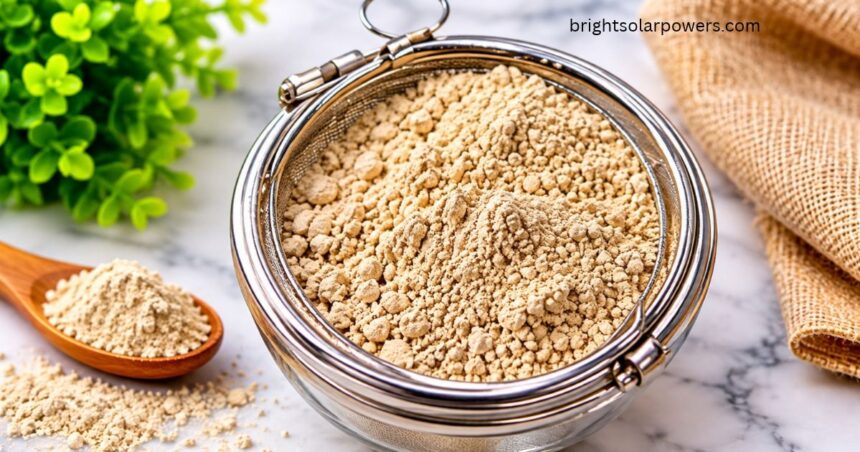
NA Calcium Sulfate Select Salts is a dry salt that aquarium keepers add to raise calcium and sulfur in planted aquariums. Shoppers in Nampa usually search for it by its formula, CaSO4, or by the British spelling calcium sulphate. This page answers what it is, what it does, and how to judge a provider.
NilocG lists this salt in its select salts collection and states a guaranteed analysis you can verify. We also cover other calcium sulfate grades, such as a laboratory reagent and a food additive E516. You will finish with a checklist that works for any seller.
What Is Calcium Sulfate and Which Forms Does It Take?
Calcium sulfate is an inorganic compound with the formula CaSO4, and it appears as a white powder that stays poorly soluble in water. Its hydrated forms include gypsum and hemihydrate, while anhydrite carries no water at all. NilocG sells the dihydrate, which chemists write as calcium sulfate dihydrate or CaSO4·2H2O.
American Elements lists the anhydrous powder with a density of 2.32 g/cm3 and a solubility of 0.21 g per 100 ml at 20 °C. That low solubility explains why anhydrous calcium sulfate dissolves slowly in tank water. Chemists also file the compound under CAS 7778-18-9, which helps you match listings.
How Do Gypsum, Anhydrite, and Plaster of Paris Differ?
Heating moves one form toward another, so the names describe water content. A label that says anhydrous calcium sulfate therefore tells you the water has gone.
NOAA’s CAMEO datasheet says soluble anhydrite forms below 300 °C and absorbs water to become the hemihydrate. Dead-burned gypsum forms above 600 °C and does not react with water the way soluble anhydrite does. You can use those two facts to spot a mislabeled product.
What Does CaSO4 Do for a Planted Aquarium?
Calcium sulfate supplies calcium (Ca) for cell wall structure and sulfur (S) for root development, and it also raises general hardness (GH). NilocG states these roles on its product page. Aquarium keepers add it to a planted aquarium when a test shows low calcium.
Calcium also supports plant integrity and nutrient transport inside the plant, according to the same page. Wikipedia adds that calcium sulfate causes permanent hardness in water, and the sulfate part of the molecule supplies the sulfur. Stem plants take nutrients from the water column, while rooted plants also draw on the substrate.
How Do You Dose It Correctly?
NilocG’s dosing instructions give a simple dosing per 10 gallons: 1/2 tsp adds 10 ppm calcium. Treat that figure as a starting point, then retest. Small steps work best, since every tank uses calcium at its own pace.
Mix the salt into reverse osmosis (RO) water when you remineralize, because a 5-stage reverse osmosis unit removes most dissolved minerals. A remineralizer restores minerals after RO filtration, and NilocG sells a shrimp GH+ remineralizer, a water conditioner, and a dechlorinator that each do a different job. Dissolve the salt first, pour second, and keep the dechlorinator step separate.
How Does It Fit With Other Nutrients?
CaSO4 covers calcium and sulfur, so you pair it with nitrogen, phosphorus, potassium, and trace elements. NPK stands for the first three, which count as macronutrients, while micronutrients include iron and manganese. NilocG’s dry fertilizer collection names potassium nitrate (KNO3), potassium sulfate (K2SO4), potassium phosphate (KH2PO4), manganese sulfate (MnSO4), and magnesium sulfate (MgSO4).
Iron arrives as iron gluconate, iron chelate, or an iron supplement, and trace blends include CSM+B and Microplex. NilocG also offers a dry salt package, a PPS-Pro plan, and EI-based dosing, plus single-nutrient dosing through elemental nutrients. A GH booster and a KH booster target hardness and alkalinity separately, while a liquid fertilizer or an all-in-one fertilizer covers several nutrients per bottle.
Which Planted Tanks Need More Nutrients?
Nutrient demand rises with light and CO2, so a high-tech planted tank needs more than a low-tech planted tank. A CO2-injected aquarium under high light grows fast and draws nutrients quickly. A freshwater planted aquarium with slow growers may need only occasional additions.
NilocG’s Thrive line follows those splits: Thrive for general tanks, Thrive+ for higher demand, ThriveC for lower tech, and ThriveS for a shrimp-focused tank. ThriveTabs and ThriveCaps act as root tabs, a substrate fertilizer that gives root-zone nutrition through the aquarium substrate. The same site sells aquasoil, including Mastersoil, and its home page lists Made in USA and shrimp-safe among the Thrive family’s features.
What Else Does Calcium Sulfate Do Outside the Aquarium?
Calcium sulfate appears in construction, food, farming, and laboratories. Builders use it in drywall, stucco, cementitious materials, and cement chemistry, while lab buyers know Drierite as a calcium sulfate desiccant. The hydrates also act as a tofu coagulant, and calcium sulfate carries the number E516 as a food additive.
Calcium sulfate works as a soil amendment, and a 2024 study cited by Merck describes soil remediation in sulfate-deficient soils. Laboratories use it as a laboratory reagent in culture media, where it provides pH buffering. Researchers also test it for bone repair, dental applications, and controlled drug delivery.
Where Does Commercial Calcium Sulfate Come From?
Most supply comes from natural gypsum and anhydrite, which form as evaporite deposits and reach buyers through open-cast quarrying or deep mining. Wikipedia puts world natural gypsum output near 127 million tonnes per year. Industry adds supply through by-product recovery, for example when sulfur-trapping processes capture sulfur dioxide.
Phosphoric acid plants produce phosphogypsum, but impurities often make reuse uneconomic. Sulfuric acid production relied on anhydrous calcium sulfate commercially until the 1970s. Ask any provider about the source, since fertilizer and laboratory grades differ.
What Should You Look for in a Service Provider?
Look for a provider that clearly states the product grade, the guaranteed analysis, the pack sizes, and the safety paperwork. A clear listing names the material, such as calcium sulfate dihydrate, and gives verifiable numbers. A listing with no analysis deserves a second look.
NilocG shows what that looks like: 97% calcium sulfate dihydrate, 22.5% calcium, and 18.0% sulfur on one page. It offers a one-pound size and a five-pound size. Compare other sellers against those fields.
Which Specifications Should a Listing Show?
A good listing shows purity, hydration state, particle form, and pack size. For laboratory work, ask for a high-purity grade (trace metals basis), and MilliporeSigma lists calcium sulfate at 99.99% on that basis. American Elements publishes grades from 98% to 99.99% with product codes.
Fertilizer buyers care about heavy metal content, so check whether the seller links an official source. NilocG points readers to the AAPFCO (Association of American Plant Food Control Officials) metals page for that purpose. Food and laboratory buyers need different documents.

How Do Safety Documents Help You Compare Providers?
A safety data sheet (SDS) lists hazards, handling, and first aid measures, and a trustworthy provider links one. NIOSH lists a recommended exposure limit of 10 mg/m3 for total dust and 5 mg/m3 for respirable dust of anhydrous calcium sulfate. CAMEO lists eye and skin irritation and respiratory irritation as symptoms.
CAMEO calls the compound non-combustible, yet Merck assigns storage class 11 for combustible solids to its grade, so read each supplier’s own sheet. CAMEO’s protective clothing section quotes NIOSH, which makes no body-protection recommendation. Many handlers choose gloves and a dust mask when pouring dry salt.
Which Brands Can You Check, and What Do Their Websites Say?
Start with NilocG, Brenntag, and Atomic Les, because each publishes its own offerings on its website. Each brand offers the services listed on its own website, so read those pages first. This article repeats only what the sites confirm.
Their sites address different readers. NilocG addresses aquarium hobbyists, Brenntag addresses chemical customers, and Atomic Les publishes its own pages that you should read directly. Matching your need to the right site saves time.
What Does NilocG Publish?
NilocG Aquatics runs an online aquarium store, and its site confirms a dosing information page, a support page, a dealer finder, and published shipping, refund, privacy, and terms of service policies. Its product page adds dosing instructions and a guaranteed analysis. It lists CO2 diffusers and reactors, CO2 accessories, and aquarium add-ons as separate categories.
The site states no repair services, which fits a chemical product. At the time of writing, the product page showed both pack sizes as unavailable. Confirm stock before you plan a purchase.
What Does Brenntag Publish?
Brenntag calls itself the global market leader in chemical distribution, with more than 17,000 employees and about 600 locations in over 70 countries. Its corporate site confirms value-added services and tailor-made solutions, including application solutions, marketing solutions, and supply chain solutions. It also describes a full-line portfolio of specialty chemicals, industrial chemicals, and ingredient products.
Brenntag links chemical manufacturers, which it calls suppliers, with chemical users through a global network, a supplier base, logistics, and what it calls local excellence. Its pages name Safety First as the first core value, covering product safety and process safety, and they describe environmental protection and sustainability work. The corporate page does not name calcium sulfate or any repair service, so ask Brenntag directly about CaSO4.
What About Atomic Les and Other Names?
Atomic Les maintains its own website, and only its pages can confirm which services it offers. This article lists no services for Atomic Les for that reason. Open atomicles.com yourself and note any product or service it states.
Other names turn up in searches, such as MilliporeSigma and American Elements, which publish data sheets and safety information for laboratory grades. Drierite appears in desiccant searches as a trade name. Treat each as a specification reference, not as a promise of local service in Nampa.
Why Is This Website the Easiest Way to Compare Providers in Nampa?
This website puts the checklist, the brand notes, and the product facts on one page. It points to each brand’s own website for service details and repeats no claim the sites do not confirm. You can read, compare, and decide in one sitting.
The page stays informative rather than promotional, and it focuses on NA Calcium Sulfate Select Salts (CaSO4) in Nampa. Brand pages change, so check each website for current details. Use this page as a starting point, then confirm specifics with the provider.
What Questions Do Readers Ask Most About CaSO4?
Is Calcium Sulfate a Plant Fertilizer?
Yes, calcium sulfate works as a plant fertilizer for calcium and sulfur, and NilocG describes it as a calcium sulfate fertilizer for a planted tank. It acts as an aquarium plant fertilizer only for those two nutrients, so you still add nitrogen, phosphorus, and potassium separately. Balanced feeding supports healthy plant growth in any aquascape.
Does Calcium Sulfate Replace CO2 Equipment?
No, calcium sulfate supplies minerals, while CO2 diffusers and reactors supply carbon. NilocG lists them as separate products from its fertilizers. A tank under high light needs both carbon and nutrients in balance.
Is Calcium Sulfate Safe to Handle?
Calcium sulfate is non-combustible, but the dust can irritate eyes, skin, and airways, according to NOAA’s CAMEO. Read the safety data sheet from your seller and follow its handling advice. Keep the container tightly sealed and dry.
How Do I Verify a Brand’s Services?
Open the brand’s own website and read its product, support, and policy pages. Each brand offers the services listed on its own website, and nothing else counts as confirmed.