
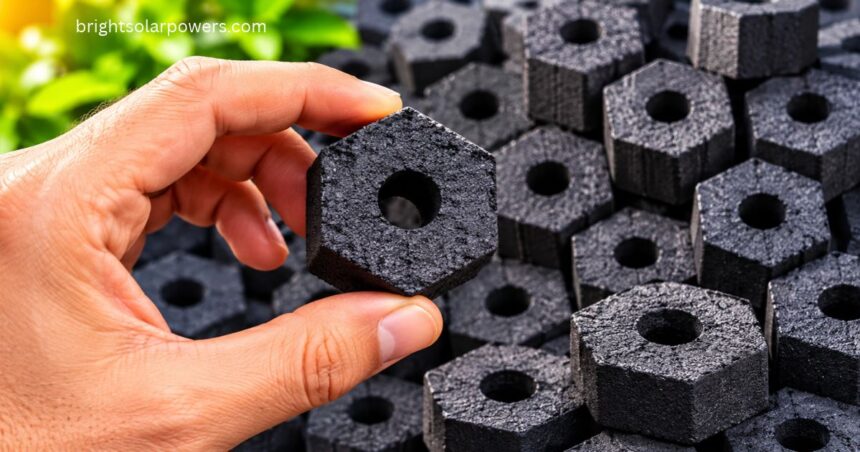
Activated carbon felt, or ACF, is a flexible mat of carbon fibers that manufacturers treat so the fibers trap gases and dissolved contaminants. The word activated describes that treatment, while carbon felt describes the matted, cloth-like shape. Buyers choose it when they want a cuttable sheet instead of loose granules.
Producers often begin with PAN-based carbon fiber or viscose rayon, carbonize it, and then activate it. Surface area commonly runs roughly 1,000 to 2,000 square meters per gram, though makers publish their own figures. I always ask for that number in writing before I compare two suppliers.
How does carbon felt differ from graphite felt?
Graphite felt comes from carbon felt that a producer heats to far higher temperatures, which changes how the fibers conduct heat and electricity. Carbon felt stays at a lower heat treatment and keeps a different structure. Dymriton lists PAN-based graphite felt in its nonwoven menu, so you can see both names side by side.
The needle punch felt process tangles fibers mechanically instead of weaving them, and that gives a springy non-woven fabric. Soft felt and rigid felt boards both start from this kind of fiber mat. When I read a catalog, I check whether the seller writes carbon, graphite, or activated, since each label means something different.
What carbon felt products can you buy?
Carbon felt products fall into two groups: soft felt that bends, and rigid boards that hold their shape. Carbon Felt Inc (CFI) shows both groups on its home page, including 1/4″ soft felt and 1/2″ soft felt. The same page lists rigid thermal boards, rigid thermal cylinders, and composite rigid boards.
CFI also names composite sandwich boards and a Flex-shield option for its thermal boards and cylinders. Carbon composite parts and carbon composites share a materials family with felt, so catalogs often list them together. Read each listing slowly, since thickness changes how a part behaves.
Which fibers and mats appear beside carbon felt?
Dymriton’s catalog places its graphite felt among fiberglass, glass fiber, and polyester fiber products for composite makers. Its nonwoven menu also lists a polypropylene mat and an aramid fiber felt. Reinforcement buyers treat these as neighbors, not substitutes, and E-glass fiber is the usual comparison.
The same menu includes a PAN surfacing veil, a PAN conductive surfacing veil, a polyester conductive surfacing veil, a polyester surfacing veil, a carbon surfacing veil, and glass surfacing tissue. It adds a chopped strand mat, a continuous filament mat, an isolation mat, and a woven roving. Dymriton also describes a non-woven carbon fiber veil, carbon fiber reinforcement, multiaxial fiber reinforcements, and a conductive veil.
What do stitched reinforcements add?
Stitched fiberglass reinforcements lay fibers in set directions and hold them with stitching, which adds strength along chosen axes. Dymriton lists biaxial fabric, triaxial fabric, quadraxial fabric, and unidirectional fabric in that group. It also lists a combination mat and a flow mat.
Dymriton’s nonwoven line aims for no binding yarn, so a finished part shows no fiber print on its face. That detail matters when you plan a cosmetic layer over a core material. Ask the seller which format fits your mold.
Which manufacturing processes use these materials?
Dymriton says its materials suit resin transfer molding, also called RTM, plus light RTM (LRTM), vacuum infusion, filament winding, and pultrusion. It also recommends designs across those methods and hand lay-up. Each method moves resin differently, so check resin flow before you order.
Its blog covers the composite winding process, winding parameters, and filament winding molding for an FRP (fiber reinforced plastic) product such as an FRP tank. Another post examines voids in Type IV pressure vessels, one family of composite pressure vessels. Because every FRP process handles fiber differently, I match the felt or mat type to the molding step first.
Where does carbon felt show up in fuel cells and electrolysis?
Fuel cell components rely on porous carbon sheets called the gas diffusion layer (GDL), and carbon felt shares a fiber family with the carbon paper and carbon cloth used there. Fuel Cell Store sells gas diffusion media in several forms. Each form moves gas and water differently.
Its home page lists Sigracet 39 BB, a non-woven carbon paper with a microporous layer (MPL), and Toray 060 carbon fiber composite paper with PTFE treatment. It also lists a carbon cloth electrode with platinum on Vulcan carbon, which works as a gas diffusion electrode (GDE). I compare thickness, treatment, and substrate before anything else.
Which membranes and catalysts sit next to the felt?
A membrane electrode assembly (MEA) joins a membrane, catalyst layers, and diffusion media, while a catalyst coated membrane (CCM) builds the catalyst onto the membrane itself. Fuel Cell Store’s keywords cover PEM fuel cell, LT PEM, solid oxide fuel cell (SOFC), and alkaline fuel cell hardware. Electrolyzer and electrolysis work appear there as well.
Its keywords include electrolyzer catalyst and fuel cell catalyst, plus 50% platinum on Vulcan XC-72R and an iridium ruthenium oxide product. It also shows a 20-micron cation exchange membrane (CEM) and Branion anion exchange membrane (AEM) grades at 30, 50, and 80 microns, so membrane thickness in microns is easy to compare. Each one is a non-reinforced membrane, and Branion ionomer resin suits catalyst ink.
How do carbon materials support hydrogen and battery work?
Hydrogen systems and batteries both depend on carbon-based electrochemical materials. Fuel Cell Store sorts its catalog into fuel cell stacks, hydrogen equipment, and battery materials. The battery section covers anode and cathode powders, and its keywords also name hydrogen materials.
Electrochemistry explains why carbon fiber works well here: it conducts electricity and resists many chemicals. Electrochemical materials and carbon felt often appear in the same buyer conversations. I keep a short glossary of each term before I email a supplier.
How do renewable energy sources fit in?
Fuel Cell Store files solar power, wind power, hydro power, and bioenergy power in separate categories beside its fuel cell products. Renewable energy and clean energy projects often convert or store electricity through hydrogen. Power devices have a section of their own.
Fuel cell cars also have a category, which shows how far these materials reach. Dymriton’s winding articles mention composite materials in aeronautics. That range explains why one carbon felt keyword leads to so many different suppliers.
Which properties should you check before you buy?
Check electrical and thermal behavior first, then surface quality and weight. Dymriton describes UV-resistant fabric and aging-resistant fabric, and Fuel Cell Store describes a membrane with low resistance. Those details tell you how a material will hold up in use.
Dymriton also advertises a smooth surface finish and high-quality finished parts, and it frames its products as lighter materials and cost-effective materials. Carbon Felt Inc says it keeps the highest level of quality through in-house work. I treat those lines as claims and request spec sheets.
What should a good carbon felt service provider offer?
A good provider cuts, tests, and explains its materials in plain language. Carbon Felt Inc states in-house manufacturing and machining, from basic boards to precision blueprint designs. Dymriton’s Support section promises technical knowledge, and its engineers say they design and develop workable material, which amounts to design and development support.
Dymriton also mentions repeated material testing, and a customer describes test specimen development there. Its technical engineer lists failure analysis among her skills, and the site highlights research and development. Ask any seller about technical support, because websites differ and I note who answers and how fast.
How do ordering and shipping work?
Carbon Felt Inc states global distribution, and Fuel Cell Store states worldwide shipping and purchase orders. Those details tell you the sellers serve buyers outside their home regions. Confirm shipping terms for your own address and your own order size before you commit.
Fuel Cell Store also lists fuel cell testing equipment, including interchangeable test hardware for single cells. That hardware matters if you plan to evaluate a felt or paper sample before you commit to volume. Sample orders show packaging and response time.
Which brands make or sell carbon felt?
Carbon Felt Inc (CFI), Dymriton, and Fuel Cell Store each approach carbon materials from a different angle. CFI makes carbon felt and carbon composite parts, Dymriton makes nonwoven and stitched composite reinforcements, and Fuel Cell Store sells fuel cell and electrochemical supplies. Each brand offers the services listed on its own website.
CFI began in 2008 as a research and development plant, according to its site. Dymriton operates from Changzhou in Jiangsu, China, and Fuel Cell Store operates from Bryan, Texas. Check each company’s website for current details, since pages change.
Which other brands appear in this field?
Fuel Cell Store’s home page shows eleven brand logos, including SGL Carbon (Sigracet), Toray, Avcarb, and Freudenberg. The row also includes Fumatech (Fumasep), Syensqo, Nel, and H-TEC, along with three others. Fuel Cells ETC makes the XT catalyst line sold there.
A brand name on a retailer’s page tells you who makes the product, not which services you will receive. Read the retailer’s own service pages, then contact the maker if you need technical data. I keep a list of brand names with data-sheet links.

Where can you learn the basics?
Fuel Cell Store runs an education section that covers fuel cell basics and hydrogen education. Its resources add energy literacy material and a glossary of terms for newcomers. It also offers lesson plans for several school levels and STEM education products.
Students and bloggers can use that glossary of terms to learn vocabulary before reading supplier catalogs. Clear vocabulary shortens sample requests. I read it before I wrote my first felt comparison.
Why do custom and sample sizes matter in Nampa?
Custom and sample sizes let you test a felt before you buy a full roll or board. Readers in Nampa, Idaho, who work with filters, lab equipment, or small fabrication jobs often need a few square inches, not a pallet. Ask every supplier for its smallest order and its cutting options.
Nampa sits in the Treasure Valley, west of Boise, so confirm lead time and shipping from each supplier’s own location. I request a sample first and measure it. Only then do I place a larger order.
What questions do readers ask about carbon felt?
Is carbon felt the same as activated carbon felt?
No, they differ. Carbon felt is the base fiber mat, while activated carbon felt gets an extra activation step, using steam or chemicals, that builds surface area. Ask the seller to confirm activation, surface area, and test method in writing before you order.
Do these three websites sell activated carbon felt?
The home pages I reviewed describe carbon felt, graphite felt, and carbon paper rather than activated carbon felt. None of them uses the term ACF. Contact each company, ask whether it can supply activated material, and request the activation method.
Which sample sizes do these brands list?
Carbon Felt Inc lists soft felt in 1/4″ and 1/2″ thicknesses, and Fuel Cell Store lists membranes by thickness in microns. Dymriton does not state sample sizes on its home page. Ask each company for its current cut sizes and minimum orders.