


India’s national portal for rooftop solar took a massive leap when the National Portal opened doors for every homeowner across all states and union territories to access financial assistance directly.
The government of India understood that implementation challenges were stopping millions of consumers from going solar, so MNRE under RK Singh completely re-imagined the residential solar subsidy programme.
This simplified programme now connects applicants to net-metering, subsidy, and commissioning support all under one roof, making solarisation of Indian homes a real possibility for everyone.
Back at COP 26 in Glasgow in 2021, Prime Minister Narendra Modi made a bold promise India would hit Net Zero carbon emissions by 2070 and pull 50% energy from renewable sources by 2030.
That promise pushed MNRE and state DISCOMs to work harder, because India’s solar power capacity already ranks fourth globally, and the country had every reason to grow faster.
The Ministry of New and Renewable Energy appointed state DISCOMs as implementation agencies to drive the Rooftop Solar Phase II programme forward and bring clean energy to every corner of the country.
What really changed the game was when Gujarat proved it could be done nearly 3 Lakh homes installed rooftop solar systems under the subsidy program, while all other states combined couldn’t cross 1 Lakh residential solar installations.
That gap told the whole story about implementation challenges and why a national solar portal with a Direct Benefit Transfer or DBT model was urgently needed. Now, subsidy disbursal goes straight into the consumer’s bank account within 30 days of installation and commissioning, cutting out delays and giving people real confidence in the system.
Companies like Tata Power, India’s national portal for rooftop solar power company with over 30 years in Renewables and presence across 265 districts, have played a key role in driving this green transition toward a truly sustainable tomorrow.
How to apply for the National portal for rooftop solar?
Every applicant who wants to access rooftop solar benefits must start by downloading the SANDES app and completing registration on the National Portal by entering their electricity connection number, consumer number, email id, and mobile number linked to their DISCOM, Distribution Company or Electricity department.
The registration process uses OTP authentication to verify the mobile number, and an activation link is sent to the email id so the entire procedure is communicated to the applicant before they move forward. Once the activation link confirms the account, the portal prefills saved details into the application form, making the process smooth and reducing the chance of errors right from the start.
After logging in, the applicant submits a request for a grid-connected rooftop solar system at their residential house, filling in details like the name on the electricity bill, address, capacity of the proposed system, and any existing rooftop solar system already in place, along with uploading the latest electricity bill.
The application then moves to the DISCOM for technical feasibility approval based on prevailing regulations, and the applicant receives the feasibility approval or rejection directly via email, so there’s full transparency at every step.
It is important that no installation work begins before feasibility approval arrives, because jumping ahead can create complications with net-metering and subsidy disbursal later.
Once feasibility approval is confirmed, the applicant must choose a vendor who is registered and empanelled with the DISCOM, as using an unregistered installer disqualifies the subsidy claim entirely.
The vendor must use domestically manufactured solar modules and domestically manufactured solar cells listed under ALMM, and the inverter must carry BIS-certified status to meet minimum technical specifications and standards set by the Ministry.
A signed agreement between the applicant and vendor available as a model format in the Help Document section of the portal protects both the national portal for rooftop solar, and the vendor is legally bound to provide comprehensive maintenance of the rooftop solar plant for at least 5 years after installation.
After the system goes up, the applicant submits project completion details covering wattage, make and numbers of solar modules, inverter details, vendor name, and a photograph of the setup, then applies for net-metering through the portal .
The net-metering application goes to DISCOM, which guides the applicant on net-metering charges and signing the net-metering agreement before DISCOM officials physically install the net-meter and run a full inspection against minimum technical specifications.
Once inspection passes, the commissioning certificate is generated online by DISCOM, after which the applicant uploads bank details and a cancelled cheque so the fund-handling agency can push the central Government subsidy directly into the bank account, completing the full cycle from OTP to subsidy without unnecessary delays.
Those who prefer help can let an empanelled solar company handle the entire end-to-end responsibility, from application to subsidy disbursal, with full application status tracking available on the portal and after-sales and maintenance service covered for 30 days post commissioning.
How Much Subsidy Can Home-Owners Get on the national portal for rooftop solar?
The national simplified subsidy scheme fixes subsidy amounts based on clear slabs that apply uniformly across all states and union territories, so every residential consumer knows exactly what Central Financial Assistance or CFA they qualify for before they even begin.
For plant capacity up to 3kW, the applicable subsidy stands at Rs. 14588 per kW, and for systems above 3kW and up to 10kW, the rate stays Rs. 14588 per kW for the first 3kW and drops to Rs. 7294 per kW beyond that, while any system above 10kW receives a fixed amount of Rs. 94822 regardless of size.
The Central Government Subsidy for a rooftop solar plant installed under the simplified procedure follows this subsidy slab structure strictly, and the CFA calculation is based on total solar module capacity, solar inverter capacity, or capacity approved by DISCOM, whichever is lower, ensuring fair subsidy calculation across all cases.
The national portal for rooftop solar caps residential rooftop solar benefits at 10 KW, meaning any system larger than that still receives only Rs. 94822 as the maximum financial assistance under this DBT model.
The fund release only happens after the inspecting authority, the DISCOM, gives clearance following successful commissioning and proper setup of the metering system as per the specified procedure, and the CFA carries no retrospective effect for systems installed before applying.
This Direct Benefit Transfer model means the subsidy disbursal lands directly in the consumer’s bank account within 30 days of commissioning, making the entire financial process transparent, traceable, and free from middlemen.
Why is the New National Solar Portal a Game-Changer for Residential Solar?
The National Solar Portal truly is a game-changer for residential solar in India because it removes the single biggest barrier that stopped millions of homeowners dependence on whether their state had an active subsidy program running or not.
Before this, consumers in states and Union territories without ongoing state subsidy programmes had no path to financial assistance from the government for rooftop solar installation, which left huge populations out of the green energy movement entirely.
Now, under the national portal for rooftop solar, every consumer across every state and every union territory of India can apply directly through the National Solar Portal, making subsidy access genuinely universal for the first time.
The shift to a DBT or Direct Benefit Transfer model puts the subsidy straight into the consumer’s bank account within 30 days of installation and commissioning of the rooftop solar system, completely cutting out the delays that plagued state-level subsidy programmes before.
Real-time tracking of application status on the portal, hassle-free online applications, and 30-day subsidy disbursement together create a system where consumers stay informed and in control at every stage.
The national portal for rooftop solar simplified programme hands power back to the homeowners and takes residential solar adoption to a level that state DISCOM-driven programmes simply could not reach on their own, and the future of solar in Indian homes looks stronger because of it.
Are There Any Conditions for availing the national portal for rooftop solar?
There are only 2 conditions for subsidy eligibility under this scheme, and both are straightforward once you understand what the government of India is trying to protect.
The first condition requires consumers to choose only from solar companies that are empanelled with their state DISCOM, and the list of empanelled companies will be published on all DISCOM websites so residential consumers can verify their choices easily before signing any agreement.
Solar company empanelment ensures that installation quality meets the minimum technical specifications set by the Ministry, protecting both the consumer and the integrity of the National Subsidy Scheme.
The second condition is that the government of India offers financial assistance only on solar systems that use Made in India solar panels, which are also called DCR or Domestic Content Requirement panels and currently, Indian manufacturers produce only polycrystalline solar cells and polycrystalline panels under this category.
This means consumers who want Monocrystalline or Mono-PERC technologies for their rooftop solar system will not qualify for the subsidy, since those solar modules do not meet the domestically manufactured requirement under ALMM.
The BIS-certified inverter rule also applies alongside these panel conditions, making sure every subsidised solar inverter and solar module installed under the DBT scheme meets both quality and origin standards set by the DISCOM and the Ministry.
Why is This Programme a Milestone Moment for the Solar Industry?
This programme marks a true milestone for the solar industry because it simultaneously fixes problems for both consumers and solar companies in a way that no previous state-run subsidy programmes ever managed to do.
Under the old system, solar companies had to offer upfront subsidy discounts to consumers and then wait many months for fund disbursement from DISCOMs, which strangled cash flow and discouraged industry participation across the country.
Now, installation companies receive full payment upfront from consumers, and the government pushes subsidies directly into consumer bank accounts within 30 days, which completely eliminates the financial strain that held back empanelment and growth for smaller solar companies.
The barrier to entry for solar companies has also dropped significantly; any company can now deposit just Rs. 2.5 Lac Bank Guarantee to get registered with a DISCOM and become eligible to install subsidised rooftop solar systems under the National Subsidy Scheme, opening the door to far greater industry participation.
With more solar companies willing to get empanelled, states will finally meet their allocation targets, and consumers will gain the consumer choice they never had before when picking an installer.
The combination of hassle-free online applications, real-time tracking on the portal, 30-day subsidy disbursement, and simplified procedure makes this programme the clearest signal yet that rooftop solar adoption among Indian homes is about to accelerate at a pace the residential solar industry has never seen, and the shift toward DBT, Direct Benefit Transfer, and clean energy powered by sustainability is now truly irreversible.
How Solar Rooftop Works?
A solar rooftop panel works on a beautifully simple principle: sun rays strike the panels, and those panels convert solar energy in the form of light into electricity in direct current or DC form through a process called the photoelectric effect, which requires no moving parts and no fuel.
That DC electrical energy then passes through an inverter connected to the power grid, where it gets converted into alternating current or AC power that every standard appliance in a residential or commercial building can use directly.
A metering panel measures the AC power output, and the entire output of the system stays synchronised with the grid, so whatever electricity the household doesn’t consume gets exported to the grid based on actual solar power generation versus local consumption at any given moment.
The net-metering setup ensures that consumers never waste a unit of power when solar production exceeds demand, the surplus flows back to the grid, and when demand exceeds solar production, the EB grid supplies the deficit seamlessly in what works like a Master Slave arrangement that keeps production steady without any manual switching.
Wattage and capacity of the solar modules, the rating of the BIS-certified inverter, and the ALMM-listed domestically manufactured solar cells all determine how efficiently the system performs day after day.
The commissioning of the system, verified through installation checks against minimum technical specifications, marks the point at which renewable energy officially begins flowing into the home, replacing coal-based electricity with clean energy that costs nothing after the initial investment and generates kilowatt hours of savings every single day.
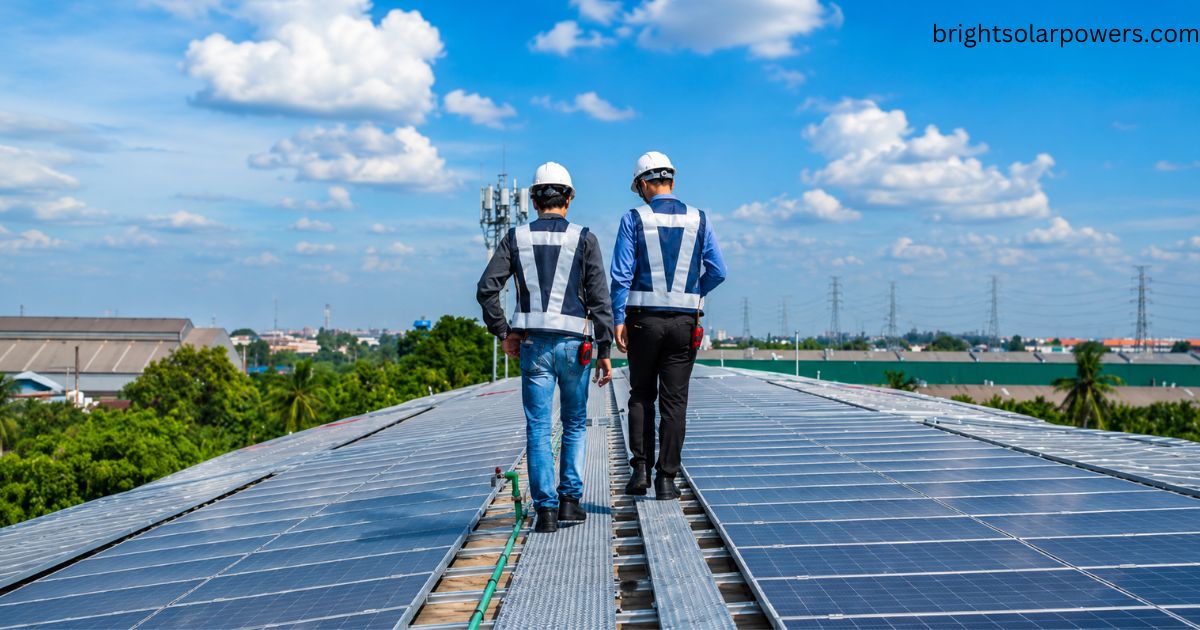
Real Benefits Seen by the national portal for rooftop solar Across India
Across industries and individual households, the shift to solar energy is delivering results that no one can argue with Nahar Industrial Enterprises, a large-scale textile manufacturer in Punjab, installed around 40 megawatts of solar capacity across their 600-acre facility.
Today, 20% of their fabric unit’s power comes directly from solar panels that generate 40,000 units of electricity every single day.
The financial benefits in the long run are undeniable. With a setup this large, the return on investment becomes inevitable, and Tata Power Solar, as a One-Stop solution, handling designing, installing, maintenance, and after-sales for 5 years, made the transition smooth for a manufacturing industry where production demand cannot afford downtime.
The Master Slave arrangement between solar production and the EB grid kept everything synchronised, ensuring the fabric unit maintained production steady even as it moved toward sustainable energy.
Arjuna Naturals, one of the first five MSMEs in South India to go solar over 10 years ago, saved a total of Rs. 7.2 crores over that decade, with a monthly saving of around Rs. 6 lakhs on power bills alone and their return on investment was fully recovered within just 3 years.
Their 18,000 units monthly requirement was partially met by 1,200 units from ground-mounted solar panels, and going solar helped them save 4,000 litres of diesel every single month that they previously burned through DG power, which cost nearly three times the price of grid power.
The hybrid arrangement between solar production and the EB grid meant that local consumption was always met first from solar, with the EB grid covering only the deficit, keeping production steady and power saving consistent even during fluctuating production demand inside this msme sector business that forms part of India’s backbone economy, contributing one third of the country’s GDP.
For residential consumers like Mr Khanna in Bhopal, the experience of going solar with Tata Power Solar translated into an electricity bill that dropped from 500 units to just 50 units per month, practically reaching zero cost for power consumed at home.
The solar panels on the rooftop also reduced heat absorption into the home, meaning coolers and air conditioners ran less often, cutting energy conversion losses and improving comfort through Punjab summers without extra cost.
The Tata Power Solar app tracked daily generation and showed live kilowatt hours generated, carbon reduction achieved, and even the number of trees planted, equivalent to 279 trees and 58.8 kilowatt hours generated up to one point, turning clean energy into something personal, visible, and deeply satisfying.
Professional installation, proper dirt removal from panels for maximum sun rays absorption, and Tata’s trusted after-sales support made the entire experience feel less like a technical upgrade and more like a lifestyle shift toward sustainability that the whole family could see and feel every single day.
Conclusion
This is genuinely the decade of solarisation of Indian homes, and the National Portal has made it possible for every consumer, from large industries to single residential households, to access clean energy and walk away from coal-based electricity for good.
MNRE’s initiative stands as a laudable move that goes far beyond short-term savings, building a foundation for a green future that will benefit Indian homes not just for years but for centuries to come, exactly in the spirit of Bijli Bachaana, Desh Sajaana that Prime Minister Narendra Modi spoke about at the National Solar Portal launch.
The widespread availability of a national portal for rooftop solar, supported by a DBT system that delivers subsidy within 30 days, a simplified programme that any applicant can navigate, and companies like Tata Power Solar delivering end-to-end responsibility.
From the national portal for rooftop solar net-metering to commissioning, this means the transition from fossil fuels to renewable sources is no longer a distant goal; it is happening right now, household by household, rooftop by rooftop, across every state and union territory of India, and the residential solar industry will never look back.
FAQs about National Portal for Rooftop Solar
What is the National Portal for Rooftop Solar Login?
The National Portal for Rooftop Solar Login lets you access your consumer login or vendor login at the official website using your mobile number and OTP. It helps you securely check your application status anytime, anywhere.
How does the National Portal for Rooftop Solar Registration work?
Registration begins by selecting your state, district, and DISCOM, then entering your consumer account number. This free-of-cost step is the gateway to applying for your rooftop solar subsidy.
How to check the national portal for rooftop solar subsidy status?
After logging in, you can track your subsidy status through the application tracking section on the portal. It shows every stage clearly, from DISCOM approval to final subsidy disbursement.
Where can I find the National Portal for Rooftop Solar Vendor List?
The vendor list shows all empanelled vendors approved under MNRE guidelines for solar installation. You can compare registered vendors by location and connect directly for your project.
What is the National Portal for Rooftop Solar Calculators?
The solar rooftop calculator estimates your ideal system size in kW based on your electricity consumption. It gives a quick, personal sense of how much you can save with clean energy.