

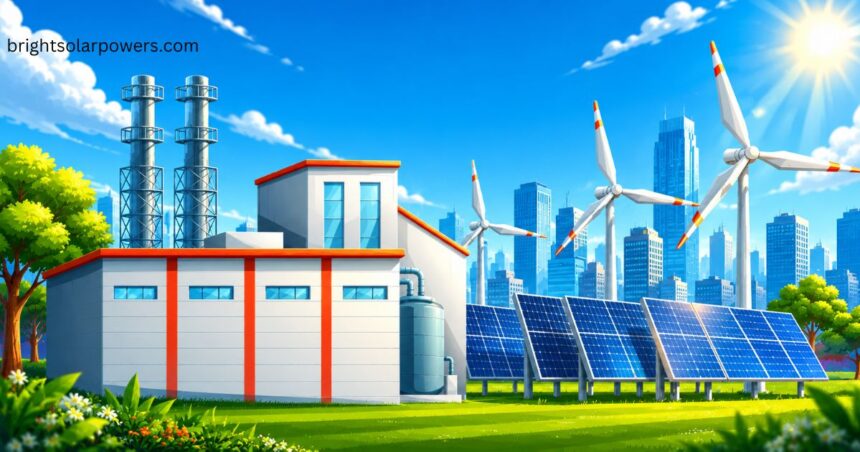
A grid-connected solar system, often simply called an on grid solar system or grid-tied solar system, captures sunlight through panels and turns it into usable electricity for your home.
This setup, also known as a photovoltaic system or PV system, stays linked to the public utility grid and the local electricity grid at all times, so there is no need for battery backup or battery storage.
What is an On Grid Solar System?
Unlike off-grid solar systems, which lean entirely on stored power, this design uses the grid itself as backup whenever solar power generation drops, such as on cloudy days or at night.
Whenever the panels produce more electricity than your running load and demand require, the surplus energy and excess energy get pushed back through net metering or feed-in tariffs, earning you credits or even payments from the utility company.
This arrangement removes the cost of extra energy storage equipment, which is why on grid solar system owners enjoy noticeable cost savings and cost savings on their monthly load.
Devices and home appliances keep running smoothly because grid power instantly fills in any gap, making the whole efficiency-driven setup balanced and dependable around the clock.
Key Components of an On Grid Solar System
Every solar setup depends on a handful of key components working together, starting with the solar panels themselves.
Installers usually choose from three main types: monocrystalline panels, polycrystalline panels, and thin-film panels based on budget, roof space, and the sunlight exposure available at a property.
Whether mounted as roof-mounted or ground-mounted arrays, these panels are positioned at the right angle and orientation to capture optimal sunlight exposure throughout the day.
Once the panels gather sunlight, a grid-tie inverter steps in to change DC electricity into AC electricity that matches household appliances and utility grid standards.
Larger installations often rely on central inverters to manage multiple strings of panels at once, while residential systems commonly use string inverters that link a series of panels into a single string.
Some homeowners prefer microinverters instead, since these attach to individual panels and deliver optimized performance even when shading affects part of the array.
A solid grid connection ties everything together, allowing seamless electricity flow between your rooftop and the wider network, while net metering tracks any excess electricity sent back for credit.
A bi-directional utility meter handles the crediting and billing process by recording power moving in both directions, which keeps everything accurate for future energy consumption.
Sturdy mounting systems, whether space-efficient roof brackets or ground-based frames, hold the panels firmly, making the whole arrangement cost-effective and efficient for years to come.
How does an On grid solar system work?
Solar energy generation begins the moment solar panels capture sunlight on rooftops or in open ground spaces, producing direct current that flows steadily into the system.
This process follows a few well-coordinated steps, moving from raw sunlight exposure to a form of power that homes and businesses can actually use. Since direct current alone cannot run most electrical systems, the next stage focuses on DC to AC conversion.
An inverter handles this conversion, turning direct current into alternating current and AC electricity so it matches the needs of standard appliances, lights, and heating systems.
This grid compatibility means the electricity powering the property works smoothly with everyday electrical systems and the public grid alike.
This cuts down on energy purchased from outside sources and lowers dependence on fossil fuels.
When solar energy production exceeds what a home needs, the surplus energy does not go to waste, since excess energy management routes it straight into net metering for credits.
At night or during cloudy weather, grid power usage takes over to keep electricity demands met without any gaps.
This seamless integration delivers a consistent power supply at every hour, blending solar energy with grid backup so naturally that most people barely notice the switch.
Advantages of On-Grid Solar Systems
One of the biggest draws of this setup is its lower initial costs and low upfront costs, since skipping complex battery storage components keeps installation expenses well below off-grid systems, off-grid alternatives, and hybrid alternatives.
Governments and local authorities often support solar energy adoption through tax credits, rebates, subsidies, and other financial incentives, making the whole package more affordable.
Eligibility and compensation rules differ by state, so checking with your local utility provider helps you understand exactly what support applies to your system size.
Connection to the utility grid also means continuous access to unlimited power, giving every home access to unlimited power without relying on battery storage at all.
Net metering policies and net metering benefits let homeowners earn credits and payments from the utility company for excess energy sent back, which directly lowers electricity bills over time.
Because there are no batteries to manage, low maintenance requirements, and minimal upkeep keep this a low-maintenance, cost-effective option for anyone watching their energy needs and monthly budget.
Disadvantages of On-Grid Solar Systems
Despite the perks, grid dependence remains the biggest drawback, since no power is available during outages unless a battery backup is added.
Unlike off-grid systems, which keep functioning no matter what, this setup pauses completely during a blackout.
For safety, the system goes through an automatic shutdown the moment power outages hit, keeping the inactive system from sending electricity into power lines while workers carry out repairs, which leaves homeowners with limited energy independence since the home still leans on the utility grid whenever solar production dips.
Before installation, securing approvals and net metering permission from your local DISCOM is required, alongside clearance tied to grid integration and the wider regulatory framework. Homeowners in remote areas should also weigh power reliability, since state-specific policies, guidelines, and regulations and approvals can vary widely from one region to the next.
Off-grid solar systems
For homes in remote locations without reliable utility access, an off-grid inverter pairs with an energy storage battery to create a sustainable electricity source that runs independent operation, free from any grid-power-unavailable scenario.
This setup is immune to grid fluctuations, changing energy prices, and shifting solar policies, giving owners complete energy independence that no on-grid setup can match.
Devices, appliances, and essential appliances all draw directly from stored solar energy or sunlight during the day, with batteries acting as a reserve for cloudy days and nighttime, while solar panels feed extra power into storage when sunlight is abundant.
Because there is no grid power to fall back on, no solar power, and no grid power at once can leave a powerless home, especially during extreme conditions, prolonged cloudy weather, or cloudy periods stretching several days.
Careful energy management becomes essential here, since unexpected high energy consumption can leave batteries depleted faster than expected, and battery capacity limitations mean that substantial battery storage and substantial energy storage are non-negotiable.
Many setups also rely on a backup generator during local power outages, ensuring uninterrupted functionality even under unreliable power supply conditions.
Smart off-grid inverters now include solar grid battery priority and priority setting features, letting owners share excessive load between solar, grid, or batteries when the load gets high.
Load fed through batteries keeps essential systems running, though electricity is never exported to the grid under any circumstances in this independent setup
Hybrid solar systems
Hybrid systems offer the best of both worlds by integrating features of grid connectivity and battery storage into one flexible, reliable energy solution. This operational versatility comes from switching between on-grid and off-grid modes automatically, giving owners exceptional flexibility and reducing grid dependency whenever needed.
Hybrid solar inverters manage this process, letting homeowners draw power from grid sources, store excess energy in flexible storage options, or feed the load directly when solar panels generate electricity.
When solar power is more than the load, the system charges batteries first and sends any remaining portion through export to the grid or the remaining power is fed back into the grid via net metering, all based on set priority.
If solar power is less than the load, instead, stored energy or grid supply fills the gap, keeping a continuous power supply steady through low solar production periods, power outages, or for later use that night.
Choosing smaller batteries or affordable batteries for occasional use boosts cost-efficiency, though higher initial costs and installation expenses from hybrid solar inverters do raise overall costs and costs compared to simpler setups.
Even so, many owners find a strong return on investment and ROI over time, since this approach delivers long-term savings by helping manage energy usage and overall performance more effectively than either on-grid or off-grid systems alone.
Location
Location plays a big role in choosing the right setup, since on-grid systems work best in ideal areas with reliable grids and a steady grid connection.
Off-grid systems suit remote locations where grid access is the norm, while hybrid systems fit regions prone to frequent outages by pairing grid support with battery backup.
Backup power
Homes that deal with frequent power outage issues benefit most from hybrid systems and battery storage, since these combinations guarantee an uninterrupted electricity supply around the clock.
This approach also improves solar energy utilisation, gives owners better control over electricity costs, supports sustainable energy goals, and helps with lowering carbon emissions across the board.
Budget
Budget-conscious buyers often pick on-grid setups, since they remain the most affordable option with the quickest payback period, thanks to government incentives, net metering, and simpler installation overall.
Off-grid systems and hybrid systems both carry higher costs from advanced inverters and battery storage, but they make sense when reliability matters more than upfront savings.
Time of Day (ToD) tariff
India’s ToD tariff structure changes electricity rates based on consumption time, encouraging efficient energy usage and mitigating the impact of fluctuating tariffs throughout the day.
During peak hours with higher tariffs, grid dependency can drive up increased costs, while low-tariff periods offer a cheaper window for drawing power.
Hybrid systems handle this well by storing excess solar energy in batteries, offering flexibility and reducing reliance on grid power exactly when tariffs spike.
Conclusion
Understanding the basic concepts of on grid solar system helps any homeowner move toward sustainable living and real renewable energy use.
Weighing the advantages and disadvantages of on-grid, off-grid, and hybrid systems against your own energy goals and future energy demands leads to a smarter choice connected to the utility grid.
Brands like Hinen and Enphase, known for real-time monitoring, microinverters, and unmatched reliability, show how far clean energy technology has come, and with the right battery backup, efficiency, and adaptability built in, a well-chosen system delivers reliability for years while making a genuine positive impact on the planet.
FAQs About On Grid Solar System
How many ACs can run on 3 kW?
A 3kW solar system can easily run one 1.5-ton AC unit along with a few basic appliances.
Which is better, off-grid or on-grid solar?
On-grid solar systems suit areas with a stable grid supply, while off-grid solar systems work best for locations facing frequent power cuts.
How do on-grid solar systems work?
On-grid solar systems connect directly to the utility grid, sending excess power generation back through net metering.
What is hybrid and on-grid solar?
Hybrid solar systems combine battery backup with grid connectivity, while on-grid systems rely fully on the utility grid without storage.