

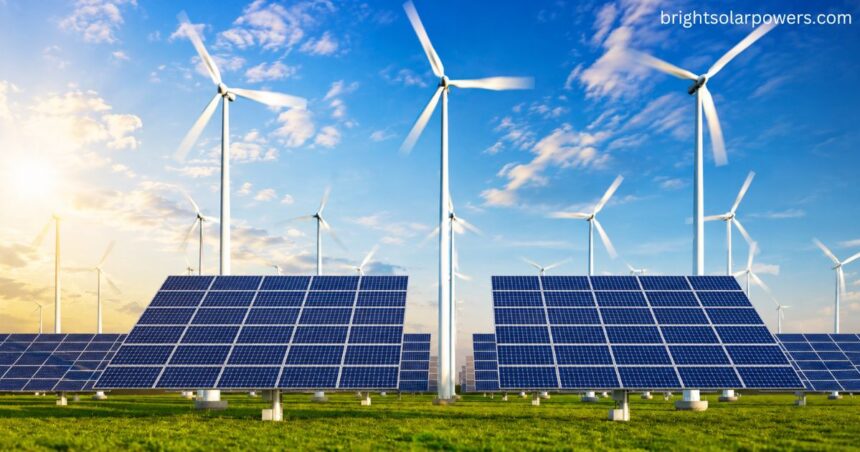
A solar and wind hybrid system setup brings together solar panels and a wind turbine to give your home or business consistent energy all through day and night. I have set up a few of these for residential use.
What strikes me first is how the dual approach solves a problem that a single renewable energy source cannot solve alone: sunlight disappears at nighttime, and wind speeds drop during clear sunny days, but rarely do both fail at once.
This hybrid nature is exactly why homeowners want it the complementary nature of solar resources and wind resources means that when one dips, the other often rises to keep electricity generation steady.
Think of it as a power setup that draws on two renewable energy sources instead of betting everything on one. PV panels convert sunlight into power, while the wind turbine turns kinetic energy from moving air into usable current.
During sunny conditions, solar generation takes the lead and produces maximum power; during storms or cloudy periods, strong winds often pick up the slack.
This is why families living with a weak grid or an unreliable grid choose this advanced system for backup power during power fluctuations, especially across seasonal transitions when neither photovoltaic panels nor a lone turbine can promise stable power.
Beyond just keeping the lights on, this hybrid system cuts electricity costs over time and offers a genuinely reliable energy supply, even under low-solar conditions or heavy cloud cover. Pairing it with energy storage systems stores extra output from both renewable sources, so the grid supply becomes a backup rather than a lifeline.
I always tell clients that this is clean energy at its most practical one of the smartest hybrid energy solutions for anyone who wants electricity they can count on, storm after storm, all year.
Can You Run solar and wind hybrid system Together?
Yes, solar power and wind power can be operated together, and honestly, this is the biggest advantage of choosing a combination system for your home, farm, or business.
A compatible hybrid charge controller is built to accept inputs from both sources at once it does not care whether the inputs come from solar panels or wind turbines, it simply intelligently manages whichever source sends power at that moment.
This is what makes these hybrid systems genuinely works well together, rather than existing as two separate setups bolted onto one roof.
During summer, solar panels usually produces most power through the daytime, while during monsoon or winter, when clouds block the sun, wind turbines often step in. The complementary nature of the two keeps energy flow steady, since the hybrid controller shifts the load between whichever source runs day and night at full strength.
I have watched this requirement play out on real rooftops peaks in demand get met without strain because the system charges battery storage whenever there is surplus.
The result is a genuinely stable electricity supply, one that keeps a battery bank topped up efficiently no matter the season. Because the controller handles everything without you lifting a finger, you get all the benefit with none of the guesswork day and night, the system just works.
Main Components of a Hybrid Solar Wind System
Every good hybrid system starts with solid hardware. A solar array made of monocrystalline panels sits on sturdy mounting structures, usually raised on poles standing 20-40 ft tall, or on a dedicated pole and wind mast for the wind turbine.
Solar panels handle sunlight absorption and turn it into direct current, while the turbine manages wind capture and feeds its own DC electricity into the system.
Connectors and cabling link every part together, and proper grounding equipment plus earthing protect the whole setup from electrical faults and lightning strikes I never skip lightning arrestors and surge protectors on any install, since a single storm can wipe out expensive gear.
At the center sits the hybrid charge controller, sometimes a named unit like the SolaX X3-Hybrid G4, which uses a PV2 input and other dedicated ports to manage power flow from both sides of the system. This controller handles wind energy integration, watches charge levels, and prevents overcharging of the batteries.
Good charge controllers also include a wind turbine controller for over-speed protection, along with breakers, disconnect switches, and automatic disconnection during high wind speeds or voltage spikes, all working as safety components for safety and system reliability.
For storage, deep-cycle batteries or lithium batteries hold the energy, and a battery monitor tracks battery health, battery life, and battery storage capacity around the clock.
A power inverter, or hybrid inverter sometimes paired with dedicated PV inverters for the solar side then converts DC to AC, producing usable AC electricity, or in bigger setups, three-phase alternating current, to run household appliances and other appliances. Systems rated near 10kW, or built from 300W panel units, are common for homes needing steady energy production.
Monitoring equipment and system control panels let you check usage rates, load usage, and load management in real time, so you always know your renewable energy performance and overall efficiency.
A well-planned dump load protects the system when battery charging is full and there is nowhere else to send extra power. During cloudy weather, or in remote off-grid systems, this mounting system and the full setup keep working with minimal maintenance, ready to handle emergencies without missing a beat.
How Does a Solar and Wind Hybrid System Work?
Here is the step-by-step version of how it all works. Solar panels catch sunlight and the wind turbine catches moving air, and both send their inputs into the hybrid charge controller, which manages generation from each source at the right voltage and current.
The controller performs power conversion and power conditioning, turning raw DC power into a form the rest of the system, and eventually your utility grid connection, can use.
From there, the inverter changes that power into AC power, ready to run direct loads like lights, fans, pumps, and other standard appliances, whether for household equipment or commercial equipment.
When demand or load demands rise, the system solar and wind hybrid system pulls from stored energy in lithium batteries or other batteries kept in the battery bank, so you get a steadier power output instead of sudden downtime.
Battery charging happens automatically whenever there is surplus wind energy or solar generation, and battery levels stay watched through system monitoring and control systems around the clock.
This whole setup acts as a backup source for backup management, offering storage for 24 hours of coverage even without a generator. It keeps green electricity flowing to meet load supply needs, tracks performance honestly, and delivers real power generation and reliable electricity without gaps.
Size of a Hybrid Controller Based on Wind and Solar Output
Sizing a hybrid controller is not a demanding task once you know the basic guidelines. A simple sizing rule many installers follow is the 1:3 ratio, meaning solar should generally sit at about one-third of total capacity compared with wind, though this shifts with local weather.
If your PV system produces 1000W and your wind turbine output reaches 2kW, your combined wind solar peak output is 3kW, and your controller rating should be sized with headroom, not right at the edge I generally suggest adding 20-30% for safety, avoiding oversizing that wastes money while still covering unexpected cold weather peaks or sudden storms.
For a solar capacity around 1kW paired with wind near 500W, a small solar charge controller rated near 1500W or 1875W usually works, while bigger homes running near 5kW or 10kW need controllers built for 10 kW and beyond, factoring in a multiplier like 1.25 for headroom.
There are real limitations to watch a controller sized only for total output at one moment can fail during a spike, so it pays to prioritize a slightly larger unit over separate controllers whenever the budget allows.
What Happens if Solar Power is More Dominant Than Wind Power?
In many parts of the country, solar power is naturally the dominant source, and that is completely fine. When solar dominance happens often because your region gets strong solar energy abundance while average wind speed stays low the system simply leans into a solar-first hybrid setup.
A single hybrid controller manages the load and directs excess solar energy toward battery charging, keeping batteries topped up for later use, while wind power still contributes when it can.
This setup stays genuinely cost-effective, since a rooftop solar system paired with a smaller wind energy contribution avoids the added expense of a full separate wind controller or separate solar controller in most homes.
The controller ensures safe charging at all times, converting DC power into usable AC power without stressing the batteries, and acting as secondary backup whenever solar output dips.
If you want extra performance, adding a small booster can help balance energy use across the day, but for most households, one well-chosen hybrid controller handles everything fine on its own.
Where Can a Solar and Wind Hybrid System Be Used?
This kind of setup shows its real value in off-grid locations and isolated areas where a grid supply is either unavailable or simply unreliable grids are the norm. Think of remote villages, remote locations, remote cabins, and scattered farms across agricultural lands, where agricultural operations like irrigation pumps and livestock watering systems need stable power every single day.
In these uncrowded rural areas, combining solar resources with local wind resources gives families real energy independence, with daytime production from the sun and steady output through the nights from the turbine true day-night renewable energy.
Beyond homes, this system supports telecom towers, telecommunications towers, and communication towers that cannot afford grid outages, along with emergency communication systems and emergency services facilities like fire stations that must stay online no matter what.
Research stations in deserts, on mountaintops, or across coastal regions rely on it to run environmental instruments, sensors, and remote monitoring equipment, while weather sites use it to keep cameras recording through cloudy days and seasonal dips in output.
Commercial users benefit just as much. Factories, industrial sheds, data huts, and other commercial facilities count on it for backup power during outages, and cold chains depend on constant uptime to keep produce fresh.
Tourism spots such as resorts, eco-tourism centers, highway hotels, and hill stations install it to guarantee guests never lose power, and rest points along remote highways do the same.
Even in areas with patchy grid access, islands, rural grid-tied homes, and off-grid homes all gain from lower seasonal variability in supply. When you compare the total cost of backup using diesel against this reliable renewable option, the hybrid setup usually wins, especially once you factor in how expensive fuel deliveries become for truly isolated homes.
What Are the Advantages of a solar and wind hybrid system?
The biggest win here is reduced intermittency. Because the two sources compensate for each other, you get real seasonal balance stronger sun and strong solar radiation during summer, and stronger winds through winter, when daylight hours shrink.
This pairing gives near 24-hour power, stretching extended daily generation across daylight hours and into the evenings and nights, unlike a single-source setup that goes quiet during calm air or heavy clouds.
Because both sources rarely fail together, you see far fewer power cuts and lower blackout chances, even through storms or other harsh weather, giving genuine weather resilience. This consistent power availability also means lower battery requirements and a smaller battery bank, since you are not relying on stored charge alone, which cuts down on battery stress over time.
Financially, this setup lowers grid consumption, trims electricity bills, and reduces diesel usage from backup diesel generators, which matters most for anyone stuck with weak grids.
Overall power production stays steady no matter the wind speed that day, giving households a genuinely reliable power supply and reliable power they can plan around.
What Are the Disadvantages of a Wind Solar Hybrid System?
No system is perfect, and this one has real trade-offs worth knowing before you invest. It is genuinely site-dependent and location dependent a good installation site needs open land, unobstructed areas, and enough space requirement for both wind mast structures and panels, which creates real space and siting challenges on a crowded open rooftop or in dense urban surroundings near tall buildings.
If the site suffers poor wind or low average wind speed below roughly 4-5 m/s, the turbine will simply underperform or sit underutilized, wasting the extra spend.
Because it uses moving parts, the turbine needs real upkeep: lubrication, vibration monitoring, regular tightening of bolts, and regular checks by skilled technicians add up to high maintenance requirements and ongoing maintenance requirements that a simple rooftop on-grid solar system does not have.
Parts wear out, vibration stresses tall masts, and without care, components break down faster, turning what should be clean energy into a wasted investment.
The upfront numbers can also sting this is genuinely costlier and expensive to install than solar alone, needing a complicated setup with separate charge controllers, a proper hybrid charge controller, and a stable foundation, all pushing higher cost well above a basic system.
In urban areas, the noise and visual impact matters too blade noise and disturbing nearby settlements are real complaints, especially near residential streets already served by fairly reliable grid electricity and steady grid supply.
For remote areas and uncrowded rural areas with limited sunlight and unreliable service, this complexity is usually worth it. But where direct sunlight is abundant and electricity bills are already low, a cheaper, simpler solar-only option often makes more sense, since good wind flow is rare across most towns and cities, and buying land just for a turbine base rarely pencils out.
Why Isn’t a Solar and Wind Hybrid System Suitable for Urban Areas?
City living creates real multiple barriers for this setup. Tall buildings clustered together cause serious wind speed reduction, since high-rise obstacles break up the natural flow of air and create turbulence instead of steady open wind.
In cities like Mumbai, Delhi, Bengaluru, Chennai, and Pune across India, this means low wind speeds most of the year, and turbines simply cannot deliver meaningful output without vast open lands or open lands nearby, which most residential roofs and rooftops in an urban environment simply do not have.
Space constraints are just as limiting. There is rarely enough pole height clearance or proper clearance on a typical roof for horizontal-axis turbines, and even vertical-axis turbines, small turbines, or smaller windmills struggle without it.
Choosing the wrong controller for the job, or mismatched turbine types, causes controller compatibility issues, poor turbine efficiency, and poor efficiency overall, along with current variations and voltage variations that stress the whole setup this is where hybrid wind turbines in urban environments tend to underdeliver.
There are real safety concerns and safety considerations too. Structural limitations on older city homes raise the risk of accidents or a damaged system during high winds, since shifting wind patterns and fluctuating 3-phase AC output add real complexity to keeping things stable.
Many neighborhoods also enforce noise restrictions, because spinning blades disturb neighbors, and genuine noise concerns are common in suburban applications too, not just in the city centre.
Given all this, the return on investment rarely justifies the investment in dense urban settings. Poor wind resource quality means the system stays far from truly reliable or affordable, and in most cases, urban homes get better value skipping the turbine altogether.
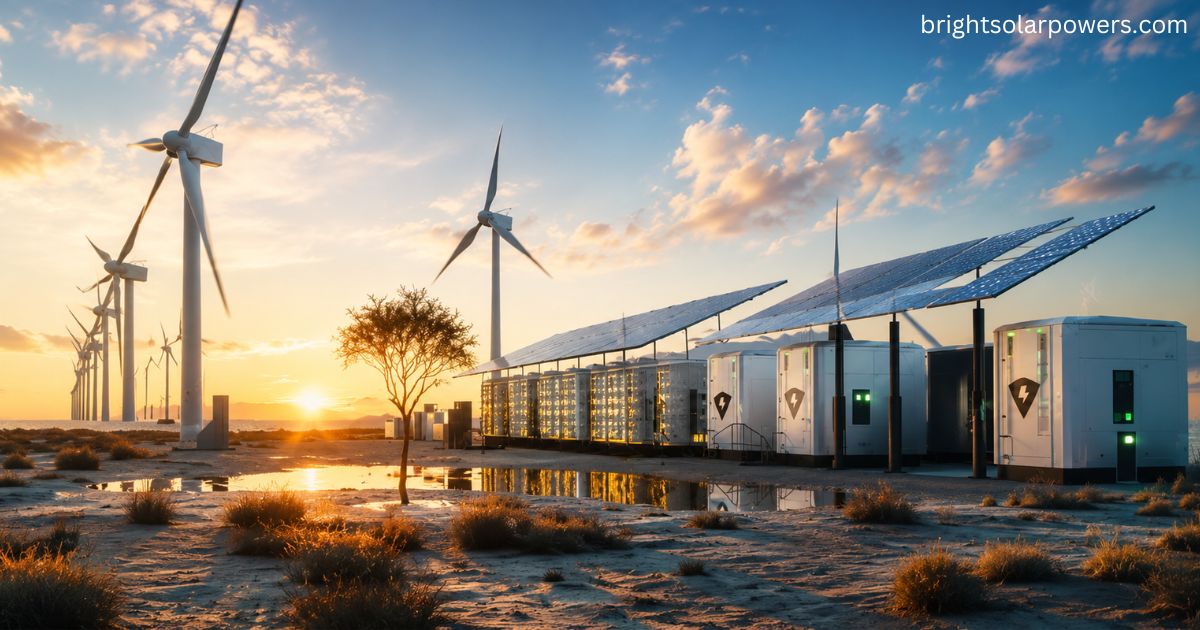
Why Install an On-Grid Rooftop Solar System in Urban Areas?
For city homes, homes, shops, and small businesses across India, a plain on-grid rooftop solar setup usually beats a full hybrid solar systems approach, and here is why.
Because grid power in most cities is fairly reliable grid with steady supply, you do not need the extra battery bank or off-grid solar systems complexity an on-grid systems design skips batteries entirely, meaning no batteries required, which keeps the initial investment and overall lower investment far more manageable than mixing in a turbine.
Take a typical 4 kW solar system for residential installations: with no pole, no vibration, and no noise, it needs only less maintenance just occasional solar panel cleaning to clear dirt/dust and a quick check on panel maintenance now and then.
Ground-mounted solar systems or roof-mounted units both work, though mounting structure height and roof height should avoid shadow for the best usable sunlight during the 4-5 hours of peak sunlight intensity each day.
Good orientation and tilt angle matter more than wind strength, since these panels never depend on integrating solar with wind at all.
Pricing varies by city and system size. In Delhi, a mid-size system can run near 1.52 lakh; near Pune, figures around 1.62 lakh to 1.72 lakh are common; Bengaluru homeowners often see quotes near 1.87 lakh.
Chennai and Hyderabad installations can range from 1.42 lakh up to 1.97 lakh; and Jaipur, Lucknow, Ahmedabad, and Bhopal each show their own local pricing, sometimes stretching to 9.50 lakh, 11.70 lakh, 11.94 lakh, 12.32 lakh, 12.97 lakh, 14.44 lakh, 16.48 lakh, or even 21.48 lakh for larger commercial rooftop systems and housing societies with bigger power needs.
Providers such as Solar Square offer a free solar power estimator so buyers in any city can check real numbers before committing, since going in blind can feel extremely expensive without one.
Government support makes the math even better. Programs like the PM Surya Ghar Muft Bijli Yojana, along with broader government subsidies, subsidies, subsidy, and other national policies, cut the initial investment significantly, sometimes offering free solar electricity for a base amount of usage.
A bi-directional net meter tracks both import electricity from the grid and excess solar electricity sent back out, and net metering benefits convert that surplus into credits against your DISCOM charges, meaning any excess solar energy you do not use is not wasted it earns real savings.
Over a typical lifespan of 25+ years, with panels rated for gentle degradation 1% per year, this grid-tied rooftop solar system delivers a faster ROI and shorter payback period, often within 3 to 5 years, especially once you factor in a tariff escalation 3% that pushes bills higher by roughly 3-6% every year if you stay fully dependent on import electricity.
That escalation alone makes rooftop Solar’s savings guarantee and higher returns compelling it costs less overall than lakhs of rupees spent on rising DISCOM charges over two decades.
Weather also favor’s this choice. Most Indian cities enjoy high solar potential, and even through shifting weather conditions, moderate temperature swings, and city pollution or pollution level, panels stay productive since they are lightweight, silent, and need far less after-sales service attention than a spinning turbine ever would.
Choosing the right panel type and inverter type for your needs, with support from a good after-sales service team for all residential customers, keeps everything running smoothly, reducing cost for cheap, dependable power for decades to come.
Conclusion
In high wind regions with consistent winds and strong winds, or countries like Poland where average wind speeds stay healthy across vast open areas, this sophisticated device becomes a genuinely resilient alternative for any property.
But it stays unfit for urban areas with crowded buildings and limited sunlight, where space availability simply is not there.
Where conditions line up well, this pairing of separate technologies brings real primary benefits: year-round energy generation, lower dependency on any single energy source, and genuine resilience during frequent power outages or full power outages.
During abundant sunshine and sunnier months like summer, solar carries most of the energy consumption as the primary generation source, while turbines pick up during colder months, when daylight shrinks each source compensates for the other’s intermittent power generation, together delivering combined power and continuous energy supply across most weather conditions.
Smart hardware makes it better still. Real-time monitoring, advanced monitoring features, and energy management tools through smart energy management and efficient energy management platforms some offered by brands like SolaX track energy demand and adjust for maximum efficiency, cutting risk and reducing strain during low wind speeds or when solar unavailable periods hit.
With proper placement, solar and wind hybrid system solar PV panels and turbines reach their peak performance period and near optimal conditions, giving households real reliability and true energy independence.
Financially, government incentives and energy storage subsidies lower the upfront investment, while long-term savings and real long-term benefits build up over the years.
For any household with high energy consumption, or a business mindful of its carbon footprint, this remains one of the most innovative systems among residential renewable energy solutions.
It genuinely offers numerous advantages and lasting environmental benefits, standing as a sustainable energy source and often the perfect solution for changing energy needs, wherever the ability to generate power from wind and sun both stay strong,.
Keeping the solar and wind hybrid system power grid as backup rather than a necessity, ready for emergencies any day of the year, and powered entirely by nature and earned green certificates.
FAQS about Solar and Wind Hybrid System
What is a solar and wind hybrid system?
It’s a renewable energy setup that combines solar panels and wind turbines to generate electricity together. This ensures a more consistent power supply, since wind and sunlight complement each other at different times.
Why is India suitable for wind-solar hybrid systems?
India has strong solar irradiance and good wind resources in states like Gujarat, Rajasthan, and Tamil Nadu. This makes hybrid renewable energy highly effective across many regions.
What does a wind-solar hybrid project involve?
It includes installing PV panels, wind turbines, an inverter, and battery storage at one site. Such hybrid energy projects are used for rural electrification, industrial power, or grid-connected supply.
Are there government subsidies for hybrid energy projects?
Yes, India offers subsidy schemes, net metering, and support from state nodal agencies. These incentives make hybrid renewable projects more affordable for developers and communities.
What is the price of a wind-solar hybrid system in India?
A small residential system (1–5 kW) may cost around ₹1.5–5 lakh, depending on battery size and turbine type. Commercial or industrial systems cost more based on capacity and components.