

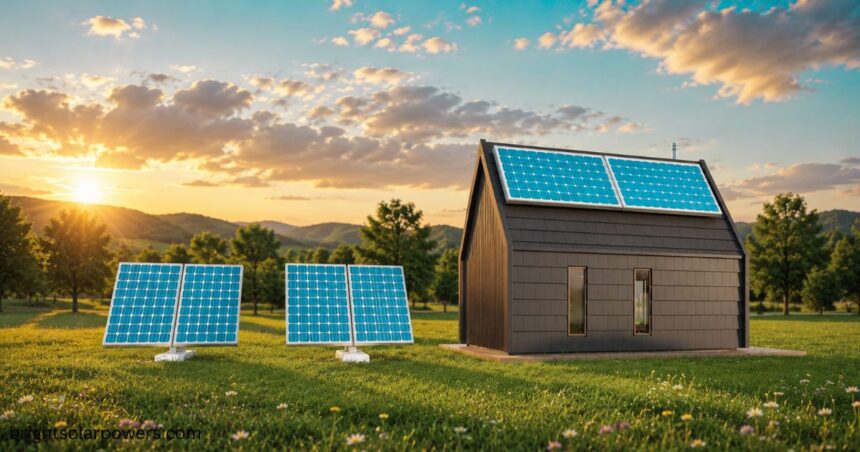
I installed my first solar batteries three years ago, and I quickly learned why going solar changes how a home runs.
A solar battery stores excess solar energy that your panels collect during the day, so you don’t waste a single drop of free power.
Many homeowners in India now choose this path because solar energy offers a way to fight rising electricity costs while protecting the planet.
When sunlight hits your roof, your solar panels turn it into power you can use right away or send to an energy storage device for later.
Making smart energy storage decisions matters most during cloudy days and nights, when the sun isn’t shining and your home still needs power.
Good battery storage also keeps your lights on during power outages, which is a relief I felt the first time my neighborhood lost power and my home didn’t.
Without a battery, any excess electricity your panels make flows straight to the grid, and in some areas that’s still the economical choice.
But if you want true energy independence, a solar battery lets you store that power and power your home whenever you need it.
Lithium-ion batteries lead the market today because they last longer than older options, and trusted lithium ion battery manufacturers build them to be durable and long-lasting.
There are several types of solar batteries on the market, and some are even portable batteries you can carry along on a trip or use as backup at a cabin.
The newest models are compatible with most electronics, which is handy for anyone who travels with phones, laptops, or cameras.
As more home or property owners adopt renewable energy, the appeal of sustainable renewable energy keeps growing because it cuts carbon emissions and lowers your power consumption footprint.
Some of today’s most popular batteries are charged using solar power alone, without needing any backup from the utility company at all.
If you live somewhere with rough weather conditions, having stored energy ready can prevent local power outages from disrupting your evening.
I always tell people that once you get your solar panels installed, the electricity you generate from solar power becomes yours to control, not the utility’s.
AC-Coupled vs. DC-Coupled Battery Storage
Every battery storage system uses some form of coupling to connect your solar panels to your home, and the two main types are AC coupling and DC coupling.
AC stands for alternating current, while DC stands for direct current, and that single difference shapes how your whole energy system works.
I learned this the hard way when my installer explained that a solar battery has to match the right setup, or it won’t run as well as it should.
With DC coupling, electricity from your panels flows through a charge controller straight into the battery without passing through an extra inverter first, which is why DC-coupled storage tends to run with more efficient results.
This setup keeps efficiency losses low since the power changes form only once before it reaches your house. The trade-off is that installation can take longer, and the installation timeline often stretches out compared to other systems.
AC-coupled storage, on the other hand, sends power through an inverter, then through a separate inverter again before it reaches your battery, so it ends up running less efficiently than a DC-coupled storage setup.
Because the power changes three separate times, you’ll notice slightly higher efficiency losses, but this method makes it far easier to add to an existing system.
That’s exactly why so many homeowners pick AC-coupled storage for retrofit installations rather than ripping out their entire setup.
AC electricity powers your appliances directly, while DC electricity is what gets stored energy in the battery itself, and your inverter handles the back-and-forth conversion, the whole three times this process needs.
One major perk of an AC setup is that it can pull power from the grid too, not just from your panels, giving you backup power even when the sun isn’t out.
This flexibility also opens the door to electricity rate arbitrage, where you charge your battery when rates are low and use that stored power when rates climb.
Cost matters here too: DC-coupled storage often comes with a higher initial cost because of its more complex setup, even though it saves you money on efficiency over time.
I always remind people that installation quality affects performance just as much as the equipment itself does.
Whichever setup you pick, understanding how electricity moves as AC and DC before you commit will save you both money and headaches down the road.
What Is a Solar Battery?
Inside every solar battery system, tiny lithium ions move back and forth between two sides of the battery, and that movement is what actually stores power.
When you charge the battery, external electricity from your solar panels or the grid pushes ions away from the cathode, which is positively charged, toward the anode, which is negatively charged.
The ions travel through a liquid electrolyte, and as they move, they store potential energy like a ball rolling uphill.
Once the ions settle into the anode, a physical separator holds them there, keeping that chemical energy ready until you need it again.
When you draw electricity from the battery, the ions flow back toward the cathode, and as they move, they release electrons that can’t cross the separator either.
Those electrons instead travel through the wires of your home, and that flow is exactly what creates the electrical current that powers your lights and appliances.
A real home solar power storage batteries setup doesn’t rely on just one cell; most lithium-ion batteries combine multiple ion battery cells together inside one device.
Sophisticated electronics built into the unit manage both performance and safety, watching closely so nothing overheats or fails while it runs.
I always tell people this is the part that separates a cheap battery from a reliable one, because good electronics protect your investment for years.
How Solar Batteries Work With a Solar Power System?
Picture this step-by-step journey through a typical solar power system: sunlight lands on the solar panels sitting on your roof, and that’s the moment generating power truly begins.
In a DC-coupled system, the electricity flows directly into the battery as DC electricity and stays stored until your home calls for it, then an inverter changes it into power your home or the grid can use.
In an AC-coupled system, the path looks a little different, since the power first turns into AC electricity for your home, and only the excess electricity flows back through a second inverter to be saved for later.
Types of Solar Batteries Used Today
Both homes and businesses now lean toward a lithium-ion-based system because it stores power safely and efficiently, two things every buyer cares about.
Many homeowners who are going solar for the first time discover that several solar battery chemistries exist, but lithium-ion keeps winning out as the top storage solution.
Lead-acid batteries feel like yesterday’s technology next to newer lead-acid alternatives, even though some people still use them out of habit.
Lithium-ion solar battery technology brings greater efficiency, higher storage capacity, and longer lifespans than older options ever could.
Yes, it comes with a higher upfront cost, but I see it as a smarter long-term investment every time I compare the numbers with a client.
In the end, paying more now to store energy better almost always pays off down the road.
Factors to Consider When Choosing a Solar Battery
Today’s market offers lithium-ion solar batteries with different capabilities, price points, and intended uses, so picking the right one starts with knowing your own energy goals.
Home solar battery capacity decides how much power you can store and use, and prices naturally climb as that storage capacity grows.
Still, a bigger battery often pays for itself by offsetting utility electricity expenses, especially if you plan to rely less on the grid over time.
If your primary motivation is just riding out local outages rather than chasing full energy independence, you probably don’t need a huge backup reserve at all.
A lower-cost system sized around your essentials can keep the lights and fridge running just fine during sustained power interruptions.
Setting a clear budget before you shop helps you avoid paying for quantity you’ll never actually use.
Most battery systems can be stacked, meaning you can start with one unit and add additional solar batteries later to reach your optimal storage capacity.
This works a lot like adding solar microinverters or planning to add solar panels down the road, since both let your home energy system grow with you.
Any energy stored beyond what your home needs can flow out, getting exported to electricity grid lines, and turning surplus into savings.
Before buying, check the installation guidelines and installation requirements for each model, since space matters as much as price.
Most high-quality batteries get mounted onto wall surfaces either indoors or outdoors, and you’ll usually find them tucked into utility rooms or other non-living spaces rather than living areas. Whether you choose a smaller capacity unit or go bigger, the actual solar battery size and your plans for initial storage installation should match how your home really uses power.
Top 10 Solar Battery Companies in India
Anyone researching top 10 solar battery companies in India quickly runs into Waaree, a brand that sells across four series, including Liger and Lion units rated less than 10KW and Lynx models that stretch from 24V to 96V.
Waaree also serves electronic vehicles, from small e-bicycles to heavy e-forklifts, plus Telecom UPS setups and Battery Energy Storage Systems, often shortened to ESS.
Their Lit range runs 12.8V to 25.6V, which I find handy for smaller home setups that don’t need a massive system.
Exide stands out for offering batteries in 12V, 6V, and 2V ranges, and its rechargeable batteries earn praise for low maintenance and lasting a long time.
Okaya takes a different approach, building units meant for partial charging conditions, which suits places with medium-to-low annual sunlight thanks to a low discharge rate.
Luminous India rounds things out with two options: the battery series L, backed by a warranty of 3 years, and the battery series H, which carries a warranty of 5 years.
Reticella batteries impress me because they survive a full 10-year shelf life with almost no low maintenance needed, and they hold up well even through tough Indian weather conditions thanks to being corrosion-resistant.
Arthron teamed up with the North Star Battery Company LLC out of the USA to build units known for lasting long while staying affordable.
Amara Raja Batteries also carry a warranty of 5 years, and you’ll spot their work powering sites as famous as the Taj Mahal, even running well under partial charging conditions.
HBL appeals to eco-conscious buyers with eco-friendly batteries that are 100% degradable and stay completely leakproof no matter where you install them. Eastman, one of India’s oldest names, has spent 47 years in the electrical industry, and its batteries earn praise for skipping self-discharge almost entirely.
V-Guard closes out the list as a trusted name across South India, delivering uninterrupted supply and consistent performance backed by a longer lifespan that keeps customers coming back.
FAQs about Solar Batteries
What is the main job of a solar battery?
A solar battery stores extra electricity from your solar panels for later use. It powers your home at night, on cloudy days, or during outages.
What’s the difference between AC-coupled and DC-coupled solar batteries?
DC-coupled batteries are more efficient but cost more to install. AC-coupled batteries are easier to add to an existing system but lose a bit of efficiency.
Why do most homeowners choose lithium-ion batteries over lead-acid ones?
Lithium-ion batteries last longer and store more energy than lead-acid models. They cost more upfront but save money over time.
How do I know what size solar battery I need?
Your battery size depends on whether you want backup essentials or full energy independence. You can also start small and stack more batteries later as needs grow.
Which are some popular solar battery brands in India?
Popular brands include Waaree, Exide, Luminous India, Relicell, and V-guard. Amara Raja and HBL are also known for long warranties and eco-friendly designs.