

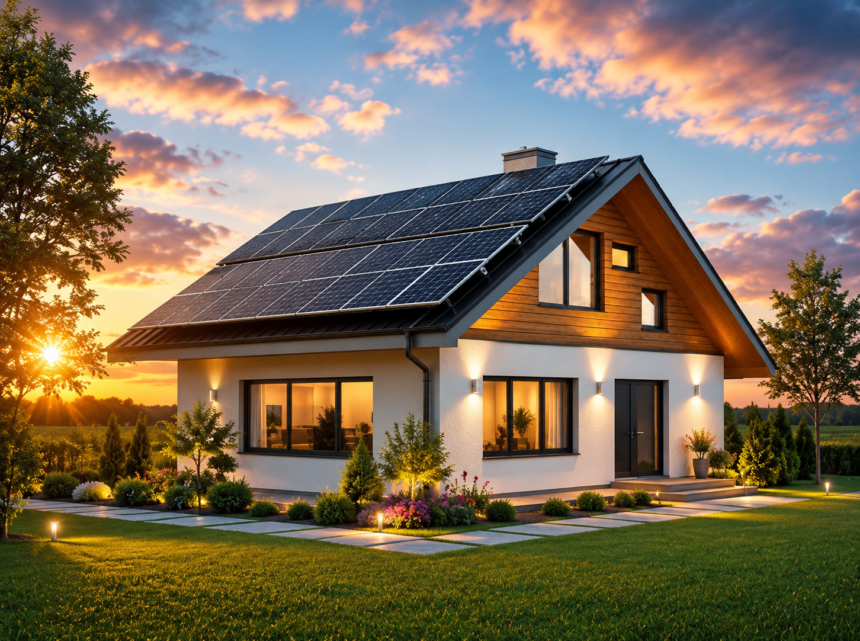
A solar rooftop photovoltaic power station, commonly called a PV system, uses electricity-generating solar panels mounted on the rooftops of residential, commercial, industrial, and educational buildings to produce clean power.
I have personally seen how conventional energy sources like coal, oil, and natural gas are limited in quantity, and experts widely agree these fuels will be completely exhausted within the coming decades if people continue depleting them at the current rate.
Solar Rooftop: A Complete Guide to Clean Energy on Your Roof
Rising energy demand keeps pushing governments to build more fossil fuel power plants, which release dangerous greenhouse gas emissions that create an adverse impact on global warming and climate change.
Solar energy stands out as a clean, climate-friendly, abundant, and inexhaustible resource for mankind, and its costs keep falling rapidly, opening new doors of competitiveness across global markets.
Solar Thermal Electricity (STE) and Solar Photovoltaic (SPV) power are becoming genuinely competitive against conventional electricity generation in tropical countries, especially where retail electricity prices stay high.
Solar installations worldwide keep growing at a remarkable pace, proving that clean energy is no longer a future dream but a present reality.
Every household, industrial unit, and commercial building can use rooftop solar to meet its energy needs, while any surplus power flows directly into the grid through established channels. Solar rooftop SPV systems installed on roof space can even replace DG gensets that buildings use during load shedding, making them far more practical than most people realize.
In any grid-connected rooftop or small SPV setup, a power conditioning unit converts DC power from panels into AC power, which then feeds into 440/220 Volt three-phase or single-phase lines, depending on system capacity, and the price of this solar power now matches or beats standard commercial tariff rates for regular consumers.
These photovoltaic PV systems sit on the roofs of buildings and convert sunlight directly into electrical energy using silicon-based semiconductor cells, and the power produced can either be used onsite or fed back into the grid as needed.
In simple terms, going solar means having clean, renewable electricity powering your home, business, or facility without burning a single drop of fuel. A complete rooftop photovoltaic system includes photovoltaic modules, mounting systems, cables, solar inverters, and various electrical accessories that work together as one unit.
IMPORTANCE OF Solar Rooftop
The single biggest reason people choose solar rooftops is that they directly help reduce electricity bills by generating power locally, cutting dependence on expensive grid supply that keeps getting costlier every year.
Beyond savings, rooftop solar actively drives renewable energy adoption across communities and helps reduce carbon emissions that damage our environment every single day. I genuinely believe that energy independence matters more today than ever before, and rooftop solar gives every building owner.
A real chance to reduce grid dependence meaningfully, solar rooftop across cities sit empty and unused, but installing solar panels turns that idle roof space into a productive, cost-effective energy asset for homes, businesses, and industries alike.
A well-designed rooftop system supports a truly sustainable energy future while simultaneously reducing pressure on the central power grid, which struggles the most in crowded urban areas during peak hours. From personal observation, buildings in dense cities that adopt rooftop solar consistently report lower bills, better reliability, and a genuine sense of contributing to a cleaner community.
USES OF ROOFTOP SOLAR
Rooftop solar serves a wide range of practical purposes, starting with generating electricity for homes and businesses that want reliable, affordable power without full grid reliance, and net metering makes this transition even more financially rewarding.
Families use solar panels for powering everyday appliances and lighting, while larger setups support fully off-grid or hybrid systems that combine solar with battery backup for an uninterrupted supply.
Charging electric vehicles at commercial locations or private homes using rooftop solar is becoming one of the fastest-growing applications in modern energy planning.
Water heating systems powered by rooftop solar significantly cut energy costs for both homes and businesses, while farmers use solar for agricultural needs like running irrigation pumps and greenhouse operations efficiently.
Telecommunication infrastructure, including remote cell towers, increasingly depends on rooftop solar to maintain connectivity in areas where grid power remains unreliable or unavailable. Public lighting and security systems, including streetlights and surveillance cameras, now run on rooftop solar across many cities, reducing municipal electricity costs while improving public safety around the clock.
EXAMPLES OF ROOFTOP SOLAR SYSTEMS
Solar panels on homes reliably meet daily energy needs without requiring any fuel, and solar rooftop systems on offices consistently bring down electricity costs that eat into business profits every month.
Solar arrays on schools support essential services like lighting and HVAC systems, creating better learning environments while teaching students about clean energy through real-world examples.
Rooftop solar paired with battery storage covers nighttime energy needs seamlessly, removing the last major barrier people cite against going fully solar.
Commercial buildings use solar to run sustainable operations that attract environmentally conscious customers, while factories deploy rooftop panels to offset massive industrial power demand that would otherwise cost a fortune.
Residential complexes increasingly install rooftop solar to share power among multiple households through the community solar model, making clean energy accessible even to those who cannot install individual systems.
Shopping malls and supermarkets use rooftop solar to offset large-scale energy consumption, and hotels and resorts adopt rooftop solar to genuinely support sustainable tourism that modern travelers actively prefer.
HOW A ROOFTOP SOLAR SYSTEM WORKS (Grid-Connected)
Sunlight conversion begins the moment solar panels absorb sunlight and transform it into direct current (DC) electricity, which flows immediately into the system for further processing. An inverter then takes that raw DC electricity and converts it into alternating current (AC) electricity that all standard appliances recognize and use without any modification.
The building’s electrical loads draw AC electricity first from the solar system, reducing how much power the building pulls from the external grid during daylight hours.
Whenever the system generates more power than the building needs, surplus electricity flows into the grid automatically, and net metering schemes convert that exported power into valuable credits that reduce future electricity bills.
Consumption patterns across the day determine exactly how much solar power the building uses directly versus how much it exports, and a smart meter tracks both flows in real time.
From direct experience working with grid-connected setups, the combination of AC electricity, net metering, and real-time monitoring makes rooftop solar one of the most financially transparent energy investments a building owner can make today.
NET METERING
The net metering scheme applies to metered prosumers under a licensee, specifically covering the domestic (LMV-1) and agriculture (LMV-5) categories, where consumers install a grid-connected rooftop solar PV system on their consumer premises, either self-owned or third-party-owned.
This system nets out energy imported from the grid against energy exported to the grid, an interactive rooftop solar PV system using a single bidirectional energy meter that records both directions of flow accurately.
As a billing mechanism, net metering directly credits the solar energy system owner for every unit of electricity they add to the grid, creating a fair exchange that makes rooftop solar financially rewarding.
The Grid Interactive Rooftop Solar Photovoltaic (RSPV) system always prioritizes self-consumption first, and only the excess energy gets injected and exported to the grid automatically without any manual action.
For example, a residential customer with a PV system on their rooftop may generate more electricity than their current home usage, and that unused excess energy flows cleanly into the grid without waste.
Using a single bi-directional energy meter, solar energy exported to the grid from the RSPV system subtracts from energy imported from the grid in units (kWh), producing a clear figure for net imported or exported energy that gets billed, credited, or carried over at the applicable retail tariff.
At the close of each settlement period covering the full financial year, any electricity credits that remain unadjusted get paid at a rate of Rs. 2 per kWh by NPCL, ensuring consumers never lose the value of power they generated and shared.
At the start of the next settlement period, the system resets all cumulative carried-over electricity credits back to Zero, starting the new cycle fresh. The peak rated capacity (kWp) of any Grid Interactive Rooftop Solar Photovoltaic (RSPV) system that an eligible consumer installs cannot exceed 100% of the sanctioned contractual load of their building as per UPERC RSPV Regulation 2019, meaning a consumer with a 5 kW sanctioned contractual load can install a maximum RSPV system of 5 kWp.
NET FEED IN TARIFF
The net-billing and net feed-in scheme covers every prosumer of any category within the area of supply of the distribution licensee who sets up a grid-connected rooftop solar PV system on their premises, whether self-owned or third-party owned.
Unlike standard net metering, this scheme measures energy imported from the grid and energy exported by the grid-interactive rooftop solar photovoltaic system of a prosumer through a single bi-directional energy meter that assigns two different tariffs to each direction.
The commission independently determines these two different tariffs, ensuring that both the consumer and the grid operator receive fair value for every unit of energy exchanged under this arrangement.
BENEFITS OF ROOFTOP SOLAR NET METERING
Reduced power bills remain the most immediate benefit that every consumer notices after installing rooftop solar, and the savings compound month after month without any additional effort.
The systems require low maintenance compared to conventional generators, and the one-time investment pays itself back reliably over the system’s operational life, making it one of the smartest financial decisions a property owner can make.
NPCL actively promotes solar rooftop power because it delivers clean, green power that benefits the entire community, and getting a solar panel installed means enjoying clean, affordable power with genuine savings at every single step of the journey.
PROCEDURE FOR NET METERING AND NET BILLING
As per UPERC RSPV Regulation 2019, only domestic consumers under LMV-1 and agriculture LMV-5 categories qualify for net metering, while all tariff categories across the board qualify for the net billing and net feed-in scheme without restriction. For on-grid rooftop solar photovoltaic installations, MNRE provides Central Finance Assistance (CFA) exclusively to net-metered domestic and residential consumers who meet the eligibility criteria.
To access CFA subsidies from both state and central government sources under Phase II of the Rooftop Solar Scheme of MNRE, consumers must install their RSPV system through empanelled vendors of UPNEDA without exception.
Consumers who want to install an RSPV system must apply through the national portal on the website for their subsidy-based RTS project before taking any physical installation steps.
After submitting the online application, the consumer or solar vendor must deliver hard copies of all required documents, following the complete document requirement list, to the NPCL Office located at Sector Knowledge Park-3.
Greater Noida. Following this two-step process carefully ensures that consumers receive their fully entitled subsidy without delays or complications that often arise from incomplete documentation.
GOVERNMENT INITIATIVES & POLICY
The Government of India launched the Jawaharlal Nehru National Solar Mission (JNNSM) under the National Action Plan for Climate Change (NAPCC) to provide tariff subsidies that build scale, drive down costs, and achieve grid parity through a target of 22,000 MW by 2022 in a carefully structured phased rollout.
India also set a self-imposed renewable energy obligation that includes a dedicated solar energy obligation, demonstrating a national commitment that goes beyond international agreements. The Government of India and the Government of Tamil Nadu together developed comprehensive policies and mechanisms to promote solar energy, including financial incentives for specific consumer categories.
The Government of India set a target of 100,000 MW of solar energy capacity for 2022, allocating 40%, equaling 40,000 MW, specifically to the consumer category through rooftop and small-scale solar energy systems.
The Tamil Nadu Solar Energy Policy 2012, notified in October 2012, introduced solar net metering for consumer solar photovoltaic systems, and this early action made the state a national leader in solar energy that other states subsequently followed.
Vision Tamil Nadu 2023, a strategic plan for infrastructure development in Tamil Nadu, includes a solar energy target of 5,000 MW, while MNRE proposed a solar energy target of 9,000 MW for Tamil Nadu for the year 2022 back in 2019.
Building on lessons from the Tamil Nadu Solar Energy Policy 2012 and aiming to accelerate the shift toward a sustainable energy future, the Tamil Nadu Solar Energy Policy 2019 expanded coverage to include both utility category and consumer category solar rooftop energy generation through multiple enabling mechanisms designed to remove barriers and scale adoption rapidly.
FAQs about Solar Rooftop
Can I Run a 1.5-Ton AC on Solar?
Yes! A 1.5-ton inverter AC needs around 5–6 solar panels (440–545W each) and a 3kW solar system to run efficiently on solar power.
Cost of a 3 kW Rooftop Solar System?
A 3kW solar system costs around ₹1.50–₹1.80 lakh (on-grid), and after the ₹78,000 government subsidy, your net cost drops to just ₹70,000–₹95,000.
What is the ₹95,000 subsidy in Rajasthan?
It’s a combined subsidy of ₹78,000 from the Central Government (PM Surya Ghar Yojana) and ₹17,000 from the Rajasthan State Government, making a 1.1 kW rooftop solar system virtually free of cost.
Which Solar Rooftop Is Best for a Home?
For homes, Tata Power Solar and Loom Solar are best for trust & ease, Waaree for budget-friendly options, and Adani Solar for premium quality. Always choose Mono PERC or N-type panels for the best efficiency.