

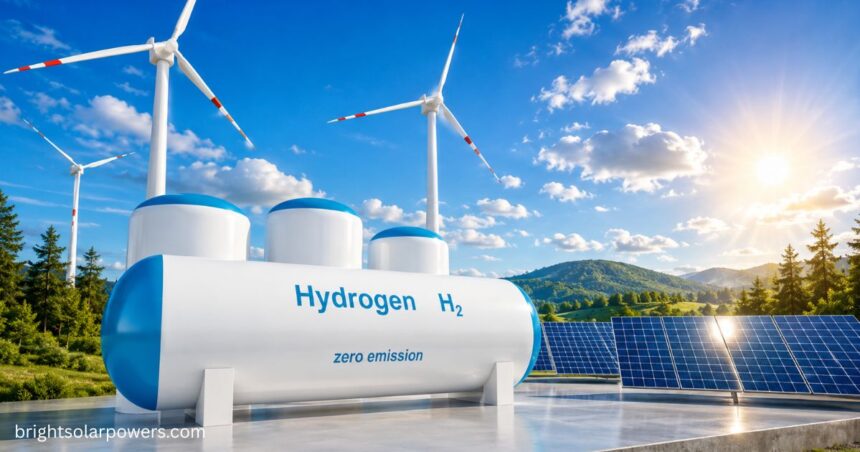
Every time I explain hydrogen solar panels to someone, their eyes light up with curiosity. These devices capture sunlight and convert it into hydrogen gas rather than just electricity, opening an entirely new door in clean power.
A built-in fuel cell then reconverts that stored gas back into usable power whenever you need it most.
HYDROGEN SOLAR PANELS
Many solar systems in 2026 push far beyond simply sending electricity through wires into your home. Certain designs use solar radiation to drive hydrogen production, moving that gas through gas tubes directly into a storage tank.
A handful of experimental models even pull moisture straight from the air, splitting it into hydrogen and oxygen using nothing but sunlight.
The global push to minimize dependence on fossil energy has accelerated interest in these viable solutions. The renewable energy sector now treats hydrogen energy systems as one of the most exciting developments of this decade.
Companies worldwide integrate solar power with hydrogen fuel cells, though price tags remain a real barrier for everyday consumers looking to transition toward clean energy and technology that truly lasts.
What Are Hydrogen Solar Panels?
A hydrogen solar panel works as a solar device whose primary output is hydrogen gas rather than raw electricity A hydrogen panel breaks that mold entirely by using sunlight to split water into hydrogen and oxygen, leaving you with a storable fuel instead of an instant current.
The panel’s design centers on two core jobs: a top layer dedicated to solar energy capture that absorbs sunlight and a water splitting stage that applies the captured solar energy to separate molecules.
Some cutting-edge units skip a fixed water line altogether, drawing moisture from the air and converting that water vapor into fuel through a split reaction inside the panel itself.
Separated gases then travel through gas tubes into a central storage tank, while oxygen gets safely vented or captured for other uses.
What you ultimately receive from this system breaks down simply: the main output is stored hydrogen solar panels ready for later use, byproduct oxygen requires careful handling, and some sophisticated systems even deliver a secondary stream of electricity.
These panels now form a growing part of hydrogen energy systems entering the market as the world’s transition to clean energy picks up real speed.
The dual benefit of immediate solar energy alongside stored hydrogen energy makes them genuinely compelling compared to conventional PV panels that stop working the moment clouds roll in, and the reliable, clean power they offer keeps attracting serious attention from engineers and homeowners alike.
How Does a Hydrogen Solar Panel Work?
Walking through an actual hydrogen panel installation taught me that the panel itself is only one piece of a much larger system. A complete setup demands a water source or humidity capture unit, a dedicated water-splitting unit housing either an electrolyzer or a photoelectrochemical layer, plus all the gas separation piping that keeps everything flowing cleanly.
You also need hydrogen storage tanks, safety valves, active monitoring systems, and an optional fuel cell that turns stored gas back into electricity on demand.
Once every component connects, sunlight strikes the solar layer, which absorbs sunlight and releases energy that either feeds an electrolyzer or triggers a direct photoelectrochemical reaction.
The system then draws purified water from a controlled feed line or pulls humidity through a membrane and adsorbent layer, after which it attacks water molecules (H₂O) and breaks the bond between hydrogen and oxygen.
Internal membranes keep those two gases apart, channeling hydrogen through sealed micro-tubes into a central manifold where output from several panels combines before moving to compressed tanks equipped with pressure regulators and leak detection systems.
From that point, stored hydrogen sits ready to serve multiple purposes: you can burn it for heat, route it to cooking appliances, or feed it into a fuel cell that runs an electrochemical reaction to restore electricity to your home.
The entire chain demonstrates how electrolysis, storage, and energy conversion work together in a remarkably efficient and environmentally friendly loop.
Understanding these limitations compared to traditional solar setups also helps you appreciate exactly where hydrogen technology excels and where it still needs refinement, especially regarding solar energy input consistency and water splitting reliability across different climates.
The Cost of Hydrogen Solar Panels
Anyone researching hydrogen solar panels quickly discovers that prices bear little resemblance to what you pay for standard rooftop gear. In India, these panels do not yet appear on any fixed retail price lists because most units remain in pilot stages or early-commercial stages rather than full mass-market availability.
Commercialization in 2026 moves forward in select regions, but production scale and regulatory approvals still dictate who actually gets access.
In the US, where confined commercial projects have deployed these systems, the cost per unit typically lands between $1,000 and $2,000 per panel, according to general industry research. That figure excludes storage, installation, and the broader infrastructure, meaning a complete system can climb into the hundreds of thousands of dollars without much effort.
Traditional solar panels, by contrast, run between $200 and $500 per panel, with full system installations landing between $10,000 and $20,000, a gap that makes the hydrogen option feel steep by comparison.
Every manufacturer factors in engineering complexity, safety certification, and the absence of standardized retail pricing that drives costs down through competition.
Buyers should treat any quote as an estimate rather than a firm number, especially since the distinction between residential products and pilot hardware still blurs considerably across the hydrogen solar panels segment today, and the upfront cost alone requires serious financial planning before committing.
Advantages of Hydrogen Solar Panels
Rather than locking energy into degrading battery cells, these systems convert solar energy directly into hydrogen fuel that you can keep stored for days, weeks, or even months without the discharge losses that plague conventional batteries.
That shift from electrochemical storage to gas storage unlocks unique benefits that purely electric systems simply cannot match, even as practical challenges remain part of the conversation.
Long-term energy storage means your hydrogen fuel sits patiently in tanks, ready to power fuel cells that restore electricity to your homes and connected devices long after the sun sets.
Energy on demand during the night or through extended power outages becomes genuinely realistic, and multiple end uses emerge naturally; the same stored gas can drive industrial applications, supply heat, or even support carefully managed cooking setups.
Scalability through expanded tank capacity makes these systems attractive for industrial systems that need far more storage than any battery bank could reasonably provide.
Beyond storage, hydrogen panels earn praise for their eco-friendly character, since burning hydrogen releases only water rather than pollutants, making them a powerful tool for shrinking carbon footprints across households, businesses, and entire communities.
Their versatility extends into powering hydrogen vehicles and serving as emergency power sources for critical facilities, while their longevity over standard solar batteries reduces long-term replacement costs.
The higher cost compared to conventional options stays real, but the combination of reliability, extended life span of fuel cells, and flexible applications positions hydrogen panels as a compelling long-game choice for homeowners who prioritize clean, resilient energy above all else.
Is Hydrogen from Solar Energy Truly Green?
The energy world uses the term “green hydrogen” specifically for hydrogen that solar panels produce using sunlight-driven electricity to split water into hydrogen and oxygen, completely bypassing fossil fuels like coal or natural gas. Because the sun supplies all the input energy, the entire process does not emit a single unit of greenhouse gases, placing green hydrogen among the cleanest fuel options humanity currently possesses.
In 2026, this distinction between truly renewable hydrogen and dirtier alternatives carries serious weight for policymakers and investors worldwide.
Understanding that green hydrogen represents the purest form of this fuel matters because not all hydrogen carries the same carbon footprint. Grey hydrogen, for instance, comes from natural gas reforming and carries a heavy emissions burden, while green hydrogen carries essentially none.
Every unit of solar energy that drives the split reaction rather than a fossil-fuel furnace pushes the industry one step closer to genuinely clean fuel options at scale.
From a personal standpoint, the green hydrogen story resonates deeply because it closes a loop that conventional solar cannot: it stores the sun’s energy in a form that heavy industry, transport, and heating can all use directly. Sunlight becomes electricity, electricity drives water splitting, and hydrogen emerges as a fuel that travels, stores, and burns cleanly without apology.
That circular elegance is precisely why researchers and governments treat green hydrogen not as a niche curiosity but as a cornerstone of the coming renewable energy economy and a genuine answer to the carbon challenge that defines our era.
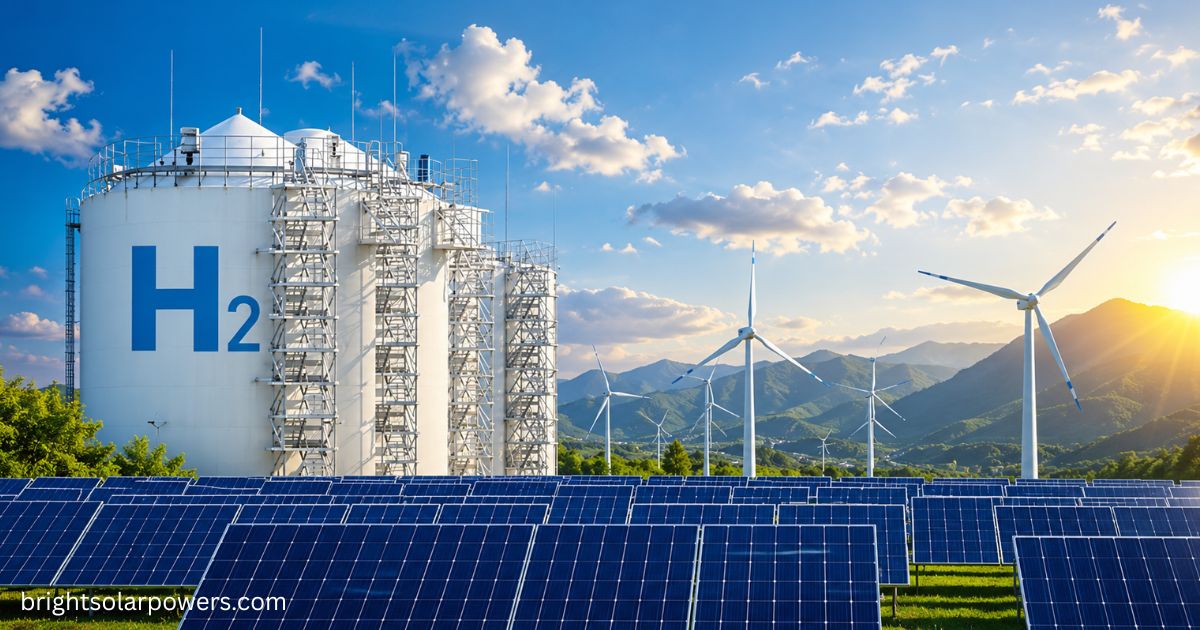
How is hydrogen made from solar energy?
Researchers currently recognize three main ways to produce hydrogen from solar energy, and understanding each method clarifies why adoption curves differ so dramatically across regions. The first and most battle-tested approach pairs standard solar panel arrays with a standalone electrolyzer that receives electricity and immediately begins electrolysis, splitting water into hydrogen and oxygen with high reliability.
Most large-scale green hydrogen projects operating today favor this proven method precisely because both the solar and electrolysis equipment sides carry decades of engineering refinement behind them, making the combined system genuinely predictable and scalable.
The second route, humidity-based hydrogen panels, takes a more self-contained approach by pulling moisture directly from the air instead of depending on a piped water supply line. Designers favor this path for modular deployment in locations where running plumbing proves difficult, and it cuts plumbing complexity considerably.
However, hydrogen output swings heavily with local humidity levels, meaning performance drops sharply in dry climates, which is why most of these systems remain firmly in the pilot phase rather than mainstream production.
The third method, photoelectrochemical PEC systems, uses a specialized semiconductor material that reacts directly with sunlight at the panel surface, triggering water splitting without routing electricity through a separate electrolyzer first.
The elegance of this approach attracts enormous interest from the research and development community, but real-world durability, long-term efficiency, material stability, and overall cost all remain active challenges.
Most PEC work today stays in early development labs rather than field installations, though breakthroughs in this space could eventually make it the dominant approach once scientists solve the remaining engineering puzzles surrounding it.
How Efficient is a Hydrogen Solar Panel?
Every conversation I have with engineers about hydrogen panels eventually circles back to Solar-to-Hydrogen efficiency, or STH, the single number that captures what fraction of incoming sunlight actually ends up locked inside hydrogen fuel as usable stored energy. Current research prototypes post STH figures between 10% and 15% under controlled laboratory conditions, which sounds modest until you consider the complexity of the multi-step conversion process happening inside each unit.
Even at 15%, the system converted more solar radiation into storable fuel than many people expect from such an early-stage technology.
Real-world performance, however, diverges from lab numbers because sunlight intensity, ambient temperature, panel tilt, orientation, and shading all affect output continuously throughout the day.
Moisture-based systems face the additional variable of local humidity levels, while all designs suffer when water quality drops below acceptable thresholds or installation quality introduces avoidable inefficiencies.
Together, these factors mean actual performance depends heavily on climate, system design, and prevailing operating conditions rather than any single published efficiency rating.
Beyond the panel itself, energy losses accumulate during hydrogen compression, storage, and eventual reconversion back into electricity, each stage shaving usable output further away from the theoretical maximum. Engineers working in this field treat STH figures as directional benchmarks under controlled test conditions rather than guaranteed delivery numbers for real installations.
Closing the gap between laboratory 10% readings and commercially viable performance targets remains one of the central engineering challenges that the hydrogen solar industry must solve before these panels can realistically compete with conventional photovoltaic technology on pure usable output terms.
Disadvantages of Hydrogen Solar Panels
Honest enthusiasm for hydrogen panels requires acknowledging the technical limitations, economic limitations, and practical limitations that currently hold the technology back from mainstream adoption. The most immediately obvious issue is lower overall efficiency: where a premium TOPCon cell delivers 26% efficiency, the energy conversion chain inside a hydrogen panel introduces multiple steps, each bleeding energy away until usable output settles in the 10% to 15% range.
That gap matters enormously when you calculate the roof space and capital required to deliver a given amount of stored energy to your home.
High system complexity compounds the efficiency problem because every hydrogen installation demands careful water handling, robust gas separation hardware, reliable compression equipment, properly rated storage tanks, and continuous safety monitoring equipment watching for faults. Safety requirements around hydrogen deserve particular respect; the gas is intensely flammable, so leak detection systems and strict ventilation standards form non-negotiable parts of any responsible installation.
Water dependency creates a geographic constraint that battery-based solar systems never face, because hydrogen production requires either purified water from a reliable supply or sufficient humidity in the surrounding air. In dry regions, both supply paths become unreliable, dragging performance below levels that justify the investment.
Taking all these disadvantages together does not mean hydrogen panels lack merit, but it does mean that buyers must enter the decision with clear eyes about where current TOPCON solar panels and battery storage still hold a decisive practical advantage in the majority of residential and small commercial situations today.
What are the applications of hydrogen panels?
Hydrogen panels shine brightest in situations where storing solar energy as a portable, long-lasting fuel matters more than generating instant electricity for appliances or charging batteries. The most immediately practical use case centers on backup power generation: a fuel cell fed by stored hydrogen restores power during power cuts or extended stretches of low sunlight far more reliably than battery banks that lose charge over time.
Because hydrogen sits stably in tanks rather than degrading electrochemically, it suits locations where grid outages last days rather than hours and dependable power is non-negotiable.
Long-duration energy storage represents perhaps the most strategically important application, particularly for communities dealing with variable sunlight across seasonal storage cycles. Systems can accumulate hydrogen during peak sunny months and draw on those reserves when winter limits solar generation, a capability that no conventional battery chemistry currently matches at a meaningful scale.
Industrial energy use taps into this same storage depth, directing green hydrogen into high-temperature processes across refining, fertilizer production, and broader manufacturing processes that currently depend on fossil-fuel-based hydrogen and carry enormous carbon burdens as a result.
At the building level, heating applications put hydrogen to work in compatible burners delivering heat for water heating and industrial thermal applications without combustion emissions. Cooking with hydrogen remains possible in carefully controlled environments using specialized appliances that meet strict safety compliance standards, though widespread residential adoption stays limited today because the gas’s intensely flammable nature demands infrastructure that most homes do not currently possess.
Each of these applications demonstrates that hydrogen panels serve a fundamentally different market than rooftop PV: they target situations where the ability to store and deploy a clean fuel across multiple sectors justifies the added complexity and cost of the entire system.
Hydrogen Panels Commercially Available in India for Homes
Anyone in India researching hydrogen panels for home use quickly discovers that true commercial availability remains out of reach for most homeowners in 2026. The overwhelming majority of units operating on Indian soil sit inside pilot stages run by research institutions or corporate energy programs rather than on residential rooftops serving ordinary families.
Lower efficiency relative to mature photovoltaic products and dramatically higher costs combine to make hydrogen panels a hard sell in a market where affordable solar electricity already meets most household needs effectively.
Hydrogen panels, by contrast, require specialized technicians, imported components, and safety infrastructure that India’s residential solar sector has not yet built at scale.
The technology makes far more sense when the goal is producing storable fuel for long periods rather than delivering immediate electricity to power fans, lights, and appliances daily.
The operational life means the total cost spread across years of service looks considerably more reasonable than the raw purchase price implies.
Buyers who approach the decision as a multi-decade infrastructure investment rather than a consumer electronics purchase tend to find the numbers far more attractive than those who focus exclusively. That said, the trajectory points toward gradual progress. Government interest in green hydrogen as an export commodity and industrial fuel keeps research funding flowing, and pilot programs continue expanding their scope across the country.
Commercially available hydrogen panel products designed specifically for residential Indian rooftop use may realistically enter the broader market within the coming years as production scales and regulatory frameworks mature, but homeowners seeking reliable, cost-effective clean power today will almost certainly find photovoltaic solar panels the far more sensible and immediately residential-ready choice for the foreseeable future.
What is the Difference Between Solar Panels and Hydrogen Panels?
The clearest way to understand the main difference between a solar panel and a hydrogen panel is to ask one simple question: what does the device actually hand you at the end of the process? A standard solar panel generates electricity the moment sunlight strikes it, and that current flows immediately to your home, into a battery, or out to the grid for others to use.
The entire value proposition rests on direct electricity delivery, fast, predictable, and compatible with virtually every appliance and infrastructure system already installed in your building.
A hydrogen panel takes a fundamentally different path by treating sunlight as the input to a fuel-making process rather than a direct power source. Instead of delivering current through wires, it produces hydrogen gas as its primary output, converting solar energy into a fuel that you can then store in tanks and deploy whenever and however you need it most.
That distinction between immediate electrical output and deferred fuel storage defines everything about how you would design, install, maintain, and ultimately use each type of system in practice.
Choosing between them comes down to what problem you actually need to solve. If your priority is powering photovoltaic-compatible loads with minimal complexity, a standard solar panel wins decisively on cost, efficiency, and ecosystem maturity.
If your situation demands stored energy that travels, scales, and serves multiple end uses beyond simple electricity generation, then hydrogen panels and their ability to produce usable electricity from stored gas through a fuel cell make them the more logical long-term investment despite their current limitations, higher price, and the differences in infrastructure they require compared to everything the conventional solar industry has already perfected.
Long-Term Savings
The upfront cost of hydrogen solar panels intimidates most buyers at first glance, but experienced energy investors consistently point to long-term savings as the metric that actually determines value over a system’s full operational life.
Sustained reductions in energy bills compound year after year, and eligibility for government incentives in many regions can shave meaningful amounts off the initial expense before the system even generates its first kilogram of hydrogen.
Together, those two forces begin closing the gap between hydrogen and conventional solar far sooner than the sticker price alone suggests.
Hydrogen energy systems carry a longer lifespan than traditional solar setups built around battery storage, primarily because hydrogen tanks and fuel cells degrade more slowly than electrochemical battery cells that cycle through charge and discharge thousands of times.
Government policy continues moving in directions that reward early adopters of clean hydrogen technology, with subsidy programs, tax credits, and feed-in arrangements gradually making the economics more accessible across different income brackets.
A worthwhile investment calculation, therefore, needs to account not just for current incentive levels but for the trajectory of policy support as nations pursue hydrogen-heavy decarbonization strategies.
Hydrogen Fuel Cell Technology
Hydrogen solar panels draw much of their long-term promise directly from the maturation of hydrogen fuel cell technology, the conversion engine that transforms stored gas into clean electricity through a chemical reaction rather than combustion. Fuel cells operate by routing hydrogen across a membrane where it reacts with oxygen to release electrons, generating power through an electrochemical reaction that produces nothing but water as its byproduct.
That process runs quietly, continuously, and without the mechanical wear that internal combustion introduces, making fuel cells inherently suited to the kind of long-duration storage and dispatch role that hydrogen solar panels require.
The practical workflow begins when solar energy drives electrolysis, splitting water into hydrogen and oxygen that then enters pressurized tanks for storage. When your home or facility needs power, the system pulls hydrogen from those tanks and feeds it into the fuel cells, where the electrochemical reaction regenerates clean electricity on demand without any emissions entering your living space.
That closed-loop design, solar input to hydrogen storage to fuel cell output, delivers an efficient and genuinely environmentally friendly energy cycle that addresses the core limitations of traditional solar setups that cannot store power beyond what their battery banks hold.
Engineers who work closely with this technology describe it as genuinely transformative because it decouples energy production from energy consumption in a way that batteries only partially achieve. A battery stores electrons; a hydrogen system stores fuel, and fuel scales in ways that batteries cannot match without prohibitive material costs.
That fundamental difference explains why hydrogen fuel cell technology attracts serious investment from aerospace, automotive, and grid-scale energy sectors simultaneously and why its continued refinement will ultimately determine how quickly hydrogen solar panels move from promising pilot projects into mainstream power infrastructure that ordinary buildings can depend on every single day.
Are Hydrogen Solar Panels Worth the Investment?
Deciding whether solar panels justify the investment requires honest reflection on your specific needs, available budget, and genuine environmental goals rather than simply chasing the newest technology on the market.
For households pursuing off-grid living in remote areas with limited grid access, these panels deliver a reliable energy source that conventional solar-plus-battery setups struggle to match across extended periods of low generation.
The ability to store months of energy as hydrogen rather than depending on battery capacity that degrades with every cycle makes a compelling case for isolated properties where energy security truly matters.
Eco-conscious consumers who treat reducing their carbon footprint as a non-negotiable priority will find hydrogen energy systems among the most genuinely clean and sustainable choices currently available at the residential and commercial scale.
Long-term planners who think in decades rather than payback periods gain access to a future-proof energy solution whose durability and scalability position it well for a world where hydrogen infrastructure continues maturing around it.
Hydrogen systems designed for businesses and communities already demonstrate that the technology scales effectively beyond individual homes, which matters for anyone whose energy ambitions extend past a single rooftop installation.
Practical considerations still demand attention before signing any contract. The high upfront cost represents a genuine financial barrier that requires an honest evaluation of your financial situation and a realistic projection of future savings before committing.
Availability of quality products and certified installers varies significantly by region, and government subsidies alongside broader incentives that offset installation costs differ dramatically across markets.
Checking what your local and national programs offer before purchasing hydrogen solar panels could meaningfully change the investment calculus, and for households and businesses in regions with strong policy support, hydrogen panels may already cross the threshold from aspirational technology into genuinely practical energy infrastructure worth serious consideration today.
FAQs about Hydrogen Solar Panels
Is a hydrogen solar panel real?
Yes, a hydrogen solar panel is real and combines solar energy with clean hydrogen production. It uses sunlight to split water into usable green hydrogen.
Can solar panels make hydrogen?
Yes, through solar-powered electrolysis, solar panels split water to generate green hydrogen. This offers a clean path toward sustainable renewable energy.
What is the cost of 1 kg of hydrogen fuel?
In India, hydrogen fuel costs roughly ₹300 to ₹400 per kg depending on production type. Green hydrogen remains pricier but is steadily becoming more affordable.
Why don’t we use hydrogen for power?
Hydrogen power is limited by high production, storage, and hydrogen infrastructure costs. Better fuel cell technology is needed for wider everyday use.
Why does Elon Musk not like hydrogen?
Elon Musk finds hydrogen fuel cells inefficient compared to direct battery storage in EVs. He backs electric vehicles as the smarter, faster clean-energy solution.