

When I first started helping homeowners understand solar panel installation costs, most people fixated on a single quote without understanding what that number actually covers. Every rooftop solar project I’ve worked on taught me one thing the per kW price tells only half the story.
In India, the Indian government pushed serious policy reform starting in 2015, targeting 227 GW of renewable energy capacity by 2022, allocating 114 GW to solar capacity, and earmarking 40 GW specifically for decentralized and rooftop projects.
The residential rooftop solar installation sector recorded a staggering CAGR of 116% between 2012 and 2018, proving that homeowners across the country were ready to embrace photovoltaic power.
Solar Panel Installation Cost: What You’re Really Paying For in 2026
By 2021, falling prices made solar system investments genuinely profitable, and by 2026, the per kW cost for a complete system settled between ₹55,000 and ₹85,000, a range influenced by components, efficiency, brand, quality, and location.
Strong brand names like Vikram Solar, frequently listed among the top 10 solar panel manufacturers, price their modules around ₹28 to ₹33 per watt, yet panels represent just one slice of the total setup cost.
The rest covers your inverter, mounting structure, cabling, protection systems, and expert labor, every element working together to deliver reliable electricity from sunlight to your home.
Reputable contractors who operate through dealer and partnership networks gain access to better pricing, stronger warranties, and deeper technical training, which directly improves output, performance, and long-term savings for you as the end customer.
The PM Surya Ghar scheme now delivers subsidy money through Direct Benefit Transfer (DBT) straight into your account, making net metering, DCR (Domestic Content Requirement) compliance, and CFA (Central Financial Assistance) benefits more accessible than ever before.
Systems using DCR-compliant monocrystalline or polycrystalline panels qualify for this support, and whether you choose an on-grid, off-grid, or hybrid configuration, your monthly bill reduction and overall ROI improve substantially when you factor the subsidy into your budget.
Working with a certified EPC (engineering procurement construction) firm ensures that earthing, connectors, rails, switchboard readiness, wiring, roof integrity, monitoring, permits, and insurance all receive proper attention, protecting your investment well beyond the standard payback period.
Once you clear that payback period, every unit of power your panels generate becomes pure savings, shielding you from rising tariffs and boosting your property’s resale value for decades ahead.
What Makes Up the Cost of Solar Panels for a Home
Most people shopping for solar panels assume the installation cost covers just the panels themselves; that assumption costs them money every single time.
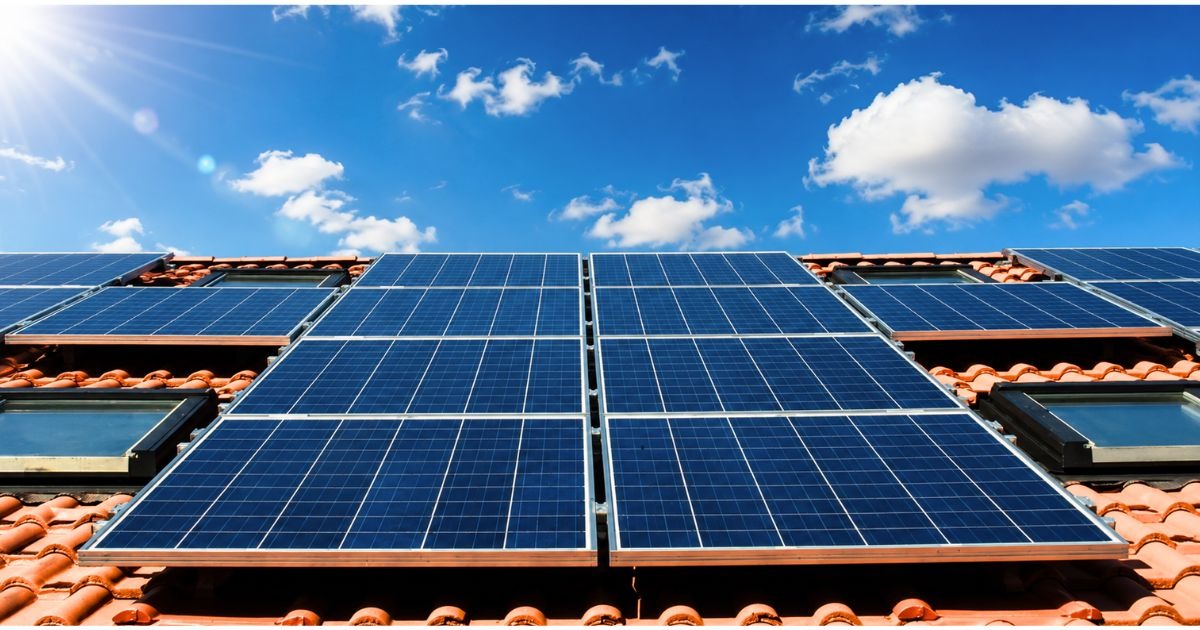
A complete working system bundles PV modules, an inverter that converts DC (direct current) from your panels into usable AC (alternating current) for home appliances, and a sturdy mounting structure suited for either a flat roof or a sloped roof.
The balance of system (BOS) that includes wiring, cables, connectors, protection devices, and earthing materials that keep your solar array operating safely.
Every certified EPC installer also factors in installation labor, electrical work, and the grid connection process, none of which appear as line items in a basic panel price, but all of which determine whether your rooftop solar system actually performs reliably.
Choosing a trusted manufacturer like Vikram Solar, widely recognised among the top 10 solar panel manufacturers, gives you modules priced around ₹28 to ₹33 per watt with dependable efficiency, verified warranty coverage, and consistent performance across seasons.
However, the panel cost alone represents only a portion of your per kW investment; the complete system price per kW reflects every component working together, not just the hardware sitting on your rooftop.
Homeowners who understand this distinction make smarter comparisons between residential installers and avoid chasing artificially low equipment quotes that strip out essential components and inflate the long-term cost of making solar work for their household.
Factors That Affect the Cost of Solar Panel Installation
Your system size in kW capacity is the single biggest driver of total solar panel installation cost, and your actual electricity consumption determines the right capacity for your household.
A typical 3BHK home in India runs comfortably on a 3 kW to 5 kW system, with total project costs landing between ₹1.5 lakh and ₹3.5 lakh depending on your chosen components and location.
Scaling up your system size also works in your favor because fixed costs like labor, transport, and basic setup spread across more capacity, dropping your effective cost per kW from roughly ₹80K on a 1 kW system down toward ₹60K on a larger 5 kW installation.
Selecting the right solar system and solar panel installation cost configuration matters just as much as size. On-grid systems connect directly to the grid and suit most urban homes focused on cutting monthly bills, while off-grid systems include batteries and backup power for areas that experience frequent power cuts.
Panel technology drives another layer of cost difference: monocrystalline panels deliver premium efficiency and performance at a slightly higher price, while polycrystalline panels offer a budget-friendly entry point with moderate efficiency and adequate output for smaller roof space.
Your choice of brand shapes every long-term outcome. A trusted brand delivers verified quality, meaningful warranty protection, reliable after-sales service, and consistent output across the full lifespan of your system, which directly influences your maintenance costs and total energy goals achieved.
City-Wise Example: How Cost Changes for Different Homes
Solar system cost varies significantly across India because each city and state operates under different incentive structures, market conditions, and infrastructure realities.
The PM Surya Ghar scheme provides a national subsidy baseline, but states like Gujarat and Uttar Pradesh layer on additional state-level support, making projects in cities like Ahmedabad and Lucknow noticeably more affordable for homeowners compared to other residential markets.
Understanding your specific state and city incentive stack before signing any contract helps you build an accurate budget and avoid leaving significant subsidy money unclaimed.
Local market conditions, solar panel installation cost, and pricing shape just as powerfully as government policy. Cities with dense networks of solar EPC firms, engineering procurement construction specialists, and active manufacturers naturally generate more competition, which pushes prices downward for consumers. By contrast, large metropolitan cities carry higher installation costs and labour costs for solar panel installation, which reflect the elevated cost of living in those areas, making the same system meaningfully more expensive than in smaller markets.
Transportation of solar panels and associated equipment, local net metering approval timelines, and specific local regulations all feed into the overall price of your solar system installation, factors that only an experienced local installer will flag before your project begins.
Hidden Costs That Homeowners Should Know
Signing a contract based purely on a low headline figure is one of the most common mistakes I see homeowners make, because the real solar installation budget always includes hidden costs that responsible installers disclose upfront.
Switchboard replacement and switchboard upgrade work surprises many buyers. Old wiring upgrades and panel board changes qualify as a major expense that dishonest contractors add after installation rather than quoting honestly at the start.
A thorough pre-installation full assessment of your roof condition also prevents the leaking roof and old roof complications that turn into expensive roof repair jobs post-installation, protecting your peace of mind from day one.
Inverter replacement deserves a place in every long-term budget because while solar panels’ lifespan stretches 25 to 30 years, your inverter’s life expectancy runs only 8 to 12 years, meaning you will almost certainly replace it at least once over your system’s life.
Monitoring fees in the form of monthly app fees or cloud fees represent recurring monitoring fees that some installers bake into ongoing contracts, while others charge separately for approvals, engineering drawings, NEM paperwork, and TNB permitting after the sale closes.
Insisting on a 5-year workmanship warranty, confirmed site insurance, workmanship coverage, and a clear position on low-quality materials, specifically weak rails, smaller cables, and unsafe connectors, before you sign, ensures your long-term investment in electricity bills.
Solar panel installation cost protection against rising tariffs stays fully intact, with real transparency from your installer about every hidden charge in the project.
Solar Panels for Home: Simple Payback Guide
Understanding the relationship between solar panels’ home cost and genuine savings transforms the way most homeowners evaluate their decision, because the numbers tell a compelling story once you lay them out clearly. Every kilowatt of solar power you install chips away at your electricity bills by reducing your dependence on grid electricity during peak hours when generation costs are costliest, and any surplus flows back through net metering to earn credits that shrink future bills further.
A 3 kW solar system priced around ₹130,000 after subsidy typically delivers roughly ₹3,000 per month in savings, pushing your payback period to approximately 3.5 years, after which two decades of near-free electricity become your reward.
Your actual ROI depends on several interconnected factors: the initial system cost, the subsidy you secure, projected electricity tariff increases over time, consistent system performance, regular maintenance habits, your daily usage patterns, and how much direct roof sunlight exposure your property receives throughout the year.
Pairing your solar investment with energy-efficient appliances reduces your overall load, meaning your panels cover a higher percentage of your total consumption without requiring a larger kW system.
Once your payback window closes, every unit of electricity your panels generate becomes pure savings, shielding you permanently from future tariff protection concerns, requiring low maintenance effort, and adding measurable property value and resale value that makes solar one of the strongest long-term financial benefits any homeowner can secure.
Subsidy on Home Solar Systems in India
The PM Surya Ghar Muft Bijli Yojana stands as the most impactful policy initiative driving affordable rooftop solar adoption across India today, channelling Central Financial Assistance (CFA) directly into eligible consumer bank accounts through Direct Benefit Transfer (DBT) without delays or intermediaries.
Homeowners who qualify under current residential rooftop schemes can access up to ₹78,000 subsidy when installing a 3 kW system, bringing a project that carries a paper price of ₹2.1 lakh down to an effective outlay of approximately ₹1.3 lakh after subsidy, a difference that fundamentally changes the financial support equation.
Government support at this level makes the subsidy one of the most powerful tools in your solar planning process, and engaging with it early in your project timeline maximises your total benefit.
To qualify for this subsidy-linked support, your system must use DCR solar panel installation cost modules that meet the Domestic Content Requirement, specifying approved domestic modules manufactured within India.
Always verify current rules directly with your installer or through the official scheme portal, since subsidy eligibility criteria do evolve with new policy updates from the Indian government. Whether you choose monocrystalline or polycrystalline technology, ensuring your panels carry DCR certification keeps your entire rooftop solar project aligned with PM Surya Ghar requirements and locks in every rupee of financial support your household deserves.
How Many Solar Panels Are Needed to Run a House?
Figuring out how many solar panels your house needs starts with pulling out your electric bills from the past 12 months, covering both summer and winter conditions, and calculating your average monthly energy use in units (kWh).
Research shows a typical Indian household consumes around 90 units kWh per month, enough to run light bulbs, a television, ceiling fans, a refrigerator, and basic kitchen appliances, though your actual figure shifts based on home size, number of family members, and the specific appliances you run daily.
Your local energy company can supply precise consumption data if your bills feel inconsistent, giving you the accurate baseline your rooftop solar supplier needs to recommend the right system size.
A 1 kW system produces roughly 4 to 5 units per day and handles basic daily loads for smaller setups, while a 3 kW system comfortably powers a typical household with room to spare, and a 5 kW configuration delivers meaningful energy independence for larger homes with higher energy demands.
Your location also plays a significant role. Homeowners in western India enjoy more daily peak hours of sunshine availability, meaning their panels generate more electricity per kW installed compared to those in the northeast, though both regions benefit strongly from going solar.
Consulting an experienced rooftop solar supplier who assesses your specific energy demands, roof space, and local peak hours data ensures your solar panel for homes investment delivers maximum electricity cost reduction from day one.
Do Solar Panels Provide Electricity During a Blackout?
One question I hear constantly from new buyers is whether their solar panels keep working during a power blackout, and the honest answer requires understanding how grid-tied solar systems actually operate.
The vast majority of solar panel installation costs rely on a grid connection to supply power during the hours when panels stop producing, typically after sunset, and most standard on-grid inverters shut down automatically during an outage to prevent a dangerous condition called “islanding.”
Slanding occurs when your system continues pushing electricity into active cables while utility personnel work on the lines, creating a serious safety hazard that your inverter eliminates mechanically without any action from you.
Only a small fraction of solar homes include battery backup capacity that genuinely keeps lights and appliances running through a power outage. These off-grid or hybrid configurations cost more upfront but deliver uninterrupted AC power regardless of grid status.
If uninterrupted supply matters to your household, particularly in areas with frequent cuts, specifying a battery backup at the design stage is far smarter than retrofitting later.
Understanding this distinction between grid-tied solar systems and battery-equipped setups before you sign your contract ensures your solar panel installation cost and PV system investment match your actual power reliability expectations from the very first day of operation.
FAQs about Solar Panel Installation Cost
Is ₹55,000 to ₹85,000 per kW the standard solar panel installation cost in India in 2026?
Yes, the average solar panel installation cost in India ranges between₹55,0000 and ₹85,000 per kW in 2026, depending on your equipment quality, roof type, and installer.
Do I need DCR solar panels to qualify for the PM Surya Ghar subsidy?
Yes, most subsidy-linked residential schemes under PM Surya Ghar require DCR solar panels that meet the domestic content requirement to qualify for central financial assistance.
Can a 3 kW solar system run a standard Indian household?
Yes, a 3 kW solar system comfortably powers most 2 BHK and 3 BHK homes with moderate electricity use and covers everyday household loads efficiently.
Do grid-tied solar panels stop working during a power blackout?
Yes, standard grid-tied solar systems shut down automatically during a power blackout to prevent islanding and protect utility personnel working on the grid.