

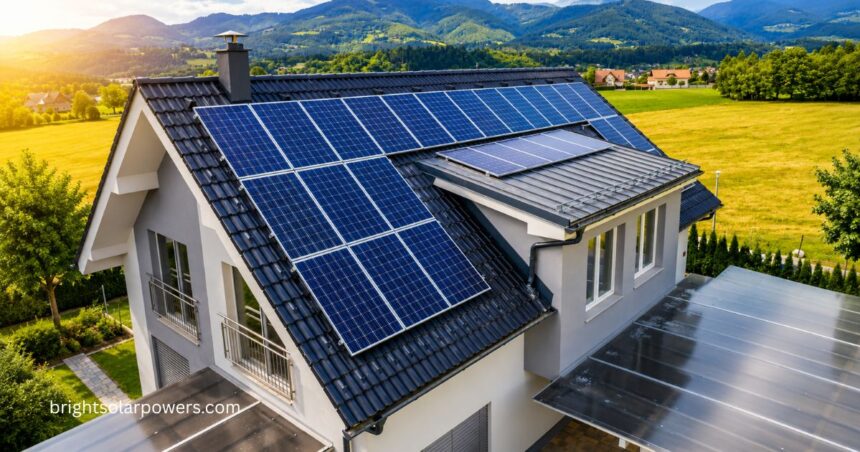
Every homeowner who thinks about solar panels for home cost for their house eventually asks the same question: what does it really cost, and is it worth the money? I have watched many families in India go through this exact journey .
Honest answer is that the price tag looks intimidating at first glance but becomes much simpler once you break it down.
This guide walks through every angle of home solar systems, from the parts that make up the price to the subsidies that bring it down, written the way I would explain it to a neighbour over tea.
Solar Panels For Home Cost
India has quietly become one of the best places in the world to go solar, and 2026 is shaping up as a strong year for it.
Homeowners are discovering that affordable, solar panels for home cost long-term solution thinking beats short-term worry about electricity cost, especially once they understand that the total cost of a system covers far more than just panels .
It includes the inverter, the mounting structure, and the wiring that ties everything together.
The system size you choose, whether it starts at 1 kW or stretches up to 10 kW, decides how much you spend and how much you save, and that choice depends heavily on your home types and daily electricity habits.
Government schemes make a real dent in the numbers too. The PM Surya Ghar Muft Bijli Yojana cuts down the upfront investment significantly, and on top of that, state-level subsidies in Delhi, Gujarat, Uttar Pradesh, and Maharashtra shave off even more from the bill.
Because of this combined support, most households recover their money within a payback period of 3 to 4 years, and then enjoy 20+ years of pure savings afterward – a timeline that very few home upgrades can match.
Prices are not identical everywhere either. City-wise prices shift because of different labour costs, local incentives, and market competition, and net metering policies also play a part in how quickly the system pays for itself.
condition, orientation, and shading influence how much power your panels actually produce, and homeowners who skip this check often run into hidden costs later, whether from electrical upgrades, roof repairs, or an unexpected inverter replacement.
This is exactly why working with reliable installers and quality manufacturers like Alpex Solar matters so much for durability, safety, and system efficiency over the years, along with output that stays consistent through the seasons.
What Makes Up the Cost of Solar Panels for a Home?
People often assume the panel itself is the whole bill, but a real system has several working parts stitched together.
The PV Modules capture sunlight and turn it into solar panels for home cost electricity, while the Inverters – whether On-Grid, Off-Grid, or Hybrid – handle the job of converting DC power into usable AC for your home appliances.
Sitting underneath all of this are the mounting structures, which hold everything firmly whether your roof is flat or sloped, plus the Balance of system components, known in the trade as BOS, covering cables, connectors, protection devices, and earthing materials for the whole solar array.
None of this installs itself, of course. The basic installation labour costs cover the physical work of mounting the panels.
Plus the electrical work required to connect everything safely to the electric grid, and every one of these pieces feeds into what you eventually pay for your residential solar system.
On the newer side, homes are also adding separate DC wiring and AC wiring runs, alongside the Solar panels and Solar inverter themselves, which together decide how smoothly your junction boxes, safety devices, and optional battery for backup systems all work in harmony.
Factors That Affect the Cost of Solar Panel Installation in the Home
The single biggest factor is simply System Size, measured in kW Capacity. A typical 3BHK household usually needs somewhere between 3 kW and 5 kW, which lands in the range of ₹1.5 lakh to ₹3.5 lakh depending on the exact components and location involved. The Type of Solar Panel also shifts the bill –
Monocrystalline panels deliver high efficiency and premium performance but cost more, while Polycrystalline panels stay budget-friendly with moderate efficiency for anyone watching their spend closely.
Beyond the panel type, the Type of Solar System you pick changes the equation too.
On-grid systems stay connected to the electricity grid and remain economical, cutting down monthly bills in a straightforward way, while Off-grid systems bring in batteries for backup during power cuts but push the price higher.
The Brand and Component Quality you choose matter just as much as the technology, because top solar brands bring long-term warranties and dependable after-sales service, sparing you from maintenance issues down the road.
Scale changes things as well. A 2 kW setup suits 2–3 BHK homes, while larger villas with high consumption households need bigger arrays altogether.
The roof type and installation complexity add or remove cost depending on whether you have an uneven roof or a simple concrete roof, and picking a genuine Solar Panel Manufacturing Company with ALMM, BIS, and IEC certification along with a 25-year warranty and Indian manufacturing support.
Protects your subsidy eligibility in the long run – something tied directly to Government Subsidy and Net Metering rules that vary by state and residential eligibility.
Solar Panel for Home Price in India
If you want a rough map of what you will spend, the numbers break down cleanly by system capacity.
A small 1 kW setup for small homes running fans and LED lights costs around ₹40,000 to ₹50,000, while a 3 kW system, ideal for 2–3 BHK homes running a TV, fridge, and washing machine, sits between ₹1.2 lakh and ₹1.5 lakh. Step up to 4 kW for medium-sized families using several appliances daily, and you are looking at ₹1.6 lakh to ₹2 lakh.
Larger homes or villas with high consumption from ACs, geysers, and pumps typically need a 5 kW system, priced from ₹2 lakh to ₹3.5 lakh.
These figures help you match your government subsidies and plan your solar investment sensibly rather than guessing.
If you would like a deeper solar panels for home cost breakdown, a with-subsidy table, a payback comparison, or even a city-wise price chart can make the decision even clearer.
Solar Installation Cost Breakdown
Looking closer at real installation numbers, a 1 kW system for small homes running fans, lights, and TV costs ₹75,000 to ₹85,000 before subsidy, dropping to ₹45,000 to ₹55,000 after it.
A 2 kW setup suited to 2 BHK households runs ₹1,50,000 to ₹1,70,000, falling to ₹90,000 to ₹1,10,000 once support kicks in, and a 3 kW system for average homes with a fridge and light AC usage costs ₹1,89,000 to ₹2,15,000, coming down to ₹1,14,000 to ₹1,40,000.
Bigger households need bigger numbers. A 4 kW system for large residential homes costs ₹2,52,000 to ₹2,85,600, with partial subsidy applicable, while a 5 kW setup for villas, bungalows, and duplex houses ranges from ₹3,15,000 to ₹3,57,000, dropping to ₹1,80,000 to ₹2,40,000 after subsidy.
For small offices, shops, and businesses, a 10 kW system costs ₹6,30,000 to ₹7,14,000, falling to ₹5,50,000 to ₹6,00,000, all calculated under the PM Surya Ghar Muft Bijli Yojana 2026 for both residential systems and commercial systems.
How Cost Changes for Different Homes?
Where you live changes what you pay, and that surprises a lot of first-time buyers. States like Gujarat and Uttar Pradesh offer extra state-level support on top of the central scheme, which is why Ahmedabad and Lucknow enjoy noticeably cheaper installations.
While cities with many solar EPC companies, standing for engineering procurement construction firms and manufacturers, benefit from healthy competition that pushes prices down further.
Metropolitan cities tend to carry higher labour costs and cost of living, which raises the final bill, and factors like transportation of solar panels and equipment, ease of net metering, and local local regulations all play their part too.
For a 3 kW On-Grid Solar System, expect roughly ₹2,05,000 in Ahmedabad, ₹2,10,000 in Lucknow, ₹2,25,000 in Jaipur, and ₹2,35,000 in Bengaluru, though system quality, roof conditions, and installer charges can shift these figures depending on who you hire, and how well your PM Surya Ghar subsidy application goes through.
Hidden Costs That Homeowners Should Know
I have seen this happen more than once – a homeowner gets a shockingly low quote, only to discover extra charges creeping in after installation begins.
A company like Solar Sunyield built its name on transparency, because issues like a needed switchboard replacement or extra wiring are exactly the kind of thing many contractors tack on later, which is why an upfront assessment matters so much before signing anything.
Leaking roofs, whether from old roofs or weak roofs, cause another common headache, and a proper roof inspection before installation avoids this completely.
It also helps to know that renewable energy panels last 25 to 30 years, but renewable energy inverters only last 8 to 12 years, so planning for that life expectancy and future inverter replacement costs early saves stress down the line.
Watch out too for monthly app fees or cloud fees tied to monitoring – genuine installers usually offer free monitoring with no strings attached.
Charges for approvals, engineering drawings, and submissions sometimes appear as surprise line items, so ask upfront whether NEM paperwork and TNB permitting are already included.
Beyond paperwork, customer service quality varies wildly between installers, and a solid 5-year workmanship warranty with ongoing support tells you a company stands behind its work.
Finally, cutting corners with weak rails, smaller cables, or unsafe connectors, or swapping out agreed generic products for contract materials, is a red flag – always confirm that site insurance and workmanship coverage protect you fully.
Solar Panels for Home Cost vs Savings
The real magic of solar shows up on your bill every month. Using solar power during the day cuts your dependence on the grid, which directly lowers electricity bills and reduces how much grid electricity you pull, while sunlight does the heavy lifting for free.
Net metering sweetens the deal further, because leftover power sent back to the grid earns credits toward future bills, and this works especially well during peak hours when grid electricity cost runs highest.
On the numbers side, ROI and Payback Period usually land between three to four years for most households – for instance, a three-kilowatt solar system costing around ₹1,30,000 can save close to ₹3,000 per month, meaning it pays for itself in about three and a half years, and then keeps generating pure savings for two decades more.
The Factors that shape your Solar ROI include your initial system cost and any subsidy, along with electricity tariff increases, system performance, regular maintenance, your daily usage patterns, and how much roof sunlight exposure you actually get.
The Long-Term Financial Benefits stretch well past the payback point, since solar shields you from future tariff hikes, demands genuinely low maintenance, and even lifts your home’s resale value.
To get the most from your setup, match your system size to real usage, run energy-efficient appliances to ease the load, and stay on top of simple panel cleaning and periodic servicing.
Subsidy on Home Solar Systems in India
The PM Surya Ghar scheme, formally the Muft Bijli Yojana, gives real financial breathing room to anyone installing rooftop solar systems.
The Central Financial Assistance, known as CFA, lands directly in your bank account through Direct Benefit Transfer, or DBT, and the Central Subsidy Structure works out to ₹30,000 per kW for systems up to 2 kW, a flat ₹78,000 at 3 kW, and the same ₹78,000 as a fixed subsidy for anything above 3 kW.
One detail people often miss is that the subsidy calculation uses whichever is lower – your panel capacity or your inverter capacity – and this central support alone significantly reduces the upfront cost of going solar.
On top of the centre’s contribution, many states layer on their own state top-up subsidies, with fresh rules now emerging for MSMEs, schools, housing societies, and agricultural consumers.
Homeowners chasing the best deal should also look for DCR solar panels, meeting the Domestic Content Requirement standard that is closely tied to solar panels for home cost subsidy eligibility, because this can pull the effective per kW cost for a system quoted at ₹2.1 lakh down closer to ₹1.3 lakh.
State-Wise Solar Subsidy in India
Every state adds its own flavour to the national scheme. Delhi offers ₹10,000 per kW up to 3 kW, capped at ₹30,000, while Uttar Pradesh goes slightly further with ₹15,000 per kW, capped at the same ₹30,000, stacked on top of the central subsidy.
Maharashtra has already seen over 2.5 lakh installations and disbursed roughly ₹1,870 crore, with especially strong backing for housing societies.
Gujarat leads the pack with close to 3 lakh beneficiaries and ₹2,362 crore given out so far, while Haryana combines its CFA with dedicated support for Antyodaya families and the Model Solar Village initiative.
It is worth remembering that these time-bound subsidies depend on active government programs, so checking current availability before you commit saves disappointment later.
Choose the Right Solar System for Your Home
Getting this choice right protects your energy savings and long-term performance, and ultimately your return on investment.
Start by reviewing your bills to Assess Energy Needs, since your monthly consumption tells you the right system size, and then move on to Evaluate Roof Space, checking Orientation, slope, size,
Shading – south-facing roofs catch the most sun in India, though east-west roofs can still work with smart design once you trim back trees, tanks, and nearby buildings.
Panel Technology deserves attention too. Options now include efficient monocrystalline panels and newer bifacial modules, plus emerging perovskite cells, all useful when your roof space is tight.
If backup power matters to you, Energy Storage through battery storage using lithium-ion batteries or solid-state batteries adds real value, and Smart Solar Technologies like smart inverters, monitoring apps, and AI-based optimisation help with fault detection and steady energy production.
On the money side, weigh your Costs against available Incentives, since capacity, panel type, and inverter technology all affect price, and options like government subsidies, EMIs, or solar loans ease the upfront cost.
Always check Warranties and Installer Reputation too – look for 10–25 years of cover from a certified installer who handles proper site assessment, quality installation, and dependable after-sales service.
The actual process kicks off with a site survey, where installers study roof angle and roof strength to judge likely energy generation.
The Home Assessment stage looks at orientation, shading conditions, and structure, alongside your household electricity usage, to work out panels required, before moving into System Design.
Covers the custom plan, panel layout, inverter selection, battery options, projected savings, and expected payback time.
Next comes Approvals, meaning permits, utility approvals, and net metering applications, followed by Equipment .
Procurement covering solar panels, inverter, mounting structures, wiring, safety devices, and only certified brands. Installation itself involves the mounting structure, careful wiring connection, linking to the electrical panel, and grid synchronization where relevant.
Testing and Commissioning follow, checking voltage levels and safety regulations before service commissioning begins, and for grid-tied homes, Net Metering Setup brings in a bi-directional meter to track grid power both ways.
Finally, ongoing Monitoring and Maintenance through a simple application or dashboard keeps things running, needing little beyond occasional panel cleaning and a routine maintenance check.
Roof Check Before You Install Solar Panels
Your roof carries the system for a long time, so checking roof condition properly matters more than people expect.
Since panels last 25 to 30 years, look for cracks, leaks, and missing tiles, and if your roof age passes ten years, get a professional inspection to fix any weak spots before installers arrive.
Orientation and shading decide how much power you actually generate, so aim for sunlight exposure on a genuinely facing roof, and trim back tree branches or clear obstructions like water tanks and antennas to protect that maximum sunlight exposure.
Finally, confirm your roof area and roof structure strength offer enough flat stable surfaces, whether for panels or solar water heaters, solar panels for home cost since the mounting equipment weight needs solid support, which is exactly why trained solar technicians should carry out the roof space inspection themselves.
Conclusion
2026 stands as a genuinely smart year for residential homes across India to switch to solar. Between long-term savings, protection from rising electricity costs, and becoming truly energy independent with clean energy, the combination of government assistance and steadily evolving.
Technology makes the payback within a 3–4 year period more achievable than ever for typical residential solar energy systems, delivering both affordability and reliability.
Getting the best results still depends on choosing the right system size, handling roof area preparation properly, and picking a trustworthy solar installer.
Just as important is selecting high-quality solar panels from an established name like Alpex Solar, since efficient, durable modules built for Indian weather conditions and backed by real long-term warranties make all the difference – done right, rooftop solar energy systems quietly power a home while stacking up savings year after year.
What Does 1 kW Actually Do for You?
Think of 1 kW in the simplest terms possible – it generates roughly 4–5 units per day, enough to cover basic daily loads for solar power running a small house.
Step up to 3 kW and you cover solar panels for home cost most of a typical household, while 5 kW gives real breathing room for bigger families.
Choosing your system size, then, really comes down to one question: how much of your electricity bill do you want to erase?
Is the Per kW Cost Worth It?
Every extra kW you add trims your monthly bill, reaches full payback in around 3–5 years, and keeps producing savings long after that.
Instead of fixating on a number like ₹70K per kW, it helps far more to think of it as steady monthly savings landing in your pocket every single month.
One Thing to Watch Out For
When comparing quotes, resist the urge to chase the lowest per kW number blindly. A tempting cheaper system often hides lower efficiency panels, shorter warranties, or compromised installation quality, and those shortcuts cost far more over 20–25 years than the small upfront savings they offer today.
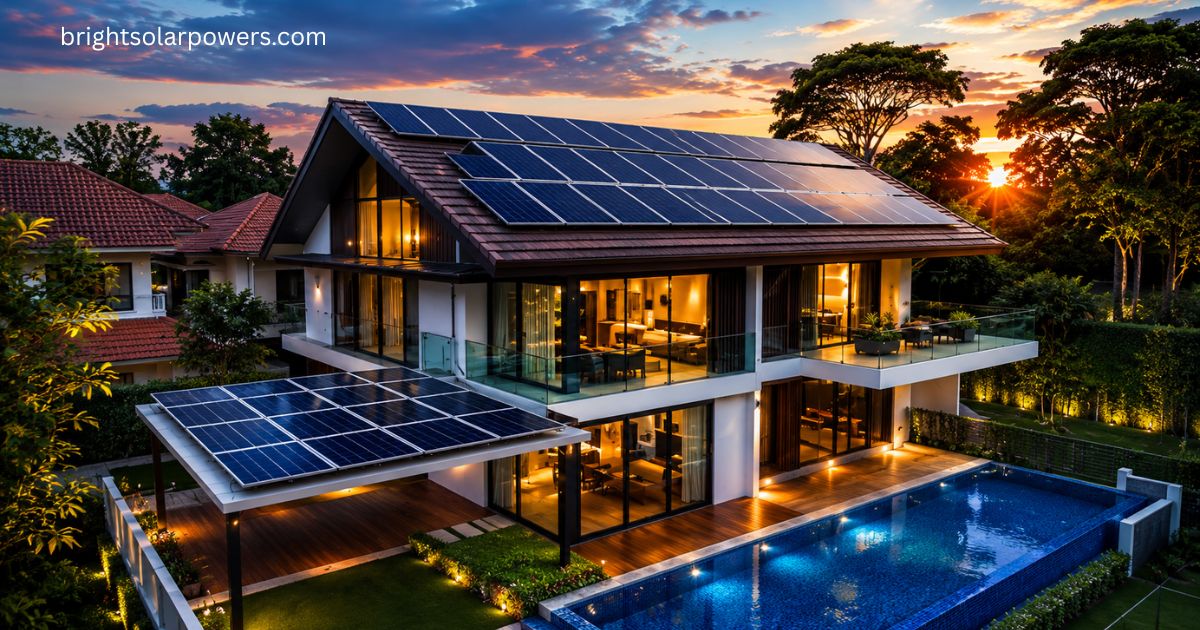
The Clearer Way to Look at It
Cost per kW works better as a pricing metric for understanding capacity than as a number to obsess over.
What actually matters is the value that capacity delivers over time, and this logic holds whether you are talking about solar power for commercial use, everyday home rooftops, or even a future pv solar power plant.
Solar Panels: The Heart of the System
At their core, PV panels simply capture sunlight and turn it into electricity, and in 2026, Indian homes mostly lean on four main types .
Monocrystalline, Mono PERC panels, Polycrystalline panels, Half-cut solar panels, and Bifacial panels for premium setups.
Among residential users, 1 kW solar panels and 2 kW solar panels remain the most popular sizes, with Mono PERC and half-cut panels dominating thanks to better efficiency and longer life.
Solar Inverters: Converting Power for Daily Use
Panels only produce DC electricity, but solar panels for home cost homes run on AC electricity, and bridging that gap is the entire job of a solar inverter.
String Inverters remain the most common choice, staying cost-effective for simple rooftop layouts, while Micro Inverters get installed panel-wise and perform better in shaded areas, though at higher cost.
Hybrid Inverters step in when batteries join the setup, carrying a heavier upfront investment, and whichever type you pick directly shapes your final installation cost across India.
Mounting Structure: Holding Everything in Place
Panels face real punishment from the elements, so mounts must withstand high winds, heavy rain, summer heat, and steady long-term load.
Rooftop mounting remains the most common approach, alongside elevated structures for concrete roofs, tin-sheet roof structures, and occasionally ground-mounted structures for homes with the space.
Better quality structures naturally boost durability, though that improvement comes with added cost.
Batteries: Optional but Useful
Batteries store excess power for use during night-time or power cuts, though most Indian homes still favour on-grid systems without one, mainly because batteries raise the upfront cost, while net metering already allows grid export and skipping batteries keeps maintenance simpler.
That said, backup power genuinely helps in India wherever power cuts happen often.
How Much Electricity Can Solar Panels Generate?
Across India, a 1 kW solar panels setup produces around 4–5 units/day, while 2 kW solar panels generate close to 8–10 units/day. The exact number shifts with location, available sunlight hours, panel efficiency, and roof direction.
Maintenance Cost of Solar Panels
One of the quiet advantages of going solar is just how low maintenance it stays over the years. Panel cleaning costs roughly ₹1,000 to ₹2,000 per year, inverter servicing stays minimal, and panel lifespan stretches past 25+ years, all with no fuel, no noise, and barely any daily attention required.
Choosing the Right Solar Panel Manufacturing Company
Look for ALMM-listed panels backed by proper BIS, IEC, and ISO certifications, along with a genuine 25-year performance warranty and real Indian manufacturing support.
Picking this kind of company protects your subsidy eligibility, delivers long-term reliability, and gives real peace of mind.
Why 2026 Is a Good Time to Install Solar Panels?
Rising electricity tariffs, steadily improving panel efficiency, stronger government support, faster ROI within 3–5 years, and growing numbers of skilled installers all point the same direction.
Public awareness has grown enough that solar has firmly become mainstream, no longer treated as an experiment.
Things to Check Before Installing Solar Panels for Your Home
Before signing anything, confirm your roof size and available shadow-free area, check your monthly electricity units, and understand your local DISCOM rules around net metering rules.
Also weigh installer experience, the panel brand, its warranty, and steer clear of rushed installers who skip proper explanations.
Is Solar Worth the Cost in 2026?
By 2026, home solar panel installation across India stands out as one of the smartest long-term moves a homeowner can make.
Even with a noticeable upfront cost, the resulting savings, real energy independence, and genuine environmental benefits make the investment worthwhile, whether you begin with 1 kW solar panels, move up to 2 kW solar panels, or plan a larger setup from day one.
Solar brings real stability in an otherwise unpredictable energy future, and choosing the right system size alongside a trustworthy solar panels for home cost manufacturing company turns this from a simple expense into a genuine smart asset for the home.
FAQS About Solar Panels For Home Cost
What is the cost of solar system in a house?
A home solar system cost usually ranges between ₹50,000 and ₹1.2 lakh per kW based on panel type and installation quality. This investment brings lasting savings and peace of mind through reduced electricity bills.
Can I run a 1.5 ton AC on solar?
Yes, a 1.5 ton AC generally needs a 3kW to 5kW solar system paired with proper battery backup or net metering. Cooling your home with solar power feels comforting and cost-free in the long run.
How much is 1000 solar panels?
The cost of 1000 solar panels depends on wattage and brand, often ranging from ₹2 crore to ₹3.5 crore with inverters included. Such large-scale setups are typically built for commercial or solar plant business needs.
Can 3kW solar run AC?
A 3kW solar system can easily run a 1 ton AC, though a 1.5 ton AC may need extra battery support during peak hours. With the right solar setup, staying cool becomes simple and worry-free.